












Letter to the editor
Dear Editor,
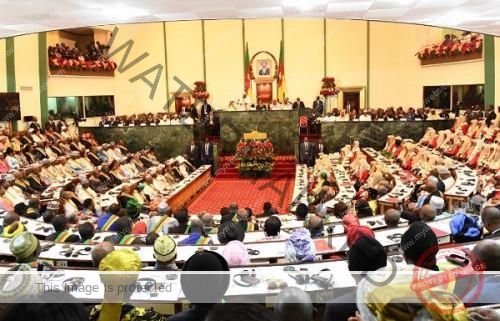
Recent public events involving Paul Biya and Pope Leo XIV have reignited discussion about language and representation in Cameroon. Much of that discussion has focused on bilingualism—its promises, its shortcomings, and its uneven application. While these concerns are valid, they risk obscuring a more fundamental issue. The central question is not linguistic. It is political.
Cameroon is constitutionally defined as a bilingual state, with English and French recognized as official languages. Yet the persistent imbalance in how these languages are used in governance and public life is not merely a policy failure. It is a visible symptom of a deeper structural reality: the relationship between the Republic of Cameroon and the people of Southern Cameroons remains unresolved.
Language, in this context, functions less as a communication tool than as an indicator of power. When one linguistic tradition consistently dominates state institutions, public communication, and national leadership, it signals more than administrative preference. It reflects an underlying asymmetry in political recognition. For many English-speaking Cameroonians, particularly those from Southern Cameroons, this asymmetry is experienced not as an isolated grievance but as part of a broader pattern of marginalisation.
However, to interpret this solely as a failure of bilingualism would be to misunderstand the nature of the problem. The origins of the current crisis do not lie in language policy. They lie in history. The union between the former British Southern Cameroons and the Republic of Cameroon emerged from a decolonisation process whose terms, legitimacy, and implementation have long been contested. That historical foundation continues to shape present realities.
In this light, contemporary governance challenges—whether in language, law, education, or administration—cannot be fully addressed through incremental reform within the existing constitutional framework alone. When a political arrangement consistently produces outcomes that significant portions of the population experience as exclusionary, the question that arises is not simply how to improve the system, but whether the system itself adequately reflects the consent of those it governs.
The recent contrast in public communication styles—most notably the Pope’s decision to address different audiences in the language most reflective of their identity—has been widely interpreted as a lesson in practical bilingualism. It may also be read more broadly as a reminder of a deeper principle: that legitimacy in governance is relational. It is not derived solely from constitutional declarations, but from the extent to which people see themselves recognised in the structures that govern them.
This distinction is critical. Efforts to resolve Cameroon’s ongoing conflict often focus on institutional reforms—decentralisation, special status arrangements, or constitutional amendments. While such measures may offer partial relief, they do not in themselves resolve the underlying question of political legitimacy. Where that legitimacy is in doubt, reform risks being perceived not as a solution, but as an adjustment within a contested framework.
A durable resolution requires a willingness to confront this reality directly. The aspirations, identity, and governance preferences of the people of Southern Cameroons must be engaged not as peripheral concerns, but as central elements of any meaningful dialogue. In the context of international practice, this includes acknowledging that decolonisation is not merely a historical event, but in some cases an incomplete process whose outcomes remain open to reconsideration.
This does not predetermine a single outcome. Across different contexts, unresolved political questions have led to a range of negotiated solutions, including federal arrangements, enhanced autonomy, or, in some cases, peaceful separation. What unites these processes is not their form, but their foundation: the principle that durable peace is rooted in consent.
As Pope Leo XIV observed, peace cannot be decreed. Where governance is perceived as imposed rather than agreed, even well-intentioned reforms may struggle to gain legitimacy. Conversely, when solutions emerge from inclusive and credible processes that reflect the will of the people, they stand a far greater chance of enduring.
The lesson, therefore, is not about language alone. It is about the limits of constitutional form when detached from political reality. A state may declare itself bilingual, but if its structures do not reflect balance in practice, the issue extends beyond communication into the realm of legitimacy. And where legitimacy is persistently questioned, the conversation inevitably returns to its foundation.
Cameroon’s challenge is not simply to improve bilingual governance. It is to address a deeper question: whether its current political arrangement fully resolves the historical process from which it emerged. Until that question is engaged with clarity and openness, the tensions now visible in language, identity, and governance are likely to persist.
The principle is straightforward. Where a system consistently fails to reflect the identity, consent, and aspirations of a people, the issue is no longer merely constitutional. It becomes one of political legitimacy—and ultimately, of decolonisation.
Sincerely,
A patriot



Leave feedback about this