

Licensing restrictions, selective advertising, and politically motivated prosecutions have turned the press into an echo chamber. The late Samuel Wazizi, tortured to death in military custody, remains a symbol of what happens when truth confronts tyranny.
By Ali Dan Ismael — just back from Yaoundé, Cameroun
Journalism: A Profession for Beggars in La République du Cameroun
Introduction: When the Pen Begs Before It Writes
In most civilized societies, journalism stands as the conscience of the nation — a profession of inquiry, courage, and truth-telling. In La République du Cameroun, however, journalism has been reduced to a profession of survival — one where the journalist no longer holds power to account but instead begs from it. The noble watchdog of democracy has been chained, starved, and taught to wag its tail for scraps from the tables of ministers, generals, and business elites.
The Systemic Poverty of the Pen
Cameroon’s media mirrors the nation’s broken political economy. Journalists are underpaid, overworked, and often unpaid for months. Many survive on motive money — envelopes handed out at press conferences or political events. This has turned journalism from a vocation of conscience into a craft of survival, where truth is traded for access. In Yaoundé, the average reporter earns less than a taxi driver. To speak truth to power is to risk starvation; to flatter power is to eat. Poverty has become the most effective weapon of censorship.
State Capture of the Media
Under Paul Biya’s four-decade rule, the press became an instrument of control. CRTV functions as a palace loudspeaker; most private outlets survive on state patronage and fear.
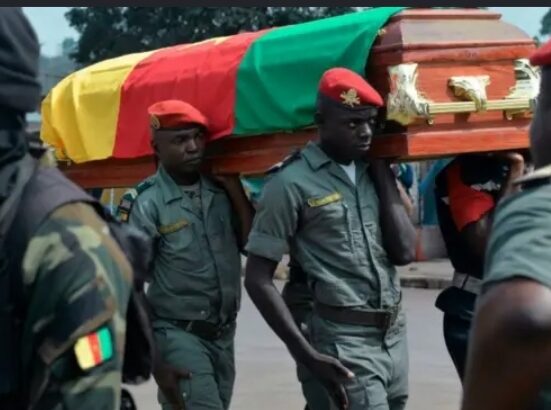
Licensing restrictions, selective advertising, and politically motivated prosecutions have turned the press into an echo chamber. The late Samuel Wazizi, tortured to death in military custody, remains a symbol of what happens when truth confronts tyranny.
The supposed regulatory authority — the National Communication Council (NCC) — has become a tool of suppression rather than protection. Under Joe Chebonken Kalabubse, the Council has failed disastrously in its duty to defend press freedom or ensure fair and balanced reporting. Instead of upholding ethical standards, it acts as a censorial tribunal, silencing dissent and punishing independent journalists under the guise of “disciplinary action.” Its close alignment with the Biya regime has destroyed its credibility and insulted the very profession it claims to regulate. Far from promoting professionalism, the NCC has become the regime’s blunt instrument to stifle efficiency, creativity, and truth — a bureaucratic gag on the nation’s conscience.
Associations Without Independence
The institutional decay extends beyond the NCC into what should have been independent professional associations. The Cameroon Association of English-Speaking Journalists (CAMASEJ), once a promising platform for solidarity and ethical advancement, has degenerated into another extension of the ruling party’s media machinery.
Its current president, Jude Viban, openly collaborates with the CPDM media department, a fact that undermines the association’s moral and professional authority. Instead of defending journalists from political interference, CAMASEJ’s leadership now mirrors it — turning the body into a convenient filter for regime narratives within the English-speaking press.
This capture of associations by political loyalists has erased the last institutional line between professional advocacy and propaganda. It represents the final insult to the journalism profession: when even the guardians of independence surrender their voice for comfort and recognition. Under such leadership, journalism is no longer a calling — it is a contract.
The Political Economy of Begging
Calling journalism “a profession for beggars” is not an insult to journalists themselves but a verdict on the system that impoverishes them. The CPDM political culture ensures that the purse controls the pen. Selective invitations, “brown envelopes,” and orchestrated awards have replaced professional merit. A journalist who praises the regime is rewarded; one who questions it is punished.
Gone Are the Days of True Journalism
There was a time when journalism in Cameroon inspired both fear and respect. Gone are the days of Cameroon Calling, when broadcasters like “Akoaya” the columnist, Charlie Ndichia, and Paddy Mbawa challenged authority with wit and integrity. They were not rich, but they were revered. Politicians loved to hate them because they upheld the law and spoke truth to power. That generation defined honour in journalism — a legacy now buried under propaganda and patronage.
Even once-celebrated figures of intellectual excellence have succumbed to the decay. The once-erudite Eric Chinje, a graduate of the prestigious Department of Communications at Syracuse University and a former symbol of Cameroonian journalistic brilliance in the 1980s, now stands as a cautionary tale. Once admired globally for his eloquence and professionalism, Chinje’s recent authorship of Project C reflects a troubling descent from the golden boy of independent thought to an architect of regime narratives — a complete downgrade from the ideal he once embodied. Like some of his siblings, notably Professor Uphie Chinje, now comfortably basking in the spoils of the Biya establishment, Eric Chinje’s transformation mirrors the tragic moral inversion of an entire generation that traded truth for proximity to power.
The Bilingual Breakdown and the Death of Specialisation
Cameroon’s bilingual heritage, once a strength, has become a barrier. Journalism in both English and French has been reduced to simplistic, formulaic writing devoid of analytical depth or professional grounding. Reporters are trained to “translate” events, not interpret them; to repeat government press releases, not investigate them.
True journalism in a bilingual society should cultivate dual literacy — linguistic and intellectual. A science correspondent should ideally have a background in physics or chemistry; a medical correspondent should be a doctor, perhaps with specialisation in neuroscience or epidemiology; a legal analyst should have studied law. Instead, most Cameroonian journalists are generalists with no foundational expertise in any field of human endeavour.
This has pushed the profession back into the intellectual Middle Ages, making it irrelevant to the 21st century conversation. Rather than informing public understanding, it entertains ignorance. Serious journalism has been replaced by political blogging and regime gossip, leaving development, innovation, and the human condition unexamined.
This collapse did not happen by accident. It is the result of Paul Biya’s long misrule and France’s neo-colonial guardianship, which have traded knowledge for loyalty and intellect for obedience. The French mandate that sustains Biya’s regime has mortgaged not only Cameroon’s resources but its capacity to think critically — a tragedy visible in every newsroom.
The Death of Investigative Journalism
In such a climate, investigative reporting is suicidal. Stories that should expose corruption or electoral fraud are silenced before publication. Those who persist operate in exile or online, without income or protection.
Even bloggers and citizen journalists — once the last refuge of truth — are no longer safe. Those who write against the regime face intimidation, hacking, arrests, and death threats. Digital surveillance and smear campaigns have replaced open censorship. In today’s Cameroon, a Facebook post can cost a life.
The Deeper Challenges of the Profession
The decay runs deeper than fear or poverty. Journalists lack continuing professional education; most have never attended a workshop on ethics, safety, or digital literacy. The role models who once embodied courage have been absorbed and corrupted by the regime, turned into mouthpieces or consultants for the same system they once criticized.
There is no active national association to defend ethical standards or protect reporters from abuse. The few that exist are politically compromised. Worse still, there is no independent legal framework guaranteeing press freedom or shielding journalists from arbitrary arrest. Without education, ethics, mentors, or law, journalism in Cameroon has become a trade without teachers and a battlefield without armour.
The Changing Face of Print and Digital Media
The global media landscape is transforming at lightning speed. Traditional print media — once the bastion of credibility — is collapsing under the pressure of digitisation, economic strain, and state censorship. Across Cameroon, printing presses have fallen silent, replaced by unregulated online portals and politically funded news sites.
The rise of digital media has given new voices to independent thinkers but also opened the floodgates to misinformation, propaganda, and algorithmic manipulation. The latest frontier in this struggle is Artificial Intelligence (AI) — a tool that can both empower and endanger truth.
AI can help journalists analyse vast data, trace corruption networks, and enhance storytelling. But it can also fabricate voices, forge evidence, and spread propaganda at industrial scale. The difference lies not in the machine, but in the moral compass of the human using it.
Technology cannot replace integrity. Truth will always require conscience, context, and courage. The future of journalism will depend less on how advanced our software becomes, and more on how ethical and intellectually grounded our journalists remain.
Ambazonia: Where the Pen Still Resists
By contrast, Ambazonia’s emerging media culture — though under siege — keeps the flame of truth alive. From Voice of Ambazonia Radio and The Independentist to diaspora networks, Ambazonian journalists operate without pay, without safety, yet with unbreakable conviction. They work not for envelopes but for history. Their microphones may be small, but their voices reach the conscience of a continent.
Recommendations to Struggling Journalists
Reclaim Purpose Before Pay: Your poverty is real, but your mission is sacred. Let conscience feed your spirit when pockets are empty.
Form Independent Coalitions: Build circles of trust among honest reporters, lawyers, and civic actors. Unity protects; isolation exposes.
Seek Global Solidarity: Engage Reporters Without Borders (RSF), the Committee to Protect Journalists (CPJ), and African media networks. Visibility saves lives.
Invest in Continuous Learning: Pursue online training in ethics, science literacy, and AI journalism. Specialisation restores credibility.
Reject the “Brown Envelope” Culture: Every bribe accepted is a chain worn. Refuse coins that silence truth.
Tell the People’s Story, Not the Regime’s: Centre the market woman, the prisoner, the teacher, the refugee. The people are your true newsroom.
Demand a Legal Framework: Advocate collectively for a press-protection statute and independent media tribunal. Without law, there is no liberty.
Honour the Fallen: Remember Wazizi, Bibi Ngota, and others who died telling the truth. Their sacrifice defines your duty.
Institute National and Diaspora Awards for Courage: Establish the Wazizi Prize for Courage in Journalism — a yearly honour for reporters who show extraordinary bravery in dangerous environments. This will immortalize those who fell defending the truth and inspire a new generation of fearless journalists to rise above fear, censorship, and poverty. True professionalism begins when courage becomes culture.
Conclusion: The Price and Power of the Pen
Journalism in La République du Cameroun has become a profession for beggars because the state made it so. When the press must kneel to eat, the people must crawl to know.
Yet even in darkness, sparks remain — men and women who still write without fear and will one day rebuild a press that questions instead of flatters.
A free press does not beg. It stands. A nation without one does not breathe.
Let journalists rise again — not for pay, but for principle. Not for envelopes, but for enlightenment. And not as beggars of truth, but as builders of a new republic of conscience, where bilingualism births understanding, not confusion, where technology amplifies integrity, not deception, and where the Wazizi Prize becomes a living monument of courage — proving that even in silence, Voice of Ambazonia Radio, The Independentist, and every fearless journalist still speak truth to power.
Final Note
In the weeks to come, The Independentist will launch a dedicated editorial support channel for local newspapers and community reporters across Cameroon and Ambazonia. Through this service, editors and journalists will be able to submit their articles for high-level editing, fact-checking, and style improvement at a moderate, accessible rate.
How to register:
Send your full name, contact (phone/WhatsApp), and the name of your newspaper or media house to:
mail@theindependentistnews.com
This initiative aims to help rebuild a professional, fearless, bilingual press that can stand beside Voice of Ambazonia Radio and The Independentist as credible sources of truth for our people.
Ali Dan Ismael editor in chief