










Editorial commentary

We are home to news on Cameroon and the CEMAC region. We are dedicated to honest and reliable reporting. We are the voice of the Cameroonian people and their fight for freedom and democracy at a time when the Yaoundé government is silencing dissent and suppressing democratic voices.

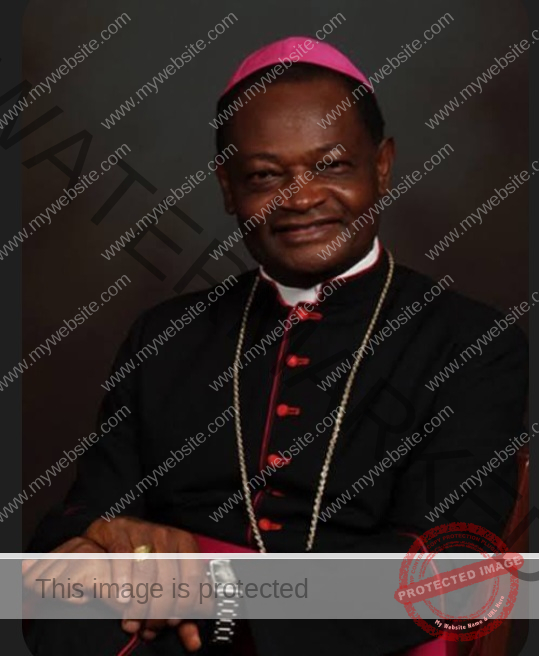
The Bishop of Kumbo breaks the cycle of hypocrisy. Without naming names, he acknowledges what everyone knows but few Church leaders dare to say: there is no legitimacy without justice.
By The Independentist Editorial Board
Advent has arrived in the hills of Kumbo, and with it comes a bold and unexpected message from the Bishop of Kumbo—one that resonates far beyond the sanctuary walls and cuts sharply through the fog of political hypocrisy that has drowned Cameroon for years.
At a time when the country is reeling from a disputed presidential election, deepening mistrust, and an unending war in the North-West and South-West, the Bishop has issued a pastoral letter that refuses to pretend. It names the suffering. It acknowledges the injustice. It confronts the moral decay. And without raising his voice, he has said what many church leaders, politicians, and diplomats have refused to say.
The contrast is striking. While the Archbishop of Bamenda appears at ceremonies with the regime, smiles for the cameras, and issues soft statements that echo official narratives, the Bishop of Kumbo has chosen a different path—one rooted in truth rather than convenience. And while the Apostolic Nuncio continues to offer diplomatic niceties and evasive language about “complex situations,” the Bishop speaks directly to the wounds of his people.
A Bishop Who Acknowledges the Wound
From Kumbo comes an admission that the crisis in the English-speaking regions is not a mere security problem or the fault of “a few misguided youths.” It began as a genuine cry for justice and dignity. It spiraled into violence, betrayal, kidnappings, and a breakdown of community trust. Families have been torn apart; neighbours turned into enemies.
For the first time in a long while, a senior church figure has described the suffering without hiding behind euphemisms. He admits that the wound is political, moral, and structural—not an accident and not a misunderstanding. This is precisely what Archbishop Nkea has consistently avoided. Publicly aligning with the regime’s narrative, he has downplayed injustices, ignored the roots of the conflict, and preferred to sit comfortably on the side of power rather than stand with the wounded.
Calling Out the Rottenness of the Election
The Bishop also dares to say what the entire country whispered after the 2025 presidential election: fraud, manipulation, intimidation, and injustice were at the heart of the process. Citizens feel betrayed. Their trust in institutions has crumbled. Yet in Yaoundé, the Nuncio performs his diplomatic rituals, congratulates winners, and carries on as if the process reflected the will of the people. It is a choreography designed to maintain access to political power rather than defend moral truth.
The Bishop of Kumbo breaks the cycle of hypocrisy. Without naming names, he acknowledges what everyone knows but few Church leaders dare to say: there is no legitimacy without justice.
Real Peace Requires Truth, Not Silence
Perhaps the most powerful—and dangerous—idea in the Bishop’s letter is the insistence that peace is impossible without justice. Not the “peace” the regime talks about. Not the “peace” sold by diplomats. Not the “peace” of silence, fear, or coerced obedience. But real peace—built on truth, accountability, dignity, and right relationships between leaders and citizens.
This single message shatters the comfortable theology of those who call for calm while ignoring oppression. It challenges the regime. It challenges the Church hierarchy. It challenges the Nuncio’s convenient neutrality. And it reminds the public that reconciliation without truth is simply surrender.
Condemning All Crimes, Not Just the Convenient Ones
The Bishop denounces kidnapping, extortion, corruption, and all forms of abuse—not selectively, not strategically, but in principle. This is a moral clarity missing from the public posture of some church leaders who only speak loudly when clergy are threatened while falling mute when entire communities are burned, soldiers execute civilians, or villages are wiped out. By insisting on justice across the board, the Bishop rejects the double standard that has infected both politics and the Church.
A Warning the Hierarchy Should Hear
One of the most important messages in the letter is the warning that internal hatred and division are as destructive as external aggression. Communities are tearing themselves apart. Suspicion and bitterness are eroding social bonds. This is not only a message for the people—it is a message for the Church itself. For bishops who have chosen ambition over truth. For church diplomats who have traded prophetic courage for political access. For religious leaders who have blessed ceremonies while ignoring the blood in the streets.
Advent in Kumbo, Amnesia in Bamenda
This pastoral letter is not perfect. It could have spoken more boldly. It could have named the atrocities more clearly. It could have called the crisis by its true name. But it opens a door that many in the Church have kept firmly shut. It acknowledges injustice. It acknowledges the brokenness of institutions. It acknowledges that peace without truth is a lie. And it does all this in a moment when silence is an accomplice to suffering.
Meanwhile, in Bamenda and in the diplomatic suites of Yaoundé, Advent is being celebrated with comfortable language and polished smiles, as if the war does not exist and as if the people’s cries are background noise.
The People Deserve More
The faithful in the conflict zones deserve shepherds who speak courageously. They deserve Church leaders who do not shrink before power. They deserve diplomats who will not hide behind protocol while human beings are hunted down.
The Bishop of Kumbo has chosen conscience over comfort. Others must now choose where they stand. History will remember who spoke truth in the darkness— and who chose to shine shoes at the palace instead.
The Independentist Editorial Board
Share This Post:
Age, Power, and the Crisis of Performative Leadership in Cameroon
AMBA WARRIOR: THE MINDSET OF A REVOLUTION
Related Post
Neither in 10-15 Years Nor in Six Centuries: Why
A DIRECT CHALLENGE TO THE MOVEMENT: ANSWERING THE 10-15
A “Natural Death” After Ten Years? How Dion Ngute’s
The Illusion of a ‘Natural Death’: Why Yaoundé’s Playbook
AN AMBAZONIAN RESPONSE TO, Navy Captain Cyrille Serge Atonfack
IS THE WORLD LISTENING: THREE DAYS FOUR FRONTLINES, ASA