









News commentary

We are home to news on Cameroon and the CEMAC region. We are dedicated to honest and reliable reporting. We are the voice of the Cameroonian people and their fight for freedom and democracy at a time when the Yaoundé government is silencing dissent and suppressing democratic voices.

The fundamental question remains: When a nation acknowledges a historical wrong, how should it determine what responsibility for repair, if any, continues into the present? That is the difficult question Britain, the Caribbean, and the wider Commonwealth must now confront.
By Ali Dan Ismael
Senior Editor-in-Chief, The Independentist News
November 2, 2026
As Amazon associate this site earns from qualifying purchases
Get copies of publications on the southern cameroons revolution By Martin Mungwa on Amazon
https://www.amazon.com/s?k=Martin+mungwa&crid=2VVLXEC4N2U8S&sprefix=trump+and+the+gov+martin+mungwa%2Caps%2C1837&linkCode=ll2&tag=njokings-20&linkId=5b937741e4c429a80f0d02d64a66b744&language=en_US&ref_=as_li_ss_tl
A Commonwealth Confronted by Its Own History
The British monarchy and government are confronting an uncomfortable historical question: Can a nation acknowledge the suffering caused by slavery while refusing to accept responsibility for repairing its consequences?
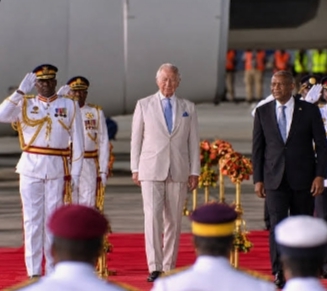
As King Charles III prepares to address the Commonwealth Heads of Government Meeting in Antigua and Barbuda, the distinction between expressing sorrow, offering an apology, and accepting material responsibility has become the centre of an intensifying international debate.
The King is expected to speak with sincerity about the historical slave trade but without delivering a formal apology. Meanwhile, British Prime Minister Andy Burnham has indicated that his government is prepared to consider an official apology and enter structured discussions with affected nations. Yet Burnham has simultaneously rejected financial reparations.
The result is a revealing diplomatic situation: Britain is prepared to reconsider how it speaks about its past, while continuing to resist important demands concerning how that past should be addressed.
For Caribbean nations, the difference is fundamental. Their demands have never been confined to ceremonial language. They concern historical recognition, institutional accountability, economic development, cultural restoration, and the enduring consequences of colonial exploitation. The central question is therefore not simply whether Britain should apologize. It is whether acknowledgment of historical injustice creates obligations beyond the expression of regret.
The King’s Sorrow and the Constitutional Limits of Monarchy
King Charles III has increasingly acknowledged the suffering associated with Britain’s involvement in the transatlantic slave trade. During his Caribbean visit, he referred to historical injustice and the suffering endured by enslaved Africans. Buckingham Palace has indicated that his Commonwealth address will confront this history while respecting the authority of elected governments over matters of official policy. There is an important constitutional distinction here.
Britain’s sovereign does not independently determine government policy concerning international reparations, diplomatic settlements, or state apologies. Such decisions belong principally to the elected government.
Consequently, the absence of a formal royal apology should not automatically be interpreted as evidence of the King’s personal opposition to one. Nevertheless, the monarchy’s historical relationship with the slave trade remains a legitimate subject of public examination.
The Royal African Company, established with royal connections during the seventeenth century, participated in the trafficking of enslaved Africans. Those historical relationships raise questions concerning the responsibilities of institutions that survive long after the individuals involved have died. The issue is not whether King Charles personally committed historical wrongdoing. He did not. The question is how enduring institutions should address documented historical involvement in systems of exploitation.
Burnham’s Opening: A Diplomatic Shift With Important Limits
Prime Minister Andy Burnham’s announcement represents a change in the British government’s stated willingness to discuss an official apology. In remarks published ahead of the Commonwealth meeting, he offered structured dialogue with countries and communities affected by the transatlantic slave trade. He also acknowledged the continuing relevance of slavery’s historical consequences.
However, he rejected financial reparations, arguing that present generations should not be held personally liable for historical wrongdoing committed under earlier laws and political systems. His government has instead proposed exploring debt restructuring for vulnerable Commonwealth countries, with former Prime Minister Gordon Brown supporting the initiative.
Investing.com+2 . This creates two distinct issues.
First, Burnham’s willingness to discuss a formal apology may create opportunities for diplomatic engagement that previous British governments resisted. – Second, his rejection of financial reparations before those discussions begin raises questions about whether the proposed dialogue will permit meaningful consideration of the full range of Caribbean demands. The difference between listening and negotiating is consequential.
A dialogue may acknowledge grievances without accepting the remedies proposed by those presenting them. An effective negotiation, by contrast, requires serious consideration of competing claims, available evidence, possible remedies, and the terms of any eventual agreement.
Caribbean Governments: Reparations Mean More Than Compensation
The Caribbean Community, CARICOM, has developed a comprehensive framework for reparatory justice. Its Ten-Point Plan encompasses formal apology, repatriation, Indigenous peoples’ development, cultural institutions, public health, education, historical research, and economic rehabilitation.
In July 2026, CARICOM endorsed a revised reparations manifesto, reaffirming its commitment to addressing the consequences of slavery and colonialism. CARICOM+1 . This framework challenges the tendency to reduce reparations to the image of governments distributing individual compensation cheques.
Reparatory justice may also include investments in universities, archival restoration, healthcare infrastructure, historical preservation, debt arrangements, and institutional partnerships.
On October 31, CARICOM Chair Philip J. Pierre welcomed Burnham’s willingness to engage while insisting that the full Ten-Point Plan remain open for discussion. He also cautioned that debt relief must not simply replace reparatory justice.
31 October 2026 – CARICOM. This distinction is critical.
Development assistance and reparations may overlap in their practical effects, but they arise from different understandings of responsibility. Ordinary development assistance is generally framed around present economic needs. Reparations are framed around acknowledged historical injustice and the question of what remedies, if any, follow from that injustice.
Whether the two approaches can be reconciled will become a central diplomatic test.
The African Dimension: Shared History Does Not Mean Identical Responsibility. An additional controversy has emerged through arguments that some African rulers and merchants participated in the capture and sale of enslaved people.
Kemi Badenoch has questioned why demands for an apology focus on Britain without equivalent attention to historical African actors who profited from slavery. The broader historical point deserves examination. Some African political authorities and commercial intermediaries did participate in the trade. Their involvement forms part of the historical record and should not be concealed.
But acknowledging their involvement does not eliminate the responsibility of European governments, companies, merchants, and institutions that financed, transported, insured, regulated, and profited from transatlantic slavery. Historical responsibility is not necessarily exclusive. Different actors may bear different kinds and degrees of responsibility, depending on their conduct, the institutional structures involved, and the available evidence.
The analytical challenge is to avoid two opposite distortions: a historical narrative that erases African participation, and another that invokes African participation to dismiss European responsibility. Both obscure the complexity of the system.
For African societies, the consequences included profound demographic, economic, political, and social disruptions. Their scale and long-term effects remain subjects of serious historical and economic scholarship. Any comprehensive examination of slavery’s legacy should therefore include African experiences alongside those of the Caribbean and the wider diaspora.
Can Present Generations Be Responsible for Historical Injustice?
Opponents of financial reparations raise an important ethical question. Why should individuals living today be required to pay for wrongdoing they neither committed nor authorized? This argument rests on a distinction between individual guilt and inherited institutional responsibility.
Individual moral culpability cannot simply be transferred from ancestors to descendants. However, states and institutions possess continuity across generations. They inherit assets, obligations, legal structures, diplomatic relationships, and public responsibilities. Whether that continuity creates legally enforceable reparations obligations is a separate and contested question.
Supporters of reparatory justice argue that institutions should not be able to retain the benefits of historical arrangements while excluding all discussion of their associated harms. Critics argue that establishing contemporary liability requires identifiable claimants, defensible causal connections, appropriate legal grounds, and workable methods of calculating remedies. Both positions deserve rigorous examination.
An honest discussion must distinguish moral responsibility, historical accountability, legal liability, and negotiated political settlement rather than treating them as interchangeable concepts.
From Slavery to Colonialism: Questions of Sovereignty
The debate also invites examination of Britain’s wider imperial history. Across Africa and the Caribbean, British colonial rule created political, educational, legal, and economic institutions whose consequences continued beyond formal independence.
The former British Southern Cameroons presents a distinct but relevant historical example. The territory was administered by Britain under international trusteeship arrangements before the 1961 political transition. The interpretation of the United Nations process, the arrangements accompanying the territory’s association with the Republic of Cameroon, and subsequent claims concerning self-determination remain contested.
These issues are not legally identical to claims arising from transatlantic slavery. Nevertheless, they involve a common question about historical accountability: What responsibilities, if any, remain when a former administering power has formally withdrawn from a territory but disputes persist regarding the consequences of its administration?
For advocates of Southern Cameroons self-determination, this question concerns Britain’s historical role and the standards by which international commitments should be evaluated. The broader lesson is that independence, diplomatic withdrawal, and historical accountability are distinct concepts. The passage of time may change the remedies available, but it does not remove historical events from legitimate scholarly and diplomatic scrutiny.
The Commonwealth’s Credibility Test
The Commonwealth describes itself as a voluntary association of independent and equal member states. That principle creates expectations of mutual respect, consultation, and recognition of members’ concerns.
The controversy over slavery demonstrates how difficult those expectations can become when members approach a shared history from profoundly different experiences.
For Britain, the Commonwealth offers opportunities for diplomatic cooperation, educational exchange, trade, and international influence. For many Caribbean and African countries, it also represents an institutional space in which the legacies of empire can be discussed.
Neither perspective automatically resolves the reparations question. However, the Commonwealth’s ability to accommodate disagreement may influence the credibility of its commitments to equality and partnership.
A useful outcome from the Antigua meeting would be agreement on a transparent dialogue process, including who participates, which issues may be considered, what evidence will be examined, and how proposed remedies will be evaluated. Without such arrangements, discussions risk producing repeated declarations of goodwill without measurable progress.
Sorrow, Apology, and Repair Are Different Acts
Three concepts should remain clearly distinguished. Sorrow expresses recognition of suffering. Apology formally acknowledges wrongdoing and may communicate institutional responsibility. Repair involves measures intended to address consequences attributed to that wrongdoing. These concepts are related, but they are not identical.
An apology may have profound symbolic and diplomatic value, particularly when previously excluded experiences receive public recognition. Yet acknowledgment alone does not necessarily remedy economic inequality, restore destroyed archives, strengthen educational infrastructure, or address the continuing institutional consequences that reparations advocates identify. Conversely, practical development partnerships may offer material benefits even where governments disagree about the historical or legal basis for reparations.
The challenge is to establish whether these approaches can coexist without confusing their purposes. Beyond Ceremonial Reconciliation
The emerging British position contains both opportunity and disagreement.
Burnham’s willingness to consider an apology opens a potential channel for addressing historical grievances more formally. His rejection of financial reparations establishes an immediate limit to that process. CARICOM’s response indicates that Caribbean governments recognize the opening while maintaining broader demands.
King Charles III, meanwhile, remains constrained by the constitutional distinction between royal expression and government policy. The Antigua Commonwealth summit will therefore test whether these positions can produce meaningful dialogue. It may also reveal whether the participants can move beyond familiar declarations to identify practical areas of agreement.
For Africa and its diaspora, the larger historical question remains significant. Recognition matters because the historical record matters. Economic and institutional consequences matter because historical injustice does not become irrelevant merely through the passing of generations. But responsible debate also requires evidence, distinctions between different kinds of obligation, and serious examination of feasible remedies.
An apology should neither be dismissed as meaningless nor presented as automatically sufficient. Ultimately, Britain’s confrontation with its slavery history will be judged not only by the eloquence of royal speeches or the wording of ministerial statements, but also by the substance, fairness, and transparency of the dialogue that follows.
The fundamental question remains: When a nation acknowledges a historical wrong, how should it determine what responsibility for repair, if any, continues into the present? That is the difficult question Britain, the Caribbean, and the wider Commonwealth must now confront.
As Amazon associate this site earns from qualifying purchases
Get your copies of publications on the Southern Cameroons revolution By Martin Mungwa on Amazon
https://www.amazon.com/s?k=Martin+mungwa&crid=2VVLXEC4N2U8S&sprefix=trump+and+the+gov+martin+mungwa%2Caps%2C1837&linkCode=ll2&tag=njokings-20&linkId=5b937741e4c429a80f0d02d64a66b744&language=en_US&ref_=as_li_ss_tl
Ali Dan Ismael
Senior Editor-in-Chief, The Independentist News
Share This Post:
THE HIDDEN ECONOMY OF FOREIGN AID: WHO PROFITS WHEN CONFLICT CONTINUES? Military Assistance, Financial Inducements, Strategic Interests, and the Cost of Dependency
Related Post
THE HIDDEN ECONOMY OF FOREIGN AID: WHO PROFITS WHEN
WHEN ANTIGUA QUESTIONS THE CROWN: BRITAIN’S COLONIAL RESPONSIBILITIES AND
MONACO, FRANCE AND SOUTHERN CAMEROONS: HISTORICAL ANALOGIES CANNOT SETTLE
The Book, TRUMP AND THE GOVERNANCE CROSSROADS IN WEST
SCRIPTEGRITY HIGHER STANDARDS, STRONGER WORK: Expert Quality assurance for
BRITAIN OPENS THE DOOR TO SLAVERY APOLOGY: WHAT ABOUT