








News commentary

We are home to news on Cameroon and the CEMAC region. We are dedicated to honest and reliable reporting. We are the voice of the Cameroonian people and their fight for freedom and democracy at a time when the Yaoundé government is silencing dissent and suppressing democratic voices.

The central issue is not whether communities should talk. They should. The issue is whether those conversations are connected to a credible process for negotiating the political future of Southern Cameroons Ambazonia. A conflict involving competing claims to political authority cannot be settled merely by managing the emotions of the population.
By Timothy Enongene
Editor-in-Chief
The Independentist News
As Amazon associate this site earns from qualifying purchases
Buy your copies of books on the Ambazonian revolution By Martin Mungwa on Amazon
https://www.amazon.com/s?k=martin+mungwa&crid=3R7LZRNP7DOV0&sprefix=martin+mungwa%2Caps%2C1955&linkCode=ll2&tag=njokings-20&linkId=2b1515da9171dc7617812b0606f1a4f3&language=en_US&ref_=as_li_ss_tl
THE HUMAN COST OF A WAR THAT CANNOT BE IGNORED
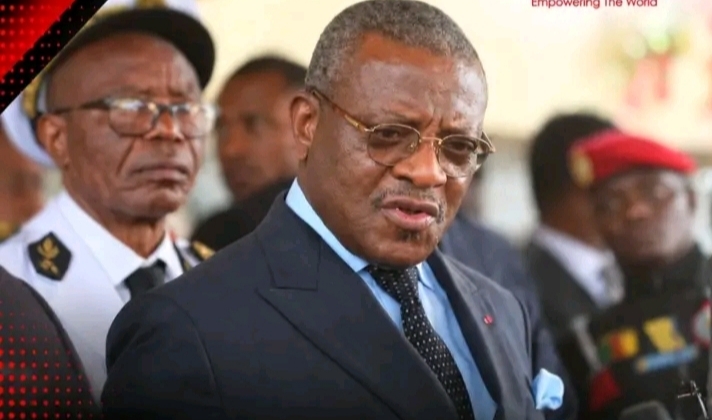
Prime Minister Joseph Dion Ngute’s reported assertion that Francophones do not feel the war raises a troubling question about how the conflict in Southern Cameroons Ambazonia is being presented to the public.
At the funeral of a Cameroonian soldier, a grieving Bulu priest reportedly appealed to the military representative to convey a message to the Head of State:
“Transmit this message to the Head of State. We no longer want to cry for our children. The Cameroonian state has every means to stop this deadly war.”
He reportedly continued: “The children of a general never die. The children of a colonel never die. It is the children of the poor who die.”
These reported remarks, which require confirmation against the original funeral recording, capture the profound human cost of a conflict that has devastated families across linguistic and political boundaries. They also expose a painful reality: while political leaders debate strategies and narratives, ordinary families continue to bury their children.
But beyond the grief lies a fundamental political question. Is Dion Ngute’s community-dialogue initiative a genuine pathway toward peace, or does it risk becoming a mechanism for avoiding internationally mediated political negotiations?
The answer requires more than emotion. It demands a careful examination of political objectives, negotiating authority, and the conditions necessary for a sustainable settlement.
THE PSYCHOLOGICAL DIMENSION OF THE PEACE NARRATIVE
Political communication is never neutral in a conflict. The language used to describe a war can influence how people understand its causes, identify responsibility, and evaluate proposed solutions.
When political leaders emphasize the suffering of communities, the importance of reconciliation, and the need to abandon armed confrontation, those messages can serve legitimate humanitarian purposes. They can also influence public perceptions of what constitutes an acceptable peace process. This is where Ambazonians must remain politically discerning.
The suffering of French-speaking Cameroonian families does not invalidate the historical and political grievances of Southern Cameroons. Neither does the suffering of Ambazonian civilians diminish the grief of families elsewhere in Cameroon. Both realities deserve recognition. However, acknowledging shared suffering is different from resolving the underlying political dispute.
The conflict is not simply the product of misunderstandings among neighboring communities. It concerns longstanding disagreements over governance, political identity, historical constitutional arrangements, and the right to self-determination. Consequently, a strategy that presents reconciliation among communities as the principal solution risks narrowing the political scope of the conflict.
The central concern is not whether Dion Ngute is personally sincere. His private intentions cannot be established without credible evidence. The concern is whether the government’s communication strategy is shifting attention from political negotiations toward community-based initiatives that lack the authority to resolve the fundamental dispute. That is a legitimate question requiring public scrutiny.
COMMUNITY DIALOGUE IS NOT POLITICAL NEGOTIATION
On September 28, 2026, Dion Ngute launched a community-dialogue initiative in Buea. Similar consultations subsequently took place in Bamenda in October. These initiatives brought together traditional rulers, religious authorities, local officials, and other community stakeholders. Such participation can contribute meaningfully to peacebuilding.
Traditional authorities can help rebuild trust. Religious leaders can promote reconciliation. Civil society organizations can facilitate humanitarian cooperation. Women and youth representatives can contribute perspectives frequently overlooked in formal political negotiations. These efforts should not be dismissed.
Nevertheless, community participation must not be confused with political negotiating authority. A traditional ruler does not automatically possess the mandate to negotiate the political future of Southern Cameroons. A religious leader cannot independently commit an armed organization to an agreement. A community representative cannot necessarily negotiate on behalf of political leaders, prisoners, displaced persons, and independence movements whose consent has not been obtained. The distinction is fundamental.
Community dialogue addresses relationships within society. Political negotiations address disputes between parties possessing competing claims, interests, and objectives. International mediation provides a possible framework for facilitating those negotiations through mutually accepted procedures. The three processes can complement one another, but they perform different functions. Community reconciliation may help prepare the ground for peace. It cannot, by itself, determine the political terms of peace.
THE UNFINISHED BUSINESS OF THE 2019 MAJOR NATIONAL DIALOGUE
The experience of Cameroon’s 2019 Major National Dialogue provides a warning. Convened by President Paul Biya and coordinated under Dion Ngute’s leadership, the dialogue was presented as an important initiative for addressing the Anglophone crisis. It produced recommendations concerning bilingualism, decentralization, governance, and special status for the North West and South West Regions.
However, the process was widely criticized because major separatist organizations and key representatives of the independence movement did not participate. Furthermore, fundamental questions concerning the political structure of the state were constrained by the government’s commitment to maintaining Cameroon’s territorial unity.
Academic examinations have subsequently identified significant weaknesses concerning inclusivity, political ownership, and implementation. The persistence of the conflict demonstrates that the dialogue did not produce a comprehensive settlement acceptable to the principal parties. The lesson is not that national dialogue has no value.
The lesson is that political participation without meaningful negotiating authority cannot automatically resolve a conflict rooted in competing claims to political legitimacy. Seven years later, the central questions remain. Who is authorized to negotiate? What issues may be placed on the agenda? Who determines the negotiating framework? What guarantees exist for implementing any agreement? Unless these questions are addressed, renewed community consultations risk reproducing the limitations of previous initiatives.
WHY INTERNATIONAL MEDIATION MATTERS
International mediation is neither a political slogan nor an automatic guarantee of independence. It is a recognized mechanism for helping parties to a conflict negotiate disagreements through an agreed process.
The United Nations identifies consent, impartiality, inclusivity, preparedness, and national ownership among the fundamental elements of effective mediation. A credible mediator can assist parties in establishing negotiating procedures, building confidence, managing disagreements, and developing implementation mechanisms. Such a process is especially important when distrust between the parties is profound.
The Cameroon conflict has already witnessed international facilitation initiatives, including efforts involving Switzerland and Canada. Those initiatives encountered significant political obstacles and did not produce a comprehensive peace agreement. Their difficulties demonstrate that international involvement alone is insufficient.
Successful mediation requires genuine political commitment, mutually accepted procedures, credible representation, and willingness to negotiate substantive disagreements. From an Ambazonian independence perspective, the question of self-determination remains central.
Yaoundé, by contrast, maintains its commitment to territorial integrity. These competing positions cannot be wished away through community meetings. They must be confronted through serious political engagement.
International mediation does not require either party to abandon its position before negotiations begin. It provides an opportunity to examine competing claims and explore whether mutually acceptable arrangements can be developed. A credible peace process must permit the parties to discuss the issues that divide them, not merely the issues that one side is prepared to place on the agenda.
IS YAOUNDÉ REPLACING NEGOTIATIONS WITH COMMUNITY CONSULTATIONS?
This is the most consequential question arising from Dion Ngute’s initiative. A government can organize consultations, encourage reconciliation, and establish reintegration programs without necessarily creating a pathway toward a negotiated political settlement. These activities may produce valuable humanitarian and social outcomes.
But if they are presented internationally as sufficient evidence that the underlying conflict is being resolved, they can also reduce pressure for more comprehensive political engagement. This possibility deserves particular scrutiny given the shortcomings of previous dialogue initiatives. The issue should therefore be evaluated through measurable questions.
– Has Yaoundé established a credible mechanism for engagement with the principal political and armed actors? – Is the government prepared to consider mutually accepted third-party facilitation? – Will negotiations permit discussion of the competing political positions underlying the conflict? – Are credible confidence-building measures being considered? – Will arrangements exist for independent monitoring and implementation? These are not unreasonable demands. They are fundamental questions of conflict-resolution design.
Without satisfactory answers, community dialogue risks becoming an exercise in managing the appearance of progress while the central political dispute remains unresolved. We cannot conclusively establish that this is Dion Ngute’s intended objective. But the political consequences of the initiative must be assessed regardless of intention.
PEACE CANNOT BE BUILT ON EXCLUSION
One of the most damaging mistakes in conflict resolution is to assume that a settlement can be imposed upon actors whose participation is necessary for its implementation. The parties to a conflict may possess fundamentally incompatible political objectives. That reality makes negotiation difficult. It does not make negotiation unnecessary.
A credible peace process should seek meaningful participation from appropriately mandated political representatives, relevant armed actors, civil society, women, displaced communities, and other affected constituencies.
Representation should be established through transparent and legitimate procedures rather than presumed on the basis of attendance at government-organized meetings. Civilian protection must also remain central. All parties have obligations under applicable international humanitarian law.
The protection of civilians, humanitarian access, the safety of children, and accountability for serious abuses cannot be postponed indefinitely while political negotiations remain stalled. Nor should communities be forced to choose between demanding immediate humanitarian relief and pursuing a durable political settlement. Both objectives are essential.
A CREDIBLE PATHWAY TOWARD A NEGOTIATED SETTLEMENT
If the government of Cameroon genuinely seeks a sustainable resolution, community dialogue should be incorporated into a broader peace architecture. Such an approach would require:
The parties should explore an agreed framework for credible international mediation or facilitation, including the mandate and impartiality of the mediator.
Negotiating participants should possess credible authority to represent their constituencies and make commitments.
The parties should establish procedures for discussing the fundamental political, constitutional, security, humanitarian, and governance questions underlying the conflict.
Steps to protect civilians, reduce violence, address appropriate detainee-related concerns, and facilitate humanitarian access should accompany political engagement.
Community dialogue should inform the formal process by ensuring that affected populations can communicate their needs and expectations.
Any eventual agreement should include clearly defined responsibilities, monitoring arrangements, verification procedures, and mechanisms for resolving disputes over compliance.
These requirements do not predetermine the outcome of negotiations. They establish conditions under which negotiations have a greater chance of producing an agreement that can be respected and implemented.
AMBAZONIANS MUST LOOK BEYOND EMOTIONAL MESSAGING
The grief of the Bulu priest deserves compassion. His reported demand that the killing stop deserves serious consideration. The lives of ordinary French-speaking Cameroonians are not expendable. Neither are the lives of Ambazonian civilians, children, soldiers, or displaced families. Every unnecessary death deepens the human tragedy. But compassion must not become political confusion.
The Ambazonian independence movement’s demand for self-determination cannot be resolved simply by asking communities to reconcile while leaving the underlying dispute over political status unanswered. Similarly, rejecting inadequate peace initiatives should never mean rejecting peaceful dialogue itself.
The essential distinction is between dialogue as a humanitarian and social process and negotiation as a mechanism for resolving competing political claims. A sustainable peace requires both. The choice is not between community dialogue and international mediation. The real question is whether community dialogue will support a credible political negotiating process or be presented as an alternative to one.
CONCLUSION: MANAGING THE NARRATIVE IS NOT RESOLVING THE CONFLICT
Prime Minister Joseph Dion Ngute’s community-dialogue initiative must ultimately be judged by its results. If it strengthens civilian protection, rebuilds trust, facilitates humanitarian cooperation, and creates pathways toward substantive negotiations, it can make a meaningful contribution to peace.
If, however, it becomes a substitute for engagement with the principal parties or a justification for indefinitely postponing political negotiations, it will leave the fundamental dispute unresolved. Ambazonians must therefore examine the initiative critically, without allowing grief to become a tool of political manipulation or permitting suspicion to replace evidence.
The central issue is not whether communities should talk. They should. The issue is whether those conversations are connected to a credible process for negotiating the political future of Southern Cameroons Ambazonia. A conflict involving competing claims to political authority cannot be settled merely by managing the emotions of the population.
It requires serious engagement with the questions that created and sustained the conflict. Community dialogue can help heal wounded societies. International mediation can help facilitate negotiations. Political courage is required to confront the underlying disagreements.
And lasting peace requires commitments that are credible, inclusive, verifiable, and capable of implementation. The road to peace does not end at the community meeting. It must lead to the negotiating table.
As Amazon associate this site earns from qualifying purchases
Buy your copies of books on the Ambazonian revolution By Martin Mungwa on Amazon
https://www.amazon.com/s?k=martin+mungwa&crid=3R7LZRNP7DOV0&sprefix=martin+mungwa%2Caps%2C1955&linkCode=ll2&tag=njokings-20&linkId=2b1515da9171dc7617812b0606f1a4f3&language=en_US&ref_=as_li_ss_tl
Timothy Enongene
Editor-in-Chief
The Independentist News
28 October 2026
Share This Post:
SOUTHERN CAMEROONS 2050 VERSUS LRC’S COLONIAL COMMUNITY DIALOGUE: AN INSULT TO INTERNATIONAL NEGOTIATION STANDARDS?
DION NGUTE’S MIND GAME EXPOSED AS BULU PRIEST PLEADS FOR END OF WAR AT THE BURIAL OF A WAR VICTIM
Related Post
THE AFRICAN BAR ASSOCIATION BREAKS THE SILENCE ON SOUTHERN
SOUTHERN CAMEROONS 2050 VERSUS LRC’S COLONIAL COMMUNITY DIALOGUE: AN
DION NGUTE’S MIND GAME EXPOSED AS BULU PRIEST PLEADS
THE INDEPENDENTISTS NEWS: A NEW CHAPTER IN EDITORIAL LEADERSHIP
ROME CALLED FOR JUSTICE, CANTERBURY DEMANDED INCLUSION. DID YAOUNDÉ
KONYE KIDNAPPINGS: ARE LRC OPERATIVES DISGUISING THEMSELVES AS AMBAZONIAN