









Commentary

We are home to news on Cameroon and the CEMAC region. We are dedicated to honest and reliable reporting. We are the voice of the Cameroonian people and their fight for freedom and democracy at a time when the Yaoundé government is silencing dissent and suppressing democratic voices.

For those advocating independence for the former British Southern Cameroons, developments in Yaoundé deserve close attention. A presidential transition could produce negotiation, continuity, greater centralization, internal competition within the state, or some combination of these. No responsible analysis can know the outcome in advance.
By Dr. Marcelius Atanga
Former President, University of Buea Students’ Union (UBSU) and Contributor to The Independentist News
As Amazon associate this site earns from qualifying purchases
Get books on statecraft and productive sovereignty by Martin Mungwa on Amazon
Buy Southern Cameroons 2050: Why America Should Care.
https://link.amazon/B07nnGMSd
Barely a month after President Paul Biya returned from the longest recorded foreign stay of his 44-year rule, rumors are again circulating in diaspora networks that the 93-year-old president may have quietly returned to Europe.
As of this writing, however, no credible news organization or official Cameroonian source has confirmed another departure. That distinction matters. Rumor should not be reported as fact. Yet the deeper problem remains: in a functioning state, citizens should not have to reconstruct the whereabouts and working status of their head of state from silence, speculation, presidential decrees and occasional photographs. The uncertainty itself has become part of Cameroon’s political story.
The Record
Biya left Yaoundé on June 7, 2026, for what the presidency described as a brief private stay in Europe. He returned from Geneva on August 20 after 73 days abroad, his longest recorded absence since becoming president in 1982. His previous record was 42 consecutive days abroad in 2024, an episode during which the government prohibited domestic media discussion of his health.
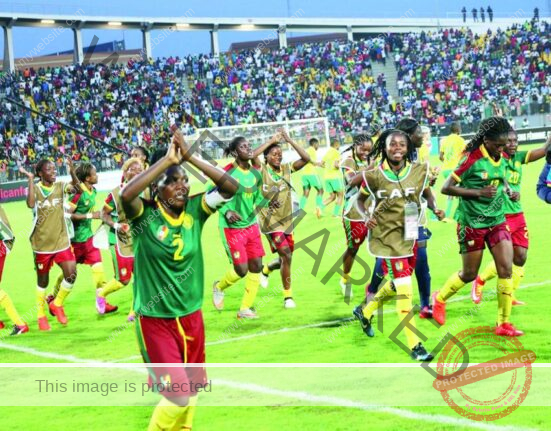
Two days after returning, on August 22, Biya and First Lady Chantal Biya received Cameroon’s women’s national football team at Unity Palace following its Africa Cup of Nations victory. That remains the most significant publicly documented in-person appearance following his return.
Presidential acts continued to be issued thereafter, including a series of military-related decrees dated August 31. But the existence of signed decrees is not the same thing as sustained public presidential engagement.
The presidency’s own public record shows that Biya’s last listed audience with a foreign dignitary was his May 7 meeting with U.S. Africa Command Deputy Commander Lt. Gen. John Brennan Jr. That prolonged distance from ordinary public scrutiny has inevitably intensified questions about decision-making at the summit of the state.
A Government Waiting
Cameroon has not undergone a comprehensive cabinet reorganization since January 4, 2019, when Joseph Dion Ngute became prime minister and a number of ministers were appointed or reassigned. Biya began another seven-year term after the contested October 2025 presidential election. Yet nearly eleven months after that election, no comprehensive new government has been announced.
There is no constitutional rule requiring a new cabinet immediately after a presidential election. But politically, the absence of a major reorganization has reinforced perceptions of institutional immobility at a moment when Cameroon faces economic pressures, multiple security crises and an unresolved presidential succession question. That succession question became even more consequential in April.
The Vice-Presidency That Remains Empty
On April 4, 2026, Parliament approved a constitutional amendment restoring the office of Vice-President by 205 votes to 16, with the legislation subsequently promulgated by President Biya on April 14. The vice-president is appointed by the president and may also be dismissed by him.
Under the amended Constitution, if the presidency becomes vacant through death, resignation or permanent incapacity duly established by the Constitutional Council, a sitting vice-president completes the remainder of the presidential term. If there is no vice-president, however, the Constitution provides for a presidential election within 20 to 120 days, with the President of the Senate serving as interim president. There is nevertheless a significant procedural difficulty surrounding permanent incapacity.
The April 14 legislation governing the Constitutional Council states that the vice-president must refer the question of permanent presidential incapacity to the Constitutional Council, which then requires a two-thirds majority to establish it. But no vice-president has been appointed. That creates an obvious legal question: who initiates the incapacity procedure if the very office empowered to initiate it remains vacant?
The Constitution provides a route when the presidency becomes vacant and there is no vice-president. The implementing law is much less clear about how permanent incapacity is formally established in the first place when there is no vice-president to make the referral. Five months after the constitutional change, that question remains unresolved.
The Succession Contest
The new office has therefore become central to speculation about Cameroon’s future. It would be misleading to state that whoever becomes vice-president is automatically guaranteed to be Cameroon’s next president. The president may remove the vice-president, and succession depends upon the circumstances under which a vacancy occurs.
What is clear, however, is that a sitting vice-president would enjoy an extraordinary constitutional advantage: if a presidential vacancy occurs while that person remains in office, the vice-president completes the presidential term. That explains the intense attention surrounding potential appointees.
Recent analysis from the Carnegie Endowment identifies several figures frequently discussed in succession scenarios. They include Ferdinand Ngoh Ngoh, the long-serving Secretary-General of the Presidency; Franck Biya, the president’s son; and former Prime Minister Philémon Yang. The analysis describes Territorial Administration Minister Paul Atanga Nji and Finance Minister Louis-Paul Motazé as figures potentially capable of shaping a succession arrangement even if they do not themselves receive the vice-presidency.
Other senior figures—including Defence Minister Joseph Beti Assomo, Civil Cabinet officials and members of Cameroon’s security establishment—would inevitably matter in any institutional transition because of the offices they occupy. These remain scenarios and analyses, not confirmed succession plans. That distinction is essential.
The Fake Decree and the Information Vacuum
One episode illustrates how dangerous an information vacuum can become. In June 2026, an individual delivered what purported to be a presidential decree appointing a vice-president to the headquarters of state broadcaster CRTV. The government later declared the document false, said CRTV officials had refused to broadcast it, and announced that the individual responsible had been arrested while investigations continued. Claims circulated linking particular political personalities to the document. Those allegations should not be presented as established fact without stronger evidence. But the incident itself is revealing.
A country in which a counterfeit succession decree can generate national attention is a country in which uncertainty at the top has become politically consequential. Rumor thrives where reliable information is scarce.
When Rumor Replaces Information
Far more extravagant claims have circulated—including assertions that Biya died years ago and that a double or “clone” has sometimes appeared in his place. There is no credible evidence supporting those claims. Biya appeared publicly during the papal visit to Cameroon in April 2026, returned visibly to Yaoundé on August 20, and hosted the national women’s football team at Unity Palace on August 22.
The problem is therefore not that such extraordinary rumors have been proved. They have not. The problem is that prolonged presidential absences, limited medical transparency and irregular public appearances create an environment in which unsupported stories can flourish. A state cannot eliminate misinformation merely by condemning it. It also has to provide credible, timely information.
A Country Under Strain
The succession debate is unfolding against a difficult national background. Official results from the October 12, 2025 presidential election gave Biya 53.66 percent of the vote and opposition candidate Issa Tchiroma Bakary 35.19 percent. Tchiroma rejected the official result and claimed that he had won. The aftermath was violent.
Reuters subsequently reported, citing United Nations sources, that 48 civilians were killed by security forces during post-election protests. The Cameroonian government did not publish an equivalent official death toll at the time. Tchiroma later left Cameroon and established himself in The Gambia. In August 2026, his team announced that his return to Cameroon was “imminent,” although no date was specified.
He has also announced criminal complaints in Switzerland relating to alleged abuses during the post-election repression. Those remain allegations subject to judicial processes, not findings of guilt.
The Anglophone Conflict Continues
The political uncertainty in Yaoundé also intersects with the continuing armed conflict in the English-speaking Northwest and Southwest regions—the territory separatist movements describe as Ambazonia. The conflict that grew out of the 2016 lawyers’ and teachers’ protests has now persisted for almost a decade.
The Global Centre for the Responsibility to Protect currently classifies civilians in the Anglophone regions as facing an “imminent risk” of atrocity crimes, citing violence by both government forces and armed separatist organizations. The humanitarian cost remains enormous.
UNHCR data reported approximately 493,400 internally displaced people in the Northwest and Southwest regions as of June 30, 2026. That figure is lower than some earlier estimates of more than 580,000 and should therefore replace the older number when citing the latest available UN data.
Behind every statistic are families separated from their homes, children whose education has been interrupted, farmers cut off from their land, businesses destroyed, and communities living between state security operations and armed-group coercion. Whatever constitutional arrangements eventually emerge, those humanitarian realities cannot simply be suspended while Yaoundé resolves its succession problem.
What the International Community Has Said
International reaction to Cameroon’s political and humanitarian crises has generally emphasized restraint, accountability and protection of civilians. Following the 2025 post-election violence, foreign governments, international organizations and human-rights groups called for investigations, restraint and respect for fundamental rights.
Yet external statements have so far produced no visible settlement of either the national succession question or the Anglophone conflict. And that may be the most important lesson. Cameroon’s constitutional transition will ultimately be shaped primarily by Cameroonian institutions, political actors, security structures and citizens—even as international governments and organizations attempt to influence stability and human-rights outcomes.
What Could Change
Several developments could quickly alter the political environment. The first would be the appointment of a vice-president. That would immediately identify the constitutional successor should the presidency become vacant while that individual remains in office. The second would be a presidential resignation, death or formally established permanent incapacity. Each would activate constitutional mechanisms that have never been tested under the newly amended framework.
The third would be renewed political mobilization surrounding the contested 2025 election and the eventual return of Issa Tchiroma. The fourth concerns the electoral calendar. The mandate of municipal councillors has been extended to February 28, 2027, unless municipal elections are held earlier. Meanwhile, Parliament extended the mandate of members of the National Assembly to December 20, 2026. It is therefore more precise to say that Cameroon’s electoral timetable has been extended and rearranged than to state categorically that both elections have already been formally scheduled for 2027. Any one of these developments could significantly change the balance of political power.
The Questions Facing Ambazonian Leadership
For those advocating independence for the former British Southern Cameroons, developments in Yaoundé deserve close attention. A presidential transition could produce negotiation, continuity, greater centralization, internal competition within the state, or some combination of these. No responsible analysis can know the outcome in advance.
The separatist movement also faces its own internal difficulties. Multiple organizations and leadership structures claim varying degrees of authority, while armed groups on the ground do not operate under a single unified command.
International governments assessing any future dialogue will therefore examine not only what happens in Yaoundé, but also whether representatives of the Southern Cameroons/Ambazonian movement can articulate coherent political, humanitarian and negotiating positions. The central question is therefore larger than the whereabouts of one president. It is this: Are the institutions and political actors on every side prepared for a transition whose timing, form and consequences remain uncertain?
Paul Biya will not govern forever. What follows him is not yet known. For Cameroon, the Anglophone regions and the wider Central African subregion, the danger lies not simply in succession itself—but in entering that succession without trusted institutions, constitutional clarity, credible information and political mechanisms capable of preventing another crisis from becoming another conflict.
As Amazon associate this site earns from qualifying purchases
Get books on statecraft and productive sovereignty by Martin Mungwa on Amazon
Buy southern Cameroons 2050; why America must care
https://link.amazon/B07nnGMSd
Dr. Marcelius Atanga
Former President, University of Buea Students’ Union (UBSU) and Contributor to The Independentist News
Share This Post:
BEYOND THE FLAG: THE HARDER QUESTION OF BUILDING AMBAZONIA
Related Post
BEYOND THE FLAG: THE HARDER QUESTION OF BUILDING AMBAZONIA
EKONA UNDER FIRE: THREE CIVILIANS REPORTED KILLED AS RESIDENTS
The Government of the Federal Republic of Ambazonia (in
À PARAÎTRE EN DÉCEMBRE 2026: UN AUDIT DE L’ÉCONOMIE
WHO BORROWS? WHO OWNS? WHO EXITS? Cameroon’s FCFA 250
COMING DECEMBER 2026: AN AUDIT OF PAUL BIYA’S ECONOMY