










Commentary

We are home to news on Cameroon and the CEMAC region. We are dedicated to honest and reliable reporting. We are the voice of the Cameroonian people and their fight for freedom and democracy at a time when the Yaoundé government is silencing dissent and suppressing democratic voices.

Modern Britain claims justice but repeatedly fails to demonstrate sufficient courage. Joseph Chamberlain’s generation imagined British power extending as far as the eye could see. Today, Britain seems unwilling to see beyond the immediate convenience of diplomatic silence.Truly, the British Empire is gone. What remains to be determined is whether Britain still possesses the moral courage to confront what it left behind.
By Ali Dan Ismael, Editor-in-chief The Independentist News
There was a time when British statesmen spoke as though their empire had no horizon. Joseph Chamberlain belonged to that age of imperial confidence. He envisioned a British Empire bound together across continents by commerce, power and what its rulers claimed was a civilizing responsibility. The empire extended as far as the eye could see, and Britain considered itself capable of governing distant territories, drawing borders and determining the political destinies of millions.
Today, that imperial reach has vanished. More damagingly, Britain’s moral vision appears to have vanished with it. The empire that once claimed to see across oceans now refuses to look directly at the consequences of its own withdrawal from Southern Cameroons. It invokes diplomacy, stability and Commonwealth partnership while avoiding the historical and political disorder Britain helped leave behind. The British Empire once extended as far as the eye could see. Today, Britain’s political courage does not appear to extend beyond the end of its nose.
The Commonwealth in the Biya Mud
The Commonwealth presents itself as a family of nations committed to democracy, human rights, accountable government, judicial independence and constitutional rule. Yet for decades, those principles have been dragged through the Biya mud.
La République du Cameroun entered the Commonwealth despite having no substantial British constitutional tradition outside the territory of the former British Southern Cameroons. The very people whose history provided the country’s principal claim to Commonwealth membership have endured political domination, cultural erosion, military violence and the dismantling of the federal safeguards under which the 1961 political arrangement was presented.
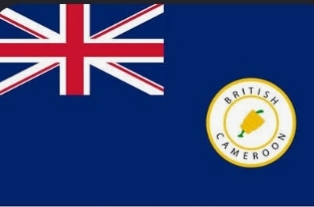
The Commonwealth retained the government in Yaoundé while the constitutional identity of Southern Cameroons was progressively extinguished. It welcomed the flag but abandoned the people. It accepted the membership application but ignored the historical foundation upon which that membership rested. It celebrated Commonwealth unity while the English-speaking courts, schools, local institutions and political identity inherited from British administration were systematically weakened.
The result is a profound contradiction: the Commonwealth has offered international respectability to the very political order accused of suppressing the people who gave La République du Cameroun its strongest connection to the Commonwealth.
Britain Cannot Plead Amnesia
Britain did not merely pass through Southern Cameroons as a disinterested observer. It administered the territory. It shaped its institutions, legal culture, educational system and constitutional expectations. It participated in the process that led to the 1961 plebiscite and the subsequent political association with La République du Cameroun. Britain therefore cannot credibly pretend that the present conflict is an entirely foreign domestic dispute with no historical connection to London.
The central question is not whether Britain must return as a colonial authority. It must not. The question is whether Britain has a responsibility to help address the consequences of a decolonization process it supervised. That responsibility is political, diplomatic and moral.
Where are the enforceable safeguards that protected the status of Southern Cameroons? Where is the instrument establishing the freely negotiated and constitutionally secure union that was promised? By what lawful process was the federal arrangement abolished? When did the people of Southern Cameroons consent to the progressive destruction of their institutions and political identity? Britain may dislike these questions, but diplomatic discomfort does not erase historical responsibility.
Stability Became an Excuse for Silence
For decades, Britain and other Western governments treated the Biya regime as a source of stability. Longevity was mistaken for legitimacy, repression for order and silence for peace. But a state is not stable merely because one ruler remains in office. A government that depends upon secrecy, force and the concentration of authority around one individual is not stable. It is postponing instability. The unresolved Ambazonian conflict is evidence of that failure.
Villages have been destroyed, civilians displaced, schools disrupted, families divided and an entire generation exposed to violence and political uncertainty. Abuses have been attributed to both state forces and armed separatist groups. Yet the fundamental political question that produced the conflict remains unanswered. Who consented to the present arrangement? Britain’s policy has too often treated territorial continuity as sacred while treating the consent of the people as negotiable. That is not democratic principle. It is diplomatic convenience.
London Hid Behind Paris
Britain’s caution cannot be separated from France’s continuing influence in La République du Cameroun. Paris has treated the country as part of its strategic sphere, while London has largely deferred to the existing regional order. The old Entente Cordiale appears to have produced a convenient division of responsibility: France protects its political inheritance, and Britain avoids disturbing it.
But Southern Cameroons was not a French-administered territory. Britain cannot indefinitely subcontract its historical conscience to Paris. France may pursue its strategic interests. Britain, however, must answer for its own decisions. It cannot proclaim support for self-government in one part of the world while refusing to confront the consequences of its departure from a territory it administered. Silence is also a policy. In this case, it has helped preserve an arrangement that has produced neither consent nor peace.
A Commonwealth of Governments—or Peoples?
The Commonwealth must decide what it actually represents. Is it merely a diplomatic association that protects incumbent governments? Or is it a community bound by enforceable principles? If democracy matters, the political consent of Southern Cameroons must matter. If constitutional government matters, the destruction of the federal arrangement must matter. If human rights matter, civilian suffering and political repression must matter. If the rule of law matters, the legal foundation of the claimed union must be open to examination.
The Commonwealth cannot continue issuing declarations about democratic values while refusing to investigate one of the most troubling constitutional legacies within its own membership. Its failure is not simply institutional. It is moral. Every year of avoidance further reduces its principles to ceremonial language delivered at summits and forgotten when they conflict with geopolitical convenience.
The Intelligence Capitals Are Watching
The uncertainty surrounding Etoudi is no longer a matter that can be contained within palace walls. Washington, Paris and London will be assessing the durability of the political order, the competing centers of power, the reliability of the chain of command and the risks surrounding an eventual succession. Intelligence agencies rarely announce what they know. Diplomatic silence should not be mistaken for ignorance.
Foreign governments will be examining who issues instructions, who controls the security apparatus, who commands the confidence of the military and who may attempt to inherit the state. They will also understand that unresolved conflicts become more dangerous when an aging personal regime approaches transition without trusted institutions.
The Ambazonian question will not disappear merely because foreign capitals prefer continuity. Any successor in Yaoundé will inherit the consequences of decades of failed policy. International recognition and financial support should not be offered as blank checks for continuing the same war under a different ruler. This is precisely when Britain should prepare to act—not through imperial command, but through principled diplomacy.
What Britain Should Do
Britain should call for an independent examination of the constitutional history and present status of the former British Southern Cameroons. It should support internationally mediated negotiations in which Southern Cameroons/Ambazonia is represented as a distinct party rather than reduced to a regional grievance within La République du Cameroun.
London should also use its influence within the Commonwealth, the United Nations and allied governments to demand civilian protection, humanitarian access, accountability for abuses and a political process grounded in consent. This would not require Britain to predetermine the final outcome. It would require Britain to stop pretending that no legitimate question exists.
Britain should open the historical record, confront its administrative decisions and help create a credible process through which the affected people can be heard. That is not colonial restoration. It is postcolonial responsibility.
Truly, the British Empire Is Gone
The disappearance of the British Empire is not the tragedy. Empires were never entitled to govern other peoples indefinitely. The tragedy is that Britain appears to have surrendered moral responsibility together with imperial control. It left behind borders but not durable consent. It departed with its flag but not with the consequences of its decisions. It now watches from a distance while the Commonwealth principles it celebrates are compromised by the political system it has accommodated. The old empire possessed reach without sufficient justice.
Modern Britain claims justice but repeatedly fails to demonstrate sufficient courage. Joseph Chamberlain’s generation imagined British power extending as far as the eye could see. Today, Britain seems unwilling to see beyond the immediate convenience of diplomatic silence.Truly, the British Empire is gone. What remains to be determined is whether Britain still possesses the moral courage to confront what it left behind.
Ali Dan Ismael, Editor-in-chief The Independentist News
Share This Post:
WHO GOVERNS FROM ETOUDI? Exiled Presidential-Security Officer Accuses Ferdinand Ngoh Ngoh of Exceeding His Authority as Questions Intensify Over Presidential Power
THE SHADOW EMPEROR OF ETOUDI: Exiled Intelligence Captain Accuses Ferdinand Ngoh Ngoh of High Treason and Exposes an Alleged “Palace Cartel” Running Cameroon
Related Post
THIS DAY IN HISTORY SEPTEMBER 22, 2017: THE DAY
A President Unseen, a Country Waiting: Yaoundé’s Succession Uncertainty
BEYOND THE FLAG: THE HARDER QUESTION OF BUILDING AMBAZONIA
EKONA UNDER FIRE: THREE CIVILIANS REPORTED KILLED AS RESIDENTS
The Government of the Federal Republic of Ambazonia (in
À PARAÎTRE EN DÉCEMBRE 2026: UN AUDIT DE L’ÉCONOMIE