










Africa does not need to prove that it has gifted footballers. That proof already exists from Cairo to Dakar, from Abidjan to Kinshasa, from Accra to Yaoundé, from Cape Verde to Casablanca. What Africa must now prove is that it can govern talent with discipline, invest in institutions with seriousness, and prepare for global victory with the same professionalism as the nations that have dominated the World Cup for generations.
By Ali Dan Ismael in Atlanta
A New Phase for African Football
The 2026 FIFA World Cup has already delivered one unmistakable message: African football has entered a new phase. For decades, African teams arrived at the World Cup carrying talent, passion, and hope, but too often left with heroic defeats and unfinished dreams. In 2026, that old story is changing. Africa is no longer merely participating. Africa is competing.
Morocco and the New Standard
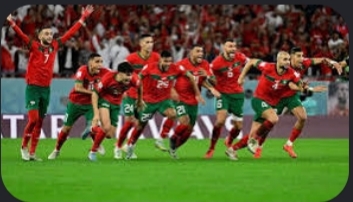
The evidence is visible on the field. Morocco has reached the quarterfinals after defeating Canada 3–0, becoming the first African nation to reach the World Cup quarterfinals twice. That achievement is not a small footnote. It places Morocco in a category of its own in African football history and confirms that its historic 2022 semifinal run was not an accident. It was the beginning of a new standard.
Narrow Defeats, Stronger Signals
Across the tournament, African teams have shown depth, courage, tactical maturity, and growing self-belief. Egypt remains alive with a Round of 16 match against Argentina. DR Congo pushed England before falling 2–1. Senegal lost narrowly to Belgium after extra time. Cape Verde stretched Argentina before losing 3–2 after extra time. Algeria, Ghana, Ivory Coast, and South Africa also carried the continent’s hopes into highly competitive matches. These were not appearances of inferiority. They were contests of narrow margins.
From Isolated Breakthroughs to Collective Strength
That matters because the history of African football at the World Cup has often been a history of isolated breakthroughs rather than sustained collective strength. Cameroon reached the quarterfinals in 1990. Senegal did the same in 2002. Ghana came painfully close to the semifinals in 2010. Morocco finally broke the continental ceiling in 2022 by becoming the first African and Arab nation to reach the World Cup semifinals.
But 2026 feels different. In earlier tournaments, Africa usually celebrated one team that exceeded expectations. In 2026, the continent has shown broader competitiveness. Multiple African teams advanced into the knockout rounds, and several others pushed elite opponents to the limit. That does not mean Africa has conquered world football, but it does mean the continent has moved from symbolic presence to structural relevance.
The Question Africa Must Now Answer
This is why Morocco’s current run is so important. Morocco is no longer simply representing itself. It is carrying the burden of African football’s next question: can Africa convert competitiveness into consistent semifinal and final appearances? The answer will not depend on emotion alone. It will depend on systems.
The world’s strongest football nations do not rely only on natural talent. They build academies. They invest in coaching. They strengthen domestic leagues. They professionalize youth development. They improve sports medicine, analytics, nutrition, psychology, facilities, and federation governance. They create football ecosystems, not merely football teams.
Skills or Governance?
This raises the central question: what is really preventing Africa from carrying the World Cup? Is it lack of skill or failure of governance?
The answer is clear. Africa does not lack football talent. Africa lacks the governance systems required to convert talent into global dominance. African players are already among the most gifted in the world. They play in Europe’s strongest leagues. They win trophies for elite clubs. They dominate physically, technically, and tactically when placed in well-organized professional environments. The problem is not the African player. The problem is the African football system that too often fails to support, prepare, protect, and organize that player at the national level.
For too long, African football has been weakened by administrative disorder, poor planning, political interference, unpaid bonuses, weak domestic leagues, underfunded youth academies, poor scouting systems, inconsistent coaching structures, and federations that sometimes behave as political clubs rather than professional institutions. These weaknesses do not show up only in boardrooms. They show up in the final minutes of knockout matches, in poor preparation camps, in preventable tactical confusion, in exhausted players, in missed penalties, and in narrow defeats that could have become historic victories.
Governance Is the Missing Multiplier
The issue, therefore, is not skills versus governance as though both are equal problems. Africa has skills in abundance. Governance is the missing multiplier. Good governance turns talent into teams. It turns teams into systems. It turns systems into winning cultures. Without governance, talent produces moments. With governance, talent produces championships.
That is the lesson Africa must take from 2026. Talent has never been Africa’s problem. Organization has. African players fill elite clubs across Europe and the Middle East. They compete at the highest level every week. Yet national teams often suffer from weak administration, poor preparation, internal disputes, inadequate facilities, late payments, political interference, and underdeveloped domestic football structures. When these weaknesses are corrected, African teams can compete with anyone.
Morocco Must Be Studied, Not Merely Celebrated
Morocco has shown what planning can achieve. Its progress is rooted not only in passion but in investment, diaspora integration, tactical discipline, elite player development, and a national football structure that understands modern competition. That is why Morocco’s success must be studied, not merely celebrated.
Football as a Mirror of National Development
The larger lesson extends beyond football. The World Cup is a mirror of national development. Countries that prepare well perform well. Countries that build institutions go further than countries that rely on improvisation. Countries that invest in people, systems, infrastructure, and long-term planning eventually turn potential into results.
Africa’s football journey therefore carries a wider message for the continent. No society rises by talent alone. Talent must be organized. Passion must be disciplined. Hope must be institutionalized. Whether in football, education, technology, infrastructure, industrialization, or governance, the same principle applies: the future belongs to prepared societies.
From Pride to Power
The 2026 World Cup has shown that Africa is closer than ever to the summit. But closeness is not enough. The next African football revolution must be built deliberately. It must include world-class youth academies, stronger domestic leagues, better coaching education, transparent federation management, sports science, data analytics, and serious investment in women’s and youth football. It must also include the African diaspora, whose players, coaches, investors, and technical experts can help transform national football ecosystems.
For now, Africa can be proud. Morocco has reached the quarterfinals again. Egypt still has a chance to deepen the story. Several African teams have departed with honor, having pushed traditional powers to the limit. But pride must not become complacency. The continent has had many inspiring World Cup moments. What it now needs is sustained World Cup power.
The Next Task
The old question was whether an African team could compete with the best. That question has been answered. The new question is whether Africa can build the systems required to win.
Africa does not need to prove that it has gifted footballers. That proof already exists from Cairo to Dakar, from Abidjan to Kinshasa, from Accra to Yaoundé, from Cape Verde to Casablanca. What Africa must now prove is that it can govern talent with discipline, invest in institutions with seriousness, and prepare for global victory with the same professionalism as the nations that have dominated the World Cup for generations.In 2026, Africa has shown that it belongs. The next task is to prove that it can lead.
Ali Dan Ismael Editor-in-chief The Independentist News



Leave feedback about this