








Editorial commentary

We are home to news on Cameroon and the CEMAC region. We are dedicated to honest and reliable reporting. We are the voice of the Cameroonian people and their fight for freedom and democracy at a time when the Yaoundé government is silencing dissent and suppressing democratic voices.

The Ambazonian conflict has evolved far beyond the framework through which many still attempt to interpret it. Until that reality is honestly confronted, the cycle of misunderstanding will continue — and with it, the instability consuming both Ambazonia and Cameroon itself. History has entered a new phase. And no amount of outdated terminology can reverse it.
By Ali Dan Ismael Editor-in-Chief, The Independentist
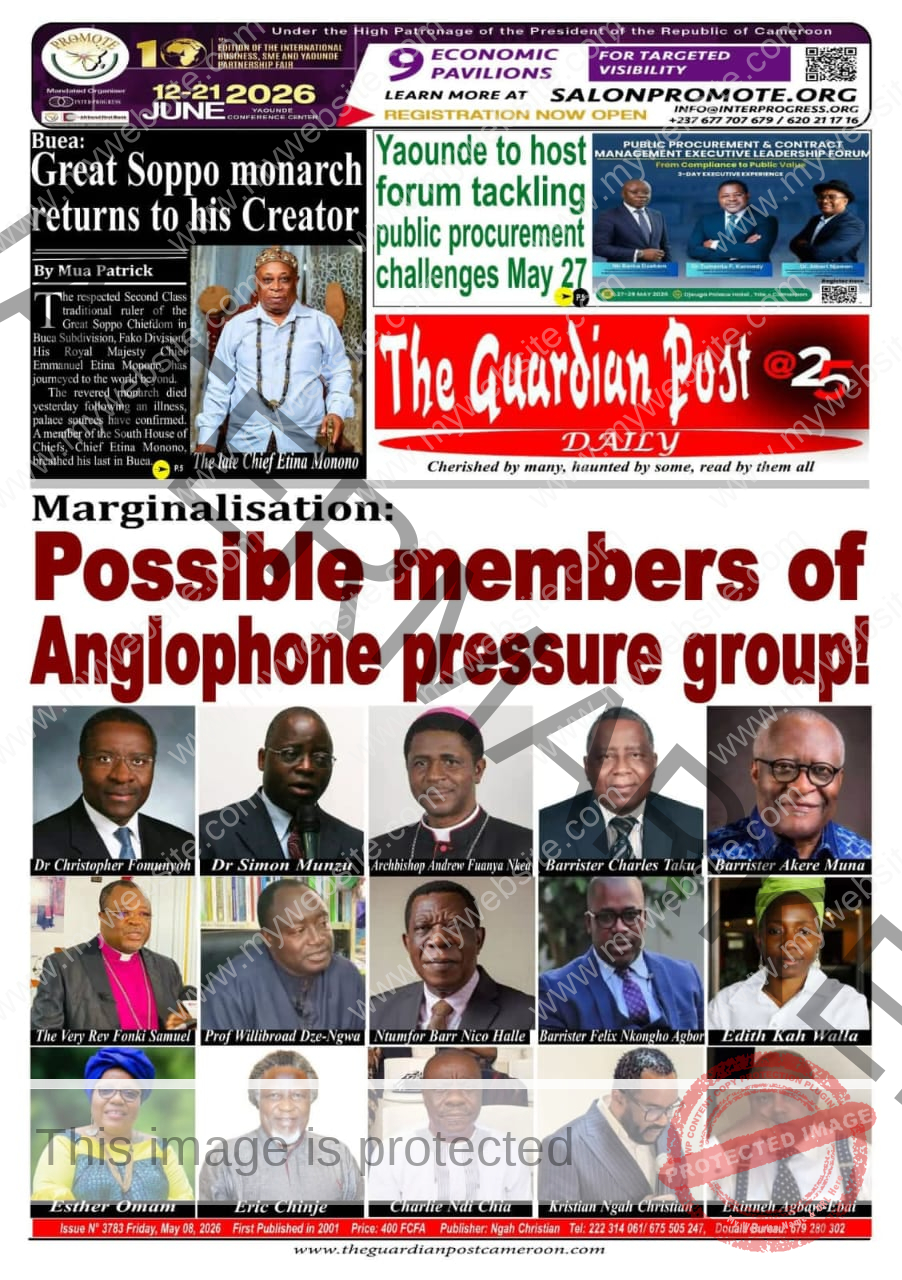
There are moments when a newspaper headline reveals more about the psychology of a political system than an entire government communiqué. The recent framing of prominent Southern Cameroonian figures as potential members of an “Anglophone pressure group” is one such moment.
After nearly a decade of war, mass displacement, village destruction, militarization, refugee flows, international legal debates, and the irreversible transformation of political consciousness in the former British Southern Cameroons, sections of the Cameroonian establishment still insist on interpreting the crisis through the outdated lens of “Anglophone marginalization.”This is not merely inaccurate. It is politically dangerous. Because one cannot solve a conflict one fundamentally refuses to understand.
The Core Misunderstanding
The greatest misunderstanding of the Ambazonian conflict is the belief that it is simply a civil rights movement inside Cameroon. It is not. That may once have been true decades ago, when lawyers, teachers, students, and civil society activists demanded reforms within the union framework. At that stage, many still believed coexistence inside a restructured Cameroon remained possible. But history moved. And history changed people.
The escalation of violence after 2016 transformed the psychology of the conflict permanently. What began as protests over legal systems, educational structures, and governance rapidly evolved into a broader political struggle centered on identity, sovereignty, historical legitimacy, and self-determination. That transformation is the part many elites in Yaoundé — and even some international observers — still fail to grasp. The conflict is no longer being interpreted by many Ambazonians as a question of “better treatment” within Cameroon. It is increasingly viewed as a question of political separation from Cameroon. That distinction changes everything.
From Citizens to a Separate Political Identity
One of the biggest analytical failures has been the continued use of the term “Anglophone problem.” The phrase sounds administrative. Technical. Manageable. It suggests a minority seeking accommodation inside an existing state structure.But many Ambazonians no longer see themselves through that framework at all. To them, the term “Anglophone” itself has become politically inadequate because it reduces a historical and territorial dispute into a linguistic complaint.
This is why proposals such as “Anglophone conferences,” “Anglophone pressure groups,” or “Anglophone dialogue platforms” increasingly generate resistance among hardline and even moderate Ambazonian circles. Those terms assume the conflict is domestic. Many Ambazonians no longer believe it is.
Instead, they interpret the crisis through the historical framework of the former British Southern Cameroons, the disputed union arrangements of 1961, and the argument that the territory possesses a distinct political identity separate from La République du Cameroun. Whether one agrees with that position or not is secondary.
The critical point is this: Millions of people now emotionally and politically believe it. And conflicts are shaped not only by legal arguments, but by collective political consciousness.
The Failure of Elite Recycling
Another major misunderstanding lies in the belief that elite conferences can simply “reset” the conflict. For years, the Cameroonian political class relied on controlled conferences, commissions, committees, constitutional promises, and elite negotiations to absorb political pressure. That model worked in earlier eras because the political system still possessed legitimacy among large segments of the population. But war changes societies. War decentralizes political authority. War radicalizes memory. War creates new identities.
Today, many young Ambazonians no longer derive political legitimacy from traditional elite structures, urban notables, or state-linked intermediaries. Their legitimacy is rooted instead in sacrifice, resistance narratives, refugee experiences, and the emotional trauma of the conflict itself. This is why many attempts at elite-led “dialogue frameworks” struggle to gain universal acceptance. The political center that once mediated tensions has fractured.
This does not mean every Southern Cameroonian supports independence, nor does it mean all advocates of dialogue are acting in bad faith. Many continue to believe that federalism, constitutional restructuring, or negotiated coexistence remain possible paths toward peace. But it does mean that any serious political initiative must recognize how profoundly the conflict has transformed public consciousness over the last decade. Ignoring that transformation does not reduce it. It deepens it.
The International Community Also Misread the Conflict
The misunderstanding is not confined to Yaoundé. Large parts of the international community initially interpreted the crisis as a temporary governance dispute that could be resolved through decentralization reforms, bilingualism initiatives, or administrative concessions. But the longer the conflict continued, the more political identities hardened. Every year of violence deepened separation psychologically. Children have now grown up entirely within the reality of conflict. Entire communities have reorganized socially, politically, and emotionally around competing national narratives. At that point, the conflict ceases to behave like a normal governance dispute. It becomes existential.
The Real Danger Ahead
The greatest danger now is not merely war fatigue. It is strategic miscalculation. If political actors continue treating the conflict as an “Anglophone management problem” rather than a deeply transformed sovereignty conflict, future peace initiatives may fail before they even begin. Because negotiations built on outdated assumptions rarely survive contact with political reality. You cannot negotiate successfully with a population whose political psychology has fundamentally changed while pretending that psychology never changed. You cannot continue speaking the language of administrative reform to people who increasingly speak the language of nationhood. And you cannot rebuild legitimacy through symbolic conferences alone while avoiding the deeper historical and political questions driving the conflict.
Beyond the Vocabulary of the Past
One of the clearest signs of political transition is the collapse of old language. For decades, the Cameroonian state framed tensions in the former British Southern Cameroons through carefully managed vocabulary: “integration,” “national unity,” “decentralization,” “bilingualism,” and “living together.” But political language only survives when populations continue believing in the political framework behind it.
Today, many Ambazonians no longer emotionally identify with those concepts in the same way previous generations once did. That shift is not merely rhetorical. It represents a deeper rupture in political imagination. A growing number of people no longer see themselves as marginalized stakeholders seeking reform within the state. They increasingly see themselves as a distinct political community seeking recognition outside the state. Whether that aspiration is ultimately achievable, negotiable, or internationally recognized is another debate entirely. But denying the transformation itself prevents serious engagement with reality.
The Hard Truth
The hard truth is that Cameroon is no longer dealing with the same political environment that existed before 2016. The old formulas are collapsing. The old vocabulary is losing power. The old assumptions no longer command universal belief. Whether one supports unity, federalism, decentralization, or independence, one fact is now unavoidable: The Ambazonian conflict has evolved far beyond the framework through which many still attempt to interpret it. Until that reality is honestly confronted, the cycle of misunderstanding will continue — and with it, the instability consuming both Ambazonia and Cameroon itself. History has entered a new phase. And no amount of outdated terminology can reverse it.
Ali Dan Ismael Editor-in-Chief, The Independentist News
Share This Post:
After Biya: The Peace Offensive, the Pope, and the Battle for Ambazonia’s Future
THE LACK OF FOUNDATION LEADS TO DRIFT: Why the Ambazonian Quest Must Be Rooted in Moral, Spiritual, and Strategic Consciousness
Related Post
IS THE WORLD LISTENING: THREE DAYS FOUR FRONTLINES, ASA
SEPTEMBER 24, 1965, THIS DAY IN HISTORY: From Equal
AMBAZONIA’S WAR- IS BIGGER THAN YAOUNDÉ: BRITAIN, FRANCE AND
THE DAY SEPTEMBER 22 1961: — WHAT AMBAZONIA CAN
TRUMP’S “SUPER INTELLIGENCE” ERA: WHAT IT REALLY MEANS —
Why Is Ambazonia More Powerful Than many Imagine.