








News commentary

We are home to news on Cameroon and the CEMAC region. We are dedicated to honest and reliable reporting. We are the voice of the Cameroonian people and their fight for freedom and democracy at a time when the Yaoundé government is silencing dissent and suppressing democratic voices.

Whether through ballots, dialogue, or international mediation, the coming months may prove decisive in shaping the next phase of this long and complex struggle.
By Timothy Enongene, Guest Editor-in-Chief, The Independentistnews
16 March 2026
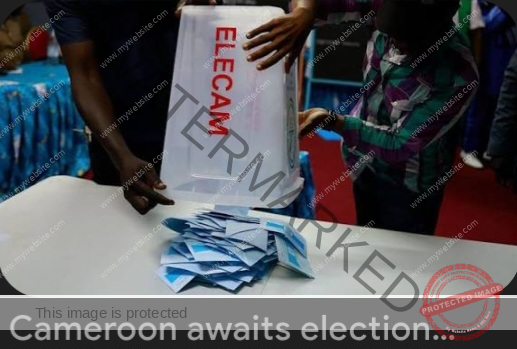
As the Republic of Cameroon prepares for its next electoral cycle, expected in August 2026, debate within Southern Cameroons communities—both at home and in the diaspora—has intensified. For a significant number of activists and citizens who identify with the Ambazonian cause, participation in elections organised by Yaoundé is viewed not as routine civic engagement but as a deeply political choice tied to questions of identity, sovereignty, and historical legitimacy.
To these voices, the issue is not merely about replacing one leader with another or negotiating for improved governance within existing constitutional arrangements. Rather, it is framed as a fundamental dispute over the status of the territory itself. Having proclaimed independence in 2017, many supporters of self-determination argue that taking part in national elections would symbolically undermine that declaration and blur the distinction between protest, negotiation, and acceptance of the current state structure.
Elections as a Symbolic Crossroads
The electoral process has therefore become a powerful symbol. For some, voting is seen as a pragmatic tool—an opportunity to influence policy, secure representation, or reduce tensions through democratic participation. For others, however, it is interpreted as legitimising a political framework they believe has failed to address longstanding grievances related to governance, language, legal traditions, and regional autonomy.
This divergence reflects broader internal debates within the Southern Cameroons movement about strategy. Should change be pursued through engagement with national institutions, or through sustained pressure aimed at achieving international recognition and a negotiated political settlement? The absence of consensus has often complicated advocacy efforts and contributed to fragmentation among political actors.
Memory, Sacrifice, and Political Legitimacy
Years of conflict have left profound emotional and social consequences. Displacement, economic disruption, and the loss of life have shaped how many communities perceive the stakes of political participation. For those who have endured village burnings, prolonged insecurity, or life in refugee settlements, electoral appeals from the central government can appear disconnected from their lived realities.
In this context, calls for an election boycott are frequently framed as acts of remembrance and solidarity—intended to honour those who have suffered and to maintain pressure for structural change. At the same time, critics of boycotts warn that disengagement may reduce the ability of Anglophone regions to influence national decisions, potentially deepening marginalisation.
Education, Awareness, and Civic Choice
Advocates on all sides emphasise the importance of political awareness and informed decision-making. Whether encouraging participation or abstention, community leaders stress that citizens must understand the historical and legal arguments underpinning their positions. Public education—through debates, forums, and media engagement—has thus become central to shaping the narrative around the 2026 polls.
Ultimately, the choice facing many residents and diaspora members is deeply personal and reflects broader questions about dignity, identity, and the future of governance in the region. While some foresee elections as a path toward gradual reform, others regard refusal to participate as a statement of principle and national aspiration.
Looking Ahead
As the electoral timetable approaches, tensions are likely to persist. What remains clear is that the question of participation extends beyond the mechanics of voting. It touches on unresolved constitutional issues, trust in institutions, and the search for a durable political settlement that can address both the aspirations of Southern Cameroons communities and the realities of state sovereignty.
Whether through ballots, dialogue, or international mediation, the coming months may prove decisive in shaping the next phase of this long and complex struggle.
Timothy Enongene, Guest Editor-in-Chief, The Independentistnews
Share This Post:
AUGUST 2026: ELECTIONS, LEGAL ARGUMENTS, AND THE UNRESOLVED STATUS DEBATE
An Ambazonian Patriot writes to the Independentistnews, addressing a message of Endurance to the people of Ambazonia
Related Post
IS THE WORLD LISTENING: THREE DAYS FOUR FRONTLINES, ASA
SEPTEMBER 24, 1965, THIS DAY IN HISTORY: From Equal
AMBAZONIA’S WAR- IS BIGGER THAN YAOUNDÉ: BRITAIN, FRANCE AND
THE DAY SEPTEMBER 22 1961: — WHAT AMBAZONIA CAN
TRUMP’S “SUPER INTELLIGENCE” ERA: WHAT IT REALLY MEANS —
Why Is Ambazonia More Powerful Than many Imagine.