










News commentary

We are home to news on Cameroon and the CEMAC region. We are dedicated to honest and reliable reporting. We are the voice of the Cameroonian people and their fight for freedom and democracy at a time when the Yaoundé government is silencing dissent and suppressing democratic voices.

The tragedy of Mbuyoke — pending the findings of any independent inquiry — underscores a central truth: military predominance cannot replace political settlement. Ashes do not build cohesion. A village reduced to rubble cannot serve as a foundation for national reconciliation.
By Timothy Enongene
Guest Editor-in-Chief, The Independentistnews
BOYO – February 26, 2026 – While official statements in Yaoundé continue to invoke the language of “national unity” and a “one and indivisible” Republic, events reported from Mbuyoke in Belo Subdivision present a far more unsettling reality.
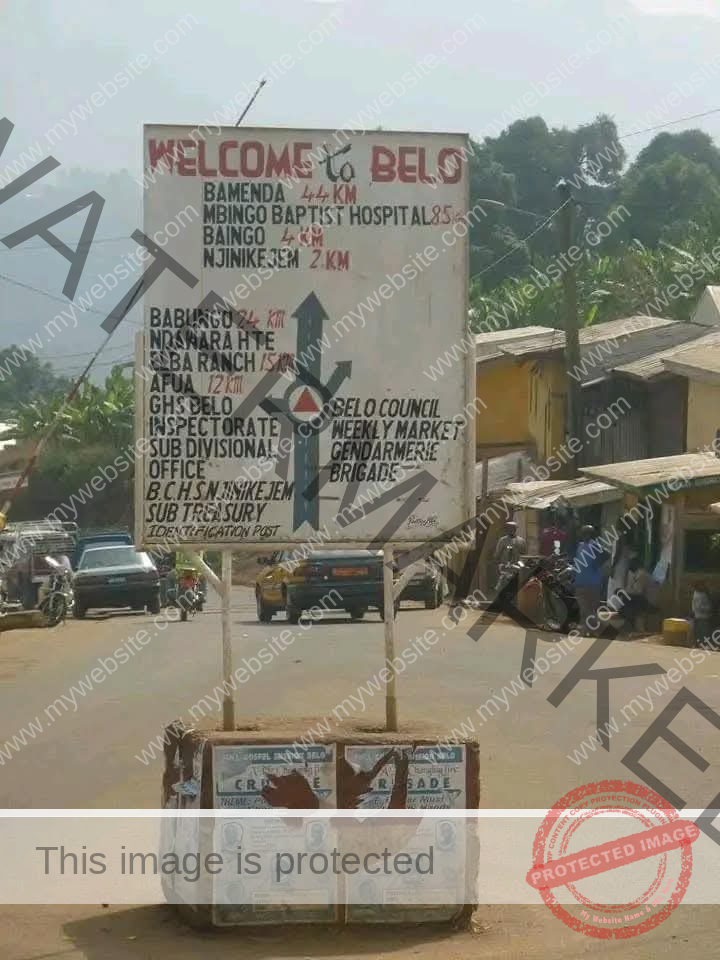
Located in Boyo Division within Cameroon’s North-West Region, Mbuyoke recently became the site of intense military operations. Local residents and civil society sources report that dozens of homes were burned during a dawn raid, displacing families and destroying livelihoods built over generations. Images and testimonies emerging from the area depict charred foundations where homes once stood and communities struggling to absorb yet another wave of devastation.
The Government of Cameroon maintains that its operations target armed separatist fighters. Yet residents and human rights advocates allege that civilians were caught in the violence and that the scale of destruction exceeded what would be necessary for a narrowly defined security objective. Calls for an independent and transparent investigation have, thus far, received little visible traction at the continental level.
If substantiated, the destruction of civilian homes as a counterinsurgency tactic would raise serious concerns under international humanitarian law. The Geneva Conventions prohibit the targeting of civilians and the destruction of property not justified by imperative military necessity. Even in non-international armed conflicts, the principles of distinction and proportionality remain binding. These are not optional standards; they are foundational rules of armed conflict.
Beyond the legal dimension lies a deeper political question. The doctrine of a “one and indivisible” state rests on the assumption of shared political consent. Unity proclaimed through official rhetoric cannot endure where trust has eroded. A state may assert territorial integrity as a matter of law, but durable unity requires legitimacy in the lived experience of its citizens.
The conflict in the North-West and South-West has now entered its second decade. Communities have endured repeated displacement, school closures, economic contraction, and psychological trauma. Whether one advocates federal reform, meaningful decentralization, or outright independence, there is broad recognition that the present trajectory has produced chronic instability rather than resolution.
Albert Einstein once cautioned that the world becomes dangerous not only because of those who commit wrongdoing, but because of those who fail to respond. In the African context, that observation carries institutional weight. The African Union’s Constitutive Act affirms both respect for sovereignty and the principle of non-indifference in the face of grave circumstances. Where credible allegations of mass civilian harm persist, prolonged silence risks being interpreted as tacit acceptance.
The tragedy of Mbuyoke — pending the findings of any independent inquiry — underscores a central truth: military predominance cannot replace political settlement. Ashes do not build cohesion. A village reduced to rubble cannot serve as a foundation for national reconciliation.
Cameroon’s future, and the credibility of continental institutions, will depend not on the repetition of constitutional slogans, but on accountability, inclusive dialogue, and a peace anchored in justice.
History rarely remembers official communiqués. It remembers whether institutions acted — or hesitated — when lives were most vulnerable.
Timothy Enongene
Guest Editor-in-Chief, The Independentistnews
Share This Post:
The Mbuyoke Mandate: When Reform Fails and a People Begin to Ask Hard Questions
Articles 4(h) and 4(p) of the AU Constitutive Act: Sovereignty, Non-Indifference, and the Legal Duties of the African Union
Related Post
IS THE WORLD LISTENING: THREE DAYS FOUR FRONTLINES, ASA
SEPTEMBER 24, 1965, THIS DAY IN HISTORY: From Equal
AMBAZONIA’S WAR- IS BIGGER THAN YAOUNDÉ: BRITAIN, FRANCE AND
THE DAY SEPTEMBER 22 1961: — WHAT AMBAZONIA CAN
TRUMP’S “SUPER INTELLIGENCE” ERA: WHAT IT REALLY MEANS —
Why Is Ambazonia More Powerful Than many Imagine.