


They may endure for a time through fear, but they do not survive the moment when the illusion collapses under its own weight. That moment is no longer theoretical. It is already visible — in Yaoundé’s paralysis, and in Southern Cameroons’ refusal to be ruled by a state that no longer exists as a governing power.
By Ali Dan Ismael
Editor-in-Chief, The Independentistnews
There is a growing consensus, even within Cameroon’s own elite circles, that power in Yaoundé no longer governs — it performs. What remains of the state is sustained not by authority, vision, or consent, but by rumor, theatre, and administrative improvisation.
Recent commentary from within Yaoundé itself describes a regime reduced to scripted leaks, staged “reshuffles,” and palace gossip involving spouses and courtiers — not because such details matter, but because politics itself has disappeared. When a state can no longer explain who decides, how decisions are made, or where authority resides, it fills the vacuum with spectacle.
One admission captures the moment with unsettling clarity: There is no longer any visible presidential arbitration, no central vision, no embodied authority. The system runs on autopilot, captured by administrative clans governing in the name of an absent figure. This is not opposition rhetoric. It is an internal diagnosis of state failure.
Paul Biya is no longer presented as a governing actor, but as a pretext — a signature without presence, an image masking succession struggles and private interests. In plain terms, Cameroon’s authority has hollowed out at the center. Yet this same hollow state insists on ruling Southern Cameroons. That contradiction is no longer sustainable.
Collapse at the center, coercion at the periphery
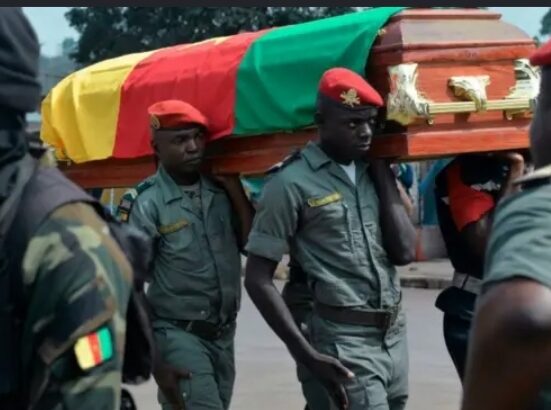
While Yaoundé simulates governance, Southern Cameroons experiences something else entirely: military occupation. There is no meaningful civilian authority on the ground. Towns and villages are managed through troop deployments, curfews, raids, and fear. Administrative officials exist, but without real power, budgetary autonomy, or legitimacy. Courts barely function. Schools are destroyed or closed. Hospitals operate intermittently, if at all.
Hundreds of thousands of Ambazonians are internally displaced. Tens of thousands live as refugees beyond the territory. Entire communities have been emptied, burned, or fragmented. This is not governance. It is control by force. The irony is now impossible to ignore: a state that admits it no longer governs itself claims the right to govern others at gunpoint.
The myth of decentralisation and reform
Supporters of “reform from within” continue to argue that Cameroon can be fixed through decentralisation, elections, or elite reshuffles. But the Yaoundé diagnosis itself exposes this as illusion. You cannot decentralise power that no longer exists. You cannot reform institutions that function only as façades. You cannot negotiate federalism with a regime that governs by rumor and survives by inertia. What Cameroon today calls governance is, increasingly, simulation.
The legitimacy question can no longer be postponed
For years, Ambazonians were told to wait: wait for dialogue, wait for reform, wait for the next reshuffle, wait for a transition that never comes. But legitimacy is not infinite. It rests on three foundations: effective authority, protection of the population, and consent of the governed. By its own internal admission, Yaoundé no longer meets the first. By its conduct in Southern Cameroons, it violates the second. By the lived reality of occupation, it has forfeited the third.
The conclusion Cameroon refuses to confront
If the Cameroonian state can no longer govern itself, it has no legitimacy to govern others. What remains is not national unity, but administrative fiction enforced by violence. Not sovereignty, but substitution. Not law, but command.
History is unforgiving to regimes that replace authority with illusion. They may endure for a time through fear, but they do not survive the moment when the illusion collapses under its own weight. That moment is no longer theoretical. It is already visible — in Yaoundé’s paralysis, and in Southern Cameroons’ refusal to be ruled by a state that no longer exists as a governing power.
Ali Dan Ismael
Editor-in-Chief, The Independentistnews