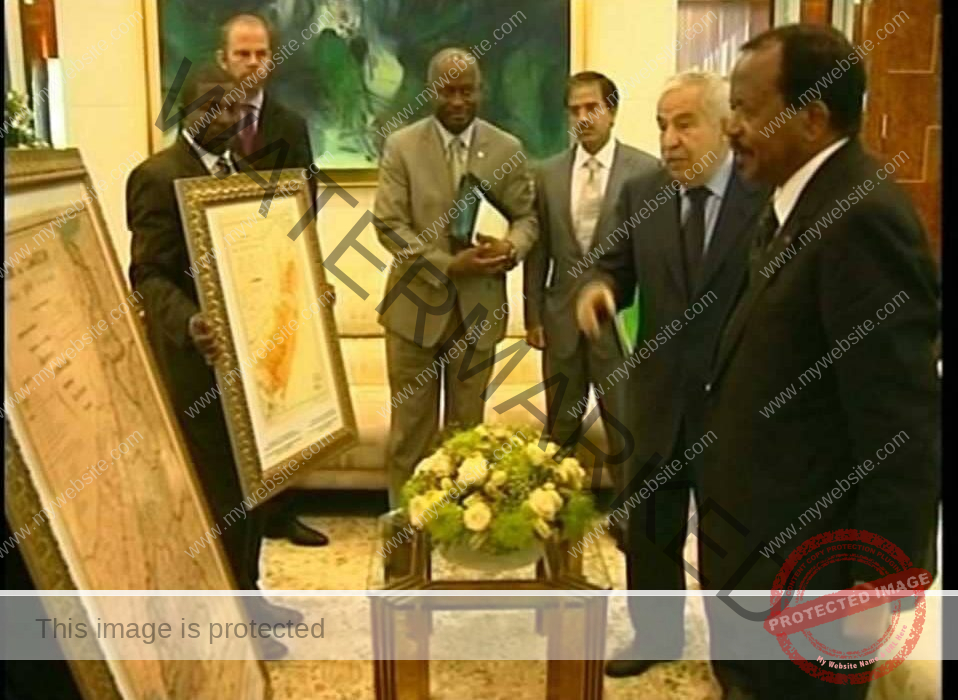


A union established without consent or compatibility left a structural fault line. Rather than the harmony once promised, tensions have deepened over time, leading to recurring instability and conflict.
By Ali Dan Ismael editor in chief and Kemi Ashu
Independentist Contributor— Legal-Historical Commentary
For more than sixty years, the people of the former British Southern Cameroons have argued that their union with La République du Cameroun was never established on a lawful foundation. This position is grounded not in emotion, but in international law and historical documentation. Prominent voices such as the late Cardinal Christian Tumi, the late Pa Mola Njoh Litumbe, and King Sokoudjou of Bamendjou have publicly affirmed this position. The evidence available supports what they stated.
The Documented Legal Background
UN Trusteeship System and Resolution 1608 (XV)
British Southern Cameroons was administered separately as a United Nations Trust Territory. In April 1961, the United Nations General Assembly adopted Resolution 1608 (XV), which recognized the plebiscite results and called for a formal agreement involving: The Government of Southern Cameroons, The Government of La République du Cameroun and The United Kingdom (administering authority)
The United Nations
This agreement, or Treaty of Union, was required to legally establish a single sovereign state. No such treaty was ever signed or registered with the UN Secretariat as required under Article 102 of the UN Charter.
African Union Principle of Borders at Independence
The Constitutive Act of the African Union, Article 4(b), requires member states to respect borders existing at the date of their independence, a principle known as uti possidetis juris. La République du Cameroun gained independence on 1 January 1960, without Southern Cameroons as part of its territory. Under AU law, sovereignty cannot be extended into another territory without a valid treaty.
Why This Matters Today
Attempts to resolve the crisis through internal reforms such as decentralization, federalism, or a “special status” have not addressed the core issue:
the underlying dispute is not a domestic governance problem but an unresolved international question of sovereignty. The legal process required to form a union was not completed. Therefore, the political arrangement that followed remains without international legal validation.
A Human Struggle as Well as a Legal One
The consequences of this legal gap have shaped identity, governance, and daily life for generations. People living in Southern Cameroons have experienced continuous strain due to the absence of a clear and lawful political framework reflecting their history and rights. Ambazonians are not asking for a new status. They are seeking recognition of the status that should have been respected from the beginning.
Historical Consequences: A Question for Reflection
Some historians have asked whether the rushed and unresolved political arrangement effectively became a “poisoned gift” to post-independence French Cameroun. Southern Cameroons inherited: Common law traditions, Democratic local governance, Political pluralism, A distinct civic identity, A protected international status under the UN system
This made integration into a French-inspired centralized system difficult from the outset. A union established without consent or compatibility left a structural fault line. Rather than the harmony once promised, tensions have deepened over time, leading to recurring instability and conflict. This question does not assign blame. It highlights the long-term consequences of ignoring legal and cultural realities in the search for political expediency.
A Peaceful Way Forward
A durable solution cannot be created through force, unilateral reforms, or denial of the historical record. A just and lasting settlement requires: Clear acknowledgment of the legal facts, Protection of civilians and their rights, Genuine dialogue under impartial international supervision, A peaceful and democratic process enabling the people to freely determine their future.The international community has a role in ensuring that the mistakes of the past are not repeated and that the people affected are given the fairness and clarity they have waited decades to receive. Only through respect for law and human dignity can peace be achieved for all parties.
Ali Dan Ismael/Kemi Ashu