

France now speaks of listening, humility, partnership and reciprocity. Its representatives engage youth groups, entrepreneurs, artists, academics and technology leaders. They increasingly operate beyond the traditional Francophone sphere. Some are learning African languages. These changes should not be dismissed. Diplomacy evolves, and meaningful cultural engagement can create genuine understanding.
By Ali Dan Ismael, Editor-in-chief The Independentist News, On Assignment
A Quiet Appointment With Continental Consequences
On July 21, 2026, Africa Intelligence reported that Emmanuelle Blatmann, the serving director for Africa and the Indian Ocean at the French Ministry for Europe and Foreign Affairs, was preparing to leave Paris to become France’s ambassador to Senegal. One day later, the French government supplied the answer to the question raised by her departure.
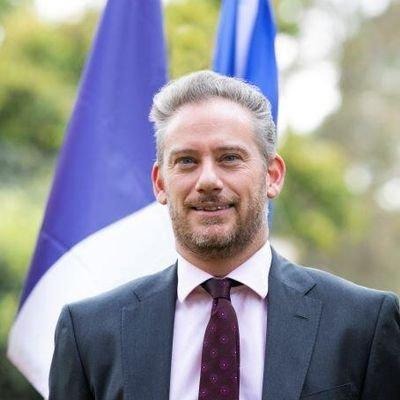
Arnaud Suquet, France’s ambassador to Kenya and Somalia, was officially appointed director for Africa and the Indian Ocean at the Quai d’Orsay. The appointment was approved by the French Council of Ministers on July 22, 2026, and is scheduled to take effect on September 15, 2026.
This is not an ordinary diplomatic transfer. The directorate Suquet will lead sits close to the centre of France’s political engagement with sub-Saharan Africa and the Indian Ocean. It receives information from embassies, evaluates political transitions, interprets conflicts, develops policy recommendations and helps determine which African governments, movements and personalities Paris considers credible, useful, dangerous or dispensable.
Suquet will not possess the almost private presidential authority once exercised by Jacques Foccart. Nevertheless, he is becoming one of the most consequential officials in the machinery through which France sees, interprets and attempts to influence Africa.
In institutional terms, he is France’s new Africa director. In political symbolism, he is emerging as the latest candidate for the uncomfortable designation generations have called “Monsieur Afrique.”
The Original Monsieur Afrique
“Monsieur Afrique” is not a formal French government title. It became associated with Jacques Foccart, the powerful presidential adviser who served as secretary-general for African and Malagasy affairs under Presidents Charles de Gaulle and Georges Pompidou from 1960 to 1974. French diplomatic archives confirm the central position he occupied in the presidency’s African machinery.
Foccart was more than an adviser who read diplomatic cables. He cultivated direct relationships with African presidents, intelligence officers, military commanders, political intermediaries and commercial networks. His influence helped sustain the post-independence system later described as Françafrique—a structure in which formal African sovereignty frequently coexisted with French military protection, commercial privilege, intelligence cooperation, monetary influence and personal relationships with ruling elites.
The original Monsieur Afrique was the human junction connecting the Élysée Palace to African presidential palaces. He represented an era when a telephone call, a private meeting or an understanding between political insiders could influence the direction of an African state.
That system no longer operates in precisely the same form. African populations are younger, more connected and increasingly resistant to inherited hierarchies. Social media has weakened diplomatic secrecy. Governments can now seek partnerships with China, Russia, Türkiye, India, Brazil, the Gulf states and the United States. French military influence has suffered major reversals across the Sahel.
But the weakening of the old machinery does not mean that France has abandoned its interests. It means Paris must search for new methods, new language and a new kind of operator. Arnaud Suquet appears to represent that adaptation.
Who Is Arnaud Suquet?
Suquet is a modern French state administrator whose career combines diplomacy, European institutions, corporate public affairs and extensive experience across Africa. He studied at the Institute of Political Studies in Aix-en-Provence and earned an advanced degree in international relations from Paris 1 Panthéon-Sorbonne. He began his diplomatic career in 2004, later serving at the French embassy in Sudan, at France’s permanent representation to the European Union and as an adviser to the European Union’s representative for the Horn of Africa. He subsequently worked at the French embassy in Ethiopia.
Between 2017 and 2019, he joined the public-affairs directorate of TotalEnergies. He later returned to the French foreign-policy establishment, serving as deputy director for Southern Africa and the Indian Ocean and then as Africa adviser in the foreign minister’s cabinet. In 2022, he became France’s ambassador to Kenya and Somalia.
This career is significant because it places Suquet at the intersection of several dimensions of French power: government diplomacy, European policy, energy interests, corporate networks, security relationships and multilateral institutions.
The new Monsieur Afrique is therefore unlikely to resemble the solitary presidential operator of the Foccart era. He is more likely to function as the coordinator of a distributed system in which embassies, corporations, development institutions, cultural organisations, universities, defence establishments and international agencies reinforce one another.
The instruments are more numerous. The language is more polished. The presentation is more cooperative. But the protection of national interests remains the organising purpose of diplomacy.
The Diplomat Who Learned to Speak Differently
Suquet’s years in Kenya reveal the diplomatic personality France is now elevating. He became known for speaking Kiswahili and for experimenting with Sheng, Kenya’s rapidly evolving urban language associated especially with young people. Kenyan reporting portrayed him as a diplomat who made a serious effort to engage the country through its language, humour and popular culture rather than remaining enclosed within official receptions and Francophone diplomatic circles.
At first sight, this appears to be a simple gesture of respect. A foreign diplomat learns the language of the country in which he serves. He greets citizens, understands cultural references and reduces the distance between the embassy and the population.
But language is never merely decorative in diplomacy. A diplomat who depends entirely on interpreters usually hears the official message. A diplomat who understands the language may also hear the jokes, grievances, rumours, coded warnings, social tensions and private ambitions circulating beneath the formal statement.
Language provides entry into the emotional interior of a society. It helps an outsider understand not only what people say, but how they say it, what they omit and what meanings are hidden in proverbs, humour, hesitation and silence.
Suquet’s Kiswahili therefore represents more than charm. It represents proximity, cultural access and political intelligence.
The French Are Learning From the British
The French now appear to be learning from the British imperial and post-imperial playbook: speak the local language, enter the cultural world of the people, earn their confidence—and gain access to information that remains unavailable to the outsider standing at the gate.
The British historically understood that language could serve several purposes simultaneously. It could facilitate administration, train local personnel, strengthen education, support commerce, cultivate elites and provide access to the internal conversations of a society.
In direct terms, the logic was simple: speak the local language and you may eventually gain access not only to the marketplace and the classroom, but also to the private conversations of political and social elites—and sometimes to their most carefully guarded secrets.
This should not be interpreted to mean that every linguist, teacher or diplomat is an intelligence operative. Nor does learning an African language automatically constitute manipulation. Language study can reflect genuine respect and intellectual curiosity.
But states rarely invest systematically in language knowledge without understanding its strategic value. The British did not confine this approach to their diplomats. They embedded it in education, curriculum development, examinations, universities, missionary institutions and professional certification.
From Yoruba to Urdu: Education as Strategic Access The British educational and examination ecosystem long ago recognised that lasting influence required more than teaching colonial populations to speak English. It also required studying, standardising, examining and certifying the languages spoken by the populations themselves.
Through different British institutions and examining bodies—including Cambridge International, London-based examination systems, Pearson Edexcel and OCR—languages extending symbolically from Yoruba to Urdu entered curricula, certification structures and formal assessment.
Cambridge International continues to offer Urdu at IGCSE, O Level and advanced levels. Pearson Edexcel also provides a regulated GCSE qualification in Urdu. OCR historically offered nationally recognised language qualifications in Yoruba at several proficiency levels.
This was not simply an act of cultural generosity. Once an institution develops a syllabus in a language, it must study its grammar, literature, vocabulary, oral traditions, regional variations and cultural references. It must recruit teachers, translators, examiners and curriculum specialists. It must decide what constitutes proficiency and which texts become authoritative. The examination board does more than certify the student. It acquires organised knowledge about the student’s linguistic and cultural world.
Over time, the educational relationship produces networks. The student who receives a Cambridge, London, Edexcel or other British-linked qualification may later become a civil servant, judge, teacher, professor, journalist, military officer, business executive or government minister. Britain may no longer administer that person’s country, but British institutions may have participated in the formation of his professional vocabulary, academic standards and understanding of institutional legitimacy.
Education therefore becomes a form of long-duration diplomacy. The flag may depart while the syllabus remains. The governor may leave while the examination certificate continues to carry prestige. The colonial officer may disappear while the university, professional body, legal tradition and alumni network continue shaping the future elite.
This is one reason British influence often survives without the loud ideological insistence historically associated with French assimilation. Britain learned to exercise power not only by asking others to enter the English-speaking world, but also by entering their linguistic and institutional environments.
France is now observing that advantage. Do Not Be Surprised When the French Speak Lamnso Do not be surprised if the once linguistically purist French diplomatic establishment eventually produces officials capable of speaking Lamnso. One day, a French diplomat may arrive in Bui not merely with an interpreter, a Francophonie programme and a prepared speech in French, but with greetings, proverbs and carefully rehearsed expressions in Lamnso.
Others may study Pidgin English, Duala, Ewondo, Fulfulde, Kenyang, Mungaka or local languages spoken across Southern Cameroons/Ambazonia and La République du Cameroun. This would not necessarily mean that France had abandoned the promotion of French. It would mean Paris had realised that linguistic rigidity had become a strategic disadvantage.
The old expectation was that the African interlocutor must enter the French linguistic universe. The emerging approach is more flexible: France will enter the African linguistic universe while continuing to protect its economic, diplomatic and security interests.
The new representative may speak the language of the royal palace, the university campus, the market woman, the youth movement and the village gathering. He may understand the grievance before it becomes a public protest. He may identify the ambitious young politician before that individual appears on the national stage. He may hear divisions within a movement long before they become visible to outside observers. The new Monsieur Afrique may therefore be more culturally accessible than his predecessors while being strategically better informed. That is the paradox.
Hospitality Is Not a Security Policy. Africans are naturally generous toward foreigners who demonstrate respect for their languages and cultures. A European diplomat who speaks Kiswahili, Yoruba, Lamnso or Pidgin English may be welcomed with admiration. People may interpret linguistic effort as evidence of friendship and solidarity. But linguistic familiarity does not erase national interest.
A French diplomat who speaks an African language remains a representative of the French state. His professional responsibility is not to liberate Africa but to understand Africa well enough to advance France’s objectives within it. Hospitality should therefore not become political carelessness.
Cultural intimacy should not provide unrestricted access to government deliberations, internal political disputes, national-security planning, commercial negotiations or the strategic vulnerabilities of African institutions. A foreign diplomat may be a friend. He may be sincere. He may admire the country in which he serves. But his reports ultimately travel home.
African states must learn the same lesson. They should train diplomats who speak French, English, Mandarin, Arabic, Portuguese, Russian and other strategic languages. They should understand the political cultures of the countries with which they negotiate. They should study foreign institutions as carefully as foreign governments study Africa. Diplomatic knowledge must flow in both directions.
Kenya as France’s New Laboratory
Kenya became an important testing ground for France’s effort to reinvent its African presence. For decades, French influence was concentrated in former French colonies across West and Central Africa. But as resistance to France intensified in parts of the Sahel, Paris increasingly invested in relationships with Anglophone states, especially Kenya, Ghana, Nigeria and South Africa.
The Africa Forward Summit held in Nairobi in May 2026 was presented as a new model of Africa–France engagement centred on investment, innovation, energy, infrastructure, culture, youth and private-sector partnerships. Organisers described it as a transition from the traditional donor-recipient relationship toward one based on parity and shared implementation. It was also promoted as the first Africa–France summit of its kind held in Anglophone Africa.
Suquet stood near the centre of that experiment. Before leaving Kenya, he had become associated with French investment, creative industries, university cooperation, youth engagement, energy partnerships and cultural diplomacy. The Kenyan government had identified him as a principal French representative involved in preparations for the summit.
This mixture is revealing. France’s revised African strategy is not purely military or purely commercial. It combines defence relationships, corporate investment, climate diplomacy, higher education, cultural exchange, technology, media engagement and language. Suquet’s promotion suggests that Paris may want elements of the Kenyan experiment applied more broadly across the continent.
A Softer Voice for Hard Interests
The new French method may sound softer, but the interests being protected remain substantial. The old Françafrique relied heavily on military bases, presidential friendships, intelligence relationships and privileged access to strategic industries. The emerging model is more dispersed. It works through development finance, infrastructure, renewable energy, telecommunications, cultural industries, educational partnerships, digital technology, climate programmes, private investment and security cooperation.
The modern Africa director must therefore understand more than coups, elections and presidential succession. He must understand financial institutions, corporations, social media, youth culture, climate negotiations, regional organisations, energy projects and changing public opinion.
Suquet’s career appears almost designed for that environment. He has worked in Sudan, Ethiopia and Kenya; engaged the Horn of Africa through French and European institutions; participated in the diplomatic machinery of Paris; and passed through the public-affairs structure of TotalEnergies. He is not merely a specialist in Africa. He is a specialist in the networks through which contemporary state power operates.
Can One Person Still Be Monsieur Afrique? France’s African policy is no longer controlled by a single official. Authority is distributed among the Élysée Palace, the foreign ministry, the defence establishment, intelligence services, the Treasury, the French Development Agency, ambassadors, European institutions and major corporations.
Suquet will not command the personal machinery once associated with Foccart. He will operate inside a bureaucracy and under the political direction of France’s elected leadership. Nevertheless, the director of Africa and the Indian Ocean occupies a strategically important position. The directorate helps determine how developments are interpreted before they reach the highest levels of government.
Which African opposition movements are considered serious? Which governments are described as stable? Which conflicts are treated as political questions and which are reduced to security problems? Which voices are invited to Paris, and which remain outside the diplomatic door? The language used in internal analysis can shape policy long before a minister makes a public statement. That is why the appointment matters.
The Central African Test
Suquet assumes his responsibilities at a time of profound uncertainty across Central Africa. Several governments face questions involving succession, institutional legitimacy, economic frustration and generational change. France must decide whether it will continue investing primarily in familiar ruling establishments or develop relationships with emerging political, economic and civil-society forces.
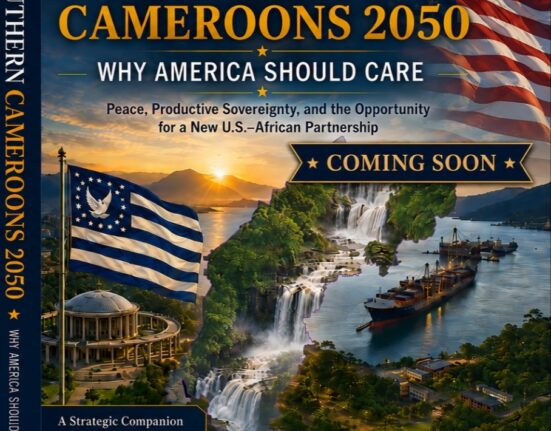
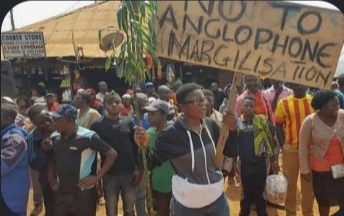
La République du Cameroun presents a particularly difficult test. Its ageing political order, unresolved succession question and continuing conflict in the former British Southern Cameroons cannot be managed indefinitely through diplomatic silence and military containment.
The central question is whether Suquet’s directorate will continue interpreting the Southern Cameroons conflict almost entirely through Yaoundé’s language of territorial integrity and counterterrorism, or whether it will seriously examine its constitutional, historical and political foundations.
Southern Cameroons was not administered as a French colony. Its Common Law tradition, English-language educational system and political institutions developed separately from those of La République du Cameroun. Any French analysis that treats the territory merely as a rebellious section of a historically French political space begins from a serious misunderstanding.
Suquet’s experience in East Africa may provide him with a wider perspective than officials whose professional formation occurred almost entirely inside the traditional Francophone sphere. He has worked in countries that do not automatically regard Paris as their political or cultural centre. Whether that experience produces a more open approach toward Southern Cameroons/Ambazonia remains uncertain.
Questions for the New Monsieur Afrique
Ambazonians should not be satisfied merely because the new French Africa director speaks African languages or presents himself as a modern partner. The real questions are political. Will France examine the dismantling of the 1961 federal constitutional arrangement? Will it distinguish the legitimate search for a political settlement from criminal violence? Will it acknowledge the weakening of the Common Law and English-language educational systems? Will it support credible international mediation rather than negotiations controlled by one party to the conflict? Will Paris recognise that military containment cannot manufacture constitutional legitimacy? These questions should be placed before Suquet through disciplined diplomacy, historical documentation and a coherent political roadmap.
France is unlikely to change policy merely because Ambazonians appeal to morality. States change direction when they conclude that an existing policy no longer protects their interests, credibility or long-term regional influence. The strategic argument must therefore demonstrate that a negotiated and durable political settlement is more beneficial to regional stability than unconditional dependence upon an ageing system in Yaoundé.
Françafrique in African Clothing?
France now speaks of listening, humility, partnership and reciprocity. Its representatives engage youth groups, entrepreneurs, artists, academics and technology leaders. They increasingly operate beyond the traditional Francophone sphere. Some are learning African languages. These changes should not be dismissed. Diplomacy evolves, and meaningful cultural engagement can create genuine understanding.
But Africa must judge the transformation by outcomes, not pronunciation. Speaking Kiswahili does not by itself end Françafrique. Greeting a community in Lamnso does not guarantee respect for its political rights. Including Yoruba or Urdu in an examination system does not automatically make the underlying relationship equal. The danger is that the old system may survive by acquiring a new vocabulary and an African accent.
Yesterday’s Monsieur Afrique arrived with secret presidential networks, military agreements and privileged corporate concessions. Tomorrow’s may arrive speaking the local language, discussing innovation, funding cultural projects and cultivating young leaders on social media. The appearance changes. The strategic question remains: Who benefits most from the relationship?
A Man to Watch, Not a Myth to Fear
Arnaud Suquet should neither be demonised nor romanticised. His career demonstrates substantial diplomatic experience, institutional knowledge and cultural adaptability. His willingness to learn Kiswahili suggests curiosity and respect. His work in Anglophone East Africa may provide perspectives not always present within France’s traditional African establishment.
But he remains a servant of the French state. His mission is to advance French interests in a continent where France no longer enjoys uncontested influence. Africa’s answer cannot simply be suspicion. It must be strategic competence. African governments must produce diplomats who understand foreign languages, institutions, economies and political cultures. They must cultivate their own intelligence capabilities, global commercial networks, research institutions and negotiating expertise.
A foreign diplomat becomes disproportionately powerful when African institutions are divided, unprepared or intellectually dependent. The answer to Monsieur Afrique is not isolation from France. It is the emergence of African statesmen and women who understand France—and every other foreign power—at least as deeply as those powers understand Africa.
The New Face of an Old Contest
Arnaud Suquet is scheduled to become France’s director for Africa and the Indian Ocean on September 15, 2026. He inherits a continent more assertive, competitive and suspicious of external control than the Africa Jacques Foccart once managed through presidential networks.
His appointment represents both French adaptation and French anxiety. Paris understands that the old order is fading. It is searching for a language, personality and strategy capable of preserving influence without appearing to demand obedience.
This time, the diplomat may speak Kiswahili. Tomorrow, he may speak Lamnso. He may study local proverbs, enter African classrooms, engage traditional authorities and understand political conversations that his predecessors could access only through intermediaries.
Africa should welcome the respect implied by learning its languages. But it must also recognise the strategy. The most important question is no longer simply: Who is Monsieur Afrique? It is: Why should Africa reveal all its secrets to a foreign Monsieur Afrique without first producing its own men and women capable of reading Paris just as clearly as Paris is learning to read Africa?
Ali Dan Ismael, Editor-in-chief The Independentist News, On Assignment