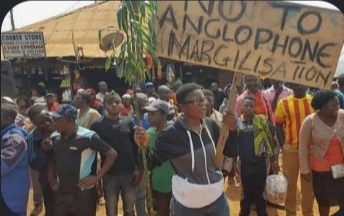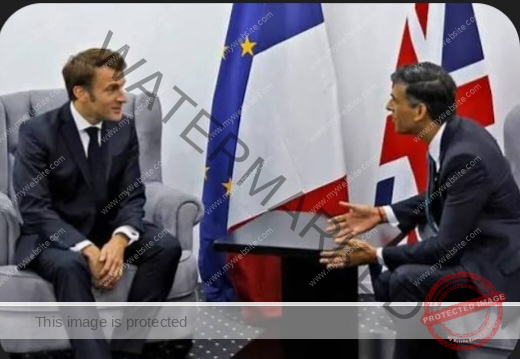


The old empires no longer need to rule every territory directly. They can influence the people who regulate its resources, educate its elites, define its international legitimacy and negotiate its economic future. They can celebrate a people’s culture while ignoring its political voice. They can speak Pidgin in the marketplace, speak Lamnso at a cultural ceremony and speak only with Yaoundé when the doors close and the economic decisions begin.
By Ali Dan Ismael, Editor-in-chief The Independentist News
Part I examined the traditional machinery of imperial intelligence: the quiet recruitment of individuals through money, ideology, coercion, compromise and ego—the instruments commonly summarized by the acronym MICE. But foreign influence does not always arrive through a secret payment, coded message or intelligence officer operating from an embassy. Some of its most durable forms are entirely visible.
Influence may arrive as a scholarship offered to a stranded student, a prestigious university appointment, a research partnership, a diplomatic invitation, a consulting contract or access to an international professional network. It may deepen through residence, citizenship, marriage and family obligations. It may also present itself through cultural diplomacy: speaking the language of a people, wearing their traditional regalia and publicly celebrating their heritage while privately conducting political and economic business with those who dominate them.
These relationships are not automatically sinister. Scholarships educate. Universities create knowledge. International marriages unite people across borders. Cultural diplomacy can express genuine respect. The danger emerges when opportunity becomes dependency, gratitude becomes political obligation and cultural intimacy becomes a substitute for historical responsibility.
For Ambazonia, understanding this hidden architecture is essential. A people who recognize only crude forms of foreign control will remain vulnerable to its more sophisticated forms.
The Declining Mystique of MICE
Intelligence agencies have traditionally recruited human sources by exploiting four principal motivations: money, ideology, coercion or compromise, and ego. Money attracts those who can be purchased through cash, employment, contracts, travel, scholarships or commercial opportunities. Ideology attracts individuals who sincerely identify with another government, political system or strategic cause. Coercion or compromise exploits fear, criminal exposure, sexual vulnerability, family pressure or damaging personal information. Ego captures those who crave recognition, foreign access, influence or the belief that they are more important than their colleagues.
These instruments remain powerful because human nature has not fundamentally changed. Political movements are still vulnerable to financial desperation, ambition, ideological division, personal resentment and the hunger for international approval. What has changed is public awareness.
In earlier generations, a recruited political asset could operate for years because ordinary citizens had little understanding of how intelligence services identified, assessed and cultivated potential collaborators. Unexplained travel, sudden foreign appointments, unusual diplomatic access or dramatic changes in personal finances might generate rumors, but rarely produced systematic investigation.
Today, citizens can preserve recordings, track public statements, examine corporate registrations and circulate evidence across continents. Diaspora professionals can investigate court filings, lobbying disclosures, foundations, financial relationships and commercial networks that people on the Home Front may be unable to examine.
The classical instruments of recruitment have therefore lost part of their mystique. Ordinary people increasingly understand that a political figure can be captured through vanity as effectively as through money. They recognize that foreign influence may arrive disguised as a conference invitation, research grant, scholarship, consulting contract or offer of diplomatic recognition.
Exposure, however, does not create immunity. Knowing that a trap exists does not guarantee that ambitious, resentful or financially vulnerable people will avoid it. It merely makes concealment more difficult.
Influence Without Formal Recruitment
The public often imagines foreign influence as a simple transaction: an intelligence officer offers money, the target accepts it and thereafter follows instructions. Reality can be far more complicated. A person does not need to sign a secret agreement to begin protecting the interests of a foreign power. Long-term dependency may shape political judgment without any formal recruitment taking place. A student rescued from hardship may develop genuine gratitude toward the country that helped him. A researcher whose entire career depends upon one international network may become reluctant to challenge it. A civil servant whose status, travel and professional recognition flow from foreign institutions may gradually begin to confuse the interests of those institutions with the interests of his own country. This is influence through formation rather than command.
The foreign power does not always need to say, “Protect our interests.” It may be sufficient to educate, promote and surround future decision-makers with a professional culture in which those interests are presented as synonymous with stability, development and modernity. When these individuals later occupy ministries, universities, regulatory bodies, state corporations or political parties, they may defend the external system because it has become part of their own identity and advancement.The result may be almost indistinguishable from formal recruitment, even when no secret intelligence relationship can be proven.
France’s Patient Investment in Elite Formation
France has frequently employed a more patient and sophisticated method of influence than open coercion. Where force could provoke resistance, educational opportunity could cultivate gratitude, familiarity and long-term institutional loyalty. Students from Cameroon and other former French colonies sometimes found themselves stranded abroad when their governments failed to honor scholarship commitments or provide promised financial support. French institutions could intervene with scholarships, stipends, university placements, research grants and professional opportunities.
Such assistance was often genuinely transformative. It rescued students from hardship, expanded access to advanced education and helped produce professors, engineers, physicians, researchers and senior administrators. But it also possessed considerable strategic value.
France was not merely educating individuals. It was establishing enduring relationships with people likely to become influential within their countries. It was a transaction across the shop counter of existence: France provided rescue, education, access and professional advancement; some beneficiaries returned home with lasting intellectual, professional and emotional connections to France.
The distinction must be stated clearly. Receiving a French scholarship does not make someone an intelligence operative. Studying at a French university does not establish political disloyalty. Many beneficiaries served their communities honorably and made substantial contributions to education, science and development.
The concern is structural.
When one foreign power helps finance the formation of a country’s elite, supplies many of its professional networks and influences the institutions through which academic recognition and career advancement are granted, gratitude and dependence can gradually become instruments of political influence. From the University to the Ministry
The system becomes politically consequential when internationally trained professionals enter the senior civil service, public universities, state research institutions, regulatory bodies, public corporations or the ruling political establishment. A relationship that began with a scholarship can mature into a network connecting laboratories, ministries, corporations, political parties and foreign commercial interests.
This helps explain the durability of French influence in Cameroon. France does not always need to issue direct instructions. It can cultivate an administrative and professional class whose education, career opportunities, social networks and international access are intertwined with French institutions.
Some members of that class may naturally protect French commercial and diplomatic interests because they have learned to regard those interests as inseparable from stability, development and their personal advancement.
Cameroon’s endemic corruption magnifies this danger. Where elite networks operate without transparency, patronage becomes normalized, public institutions serve private relationships and foreign commercial interests become embedded within the political establishment. Corruption then ceases to be merely a collection of individual crimes. It becomes an operating system. The most durable protector of a foreign asset may not be a soldier standing outside it. It may be a grateful former student sitting inside the ministry that regulates it.
Professional Networks and the Renewal of Influence
Some successful researchers and professionals later join French or France-linked institutions and return periodically for conferences, laboratory work, academic collaboration and professional renewal. These activities may constitute entirely legitimate scientific exchange. International research is necessary, and no country can prosper through intellectual isolation. Without credible evidence, such visits must never be described as intelligence training or political recruitment.
Nevertheless, repeated institutional contact can preserve relationships and reinforce shared assumptions. It can provide France with continuing access to individuals occupying strategic professional or administrative positions. Academic prestige may then be converted into bureaucratic authority. Bureaucratic authority may become influence over public policy. Public policy may, in turn, protect foreign commercial, diplomatic or strategic interests.
The system does not require every participant to understand its entire architecture. Each person may believe that he is merely pursuing education, research or professional advancement. Yet the combined network can reproduce foreign influence across generations. This is one reason imperial relationships can survive the formal end of colonial rule. The colonial administrator departs, but the educational, financial and professional ecosystem remains.
When Professional Ties Become Family Ties
A more intimate form of dependency may develop through residence, marriage and family formation. Some French-trained Cameroonians who remained abroad for extended periods became deeply integrated into French society, including through relationships and marriages with French women.
Such marriages are often genuine personal choices based upon affection and shared lives. They must not automatically be interpreted as instruments of political control. French women in interracial marriages should not be portrayed collectively as state agents, and Cameroonian men who marry them must not be presumed compromised or politically disloyal. Nevertheless, marriage, children, residency and citizenship can create powerful ties that make permanent separation from France emotionally, legally and financially difficult.
The individual is no longer connected to France only through a university, employer or research institution. France has become intertwined with family, identity, residence and the future of his children. Once children are involved, the individual becomes subject to family law, including custody arrangements, parental obligations and child-support requirements. These are lawful protections and must not themselves be characterized as political threats.
But where a person occupies a sensitive political or professional position, fear of separation from children, financial exposure, immigration problems or damaging private disclosures may create vulnerability. That vulnerability does not prove exploitation. It simply establishes that personal obligations could become leverage if a hostile institution deliberately chose to exploit them. This is where coercion or compromise may enter the most private areas of human life.
A scholarship can produce gratitude. A prestigious appointment can create professional dependence. Residence can deepen social integration. Marriage and children can make withdrawal extraordinarily costly. What began as an opportunity for intellectual advancement may become a web of professional, emotional, financial and legal dependence. The danger does not lie in interracial marriage, multicultural families or international education. It lies in the deliberate exploitation of legitimate private relationships to influence public conduct.
Scholarships Without National Strategy
Ambazonia must not respond to these dangers by rejecting foreign education, scholarships or professional cooperation. Such a reaction would weaken the very nation it hopes to build. A future Ambazonian state will need researchers, engineers, doctors, professors, diplomats, economists and public administrators trained in the world’s leading institutions. Its citizens should study in France, Britain, the United States, Brazil, Germany, South Africa, India, Japan and elsewhere. But international education must be accompanied by national strategy.
Scholarship relationships should be transparent. Training opportunities should be diversified across countries and institutions. Public officials should disclose relevant financial and professional relationships. Individuals occupying sensitive offices should be subject to clear conflict-of-interest rules. Foreign-funded education should enlarge national capacity without purchasing national loyalty.
A scholarship must produce an independent thinker, not a permanent political client. A research partnership must transfer knowledge, not institutional dependence. International cooperation must strengthen Ambazonia’s ability to make sovereign decisions rather than create an elite whose advancement depends upon external approval. The question is not whether Ambazonians should learn from the world. They must. The question is whether the knowledge they acquire will serve the nation or whether the nation will ultimately serve the institutions that educated its leaders.
Britain’s Cultural Intimacy Without Political Responsibility
Britain appears to have discovered that displaying cultural attachment to Southern Cameroons is considerably cheaper than supporting its people’s quest for self-determination. British cultural engagement has helped elevate Cameroon Pidgin English from a language once dismissed as informal or inferior into a visible medium of diplomacy, public communication and cultural identity. Some British diplomats speak Pidgin with such fluency that listeners could easily assume they were raised locally. Others have demonstrated familiarity with Lamnso, one of the major indigenous languages of the Savannah Zone, participated in traditional ceremonies and appeared publicly in the regalia of Southern Cameroonian communities.
Such cultural competence can build trust and should not automatically be dismissed as insincere. Learning a people’s language demonstrates respect. Participation in local customs can strengthen genuine human relationships. But cultural familiarity becomes politically troubling when it substitutes for historical responsibility.
Britain may speak the language of the people, wear their traditional regalia and celebrate their cultural heritage, yet conduct its most consequential political, diplomatic and economic dealings through the corrupt Yaoundé establishment and Francophone leadership. The people whose Pidgin, Lamnso and traditions are publicly embraced remain largely excluded when decisions affecting their territory, resources, security and political future are made.
This produces a disturbing contradiction: cultural recognition without political protection; ceremonial intimacy without economic accountability; linguistic solidarity without meaningful support for self-determination. Britain embraces the identity of Southern Cameroons when culture is inexpensive, but retreats behind its relationship with Yaoundé when principle could carry diplomatic or commercial costs.
Culture as Political Containment
The deeper question is not whether individual British diplomats genuinely appreciate Southern Cameroonian culture. Many undoubtedly do. The question is whether cultural diplomacy has become a substitute for confronting Britain’s historical role in the political arrangements that left Southern Cameroons vulnerable.
Speaking fluent Pidgin cannot replace an honest reckoning with the consequences of British decolonization policy. Mastering Lamnso does not excuse excluding the affected people from economic and diplomatic decisions concerning their homeland. Wearing traditional clothing cannot discharge the obligations of a former administering power.
Cultural diplomacy can function as a subtle form of political containment when it creates the appearance of friendship without altering the underlying distribution of power. A population feels recognized because its language is spoken and its customs are honored. Its people are photographed beside foreign diplomats wearing traditional regalia. Yet the decisive negotiations continue elsewhere—with the same Yaoundé elite whose centralization, corruption and Francophone domination helped produce the present conflict. The culture is celebrated while the political peoplehood behind that culture is denied.
Britain must therefore decide whether it wishes merely to understand the people of Southern Cameroons or to take their political existence seriously. Genuine friendship requires more than cultural performance. It requires honest acknowledgment of Britain’s historical responsibilities, direct engagement with credible Southern Cameroonian representatives, transparency concerning economic relationships affecting the territory and meaningful support for a lawful process through which the people can determine their political future.
A former administering power cannot satisfy its moral obligations by becoming culturally fluent while remaining politically absent. Britain may speak like the people, dress like the people and celebrate with the people. But until it listens seriously to their political demand and confronts the consequences of its historical decisions, cultural intimacy will remain an inadequate substitute for responsibility.
France and Britain: Different Methods, Similar Results
France and Britain employ different forms of influence. France’s power has often operated through education, elite formation, professional networks and the deep institutional architecture of the Francophone state. Britain’s relationship with Southern Cameroons frequently appears more culturally intimate but politically detached.
France cultivates influence inside the structures governing Cameroon. Britain demonstrates familiarity with the culture of Southern Cameroons while preserving its diplomatic and economic relationship with Yaoundé. The methods differ, but the result can be similar.
Southern Cameroons is acknowledged symbolically while its political agency is denied materially. One power helps shape the elite administering the state. The other speaks the language of the people subordinated within that state but hesitates to confront the political consequences of their subordination.France offers institutional access. Britain offers cultural recognition. Yaoundé retains the power.
For Ambazonia, this is the essential warning: foreign friendship must be evaluated by outcomes, not ceremonies. A diplomat’s fluency, a university’s generosity or a government’s expression of concern should never be confused with recognition of national rights. Language matters. Education matters. Cultural respect matters. But none of them can substitute for sovereignty, representation and political agency.
The Ambazonian Standard for Foreign Partnership
Ambazonia should neither reject the world nor approach it innocently. A future national policy should welcome scholarships, professional exchanges, research collaboration, cultural diplomacy, investment and international partnerships. But those relationships must be governed by transparency, reciprocity and national purpose.
Foreign educational partnerships should transfer knowledge and strengthen Ambazonian institutions. Diplomatic relationships should recognize credible Ambazonian representation rather than treating Yaoundé as the exclusive voice of the territory. Economic agreements affecting Ambazonian land, resources and communities should not be negotiated without the participation of the affected people.
Public officials should disclose relevant foreign funding, employment, gifts, consulting relationships and institutional affiliations. Strategic positions should not be occupied by individuals whose undisclosed dependencies create conflicts between private obligations and public duty.
These safeguards must never become excuses for persecution. A foreign degree is not evidence of betrayal. A multicultural family is not a security offense. Fluency in French or English does not determine national loyalty. International professional success should be valued, not feared. The test must always be conduct, disclosure and credible evidence.
Ambazonia needs citizens who understand foreign systems without becoming intellectually captive to them; diplomats who cultivate international friendships without surrendering national objectives; and professionals who bring knowledge home without importing permanent dependency. The nation must be open to the world while remaining anchored in itself. The Architecture Must Be Seen Before It Can Be Resisted
Foreign influence is most effective when it appears indistinguishable from ordinary opportunity. A scholarship may be generous and strategically valuable at the same time. A research relationship may produce real knowledge while also extending institutional influence. A marriage may be entirely genuine while creating private vulnerabilities that could theoretically be exploited. A diplomat may sincerely love the culture of a people while representing a government unwilling to support their political aspirations. Political maturity requires the ability to hold these truths together.
The purpose of counterintelligence is not to turn every relationship into a conspiracy. It is to recognize where dependency, undisclosed obligations and unequal power can influence national decisions. Ambazonia must avoid two equally dangerous errors. The first is innocence—the belief that foreign powers offer education, money, access and cultural recognition without strategic interests. The second is paranoia—the belief that every scholarship recipient, foreign spouse, researcher or diplomat is an intelligence agent.
Innocence leaves the nation open to capture. Paranoia destroys the talent and international relationships the nation needs to survive. The correct response is institutional discipline: transparency, diversified partnerships, conflict-of-interest rules, independent decision-making and a political culture in which national duty is stronger than personal gratitude.
The old empires no longer need to rule every territory directly. They can influence the people who regulate its resources, educate its elites, define its international legitimacy and negotiate its economic future. They can celebrate a people’s culture while ignoring its political voice. They can speak Pidgin in the marketplace, speak Lamnso at a cultural ceremony and speak only with Yaoundé when the doors close and the economic decisions begin.
Ambazonia must learn to distinguish recognition from representation, opportunity from dependency and friendship from strategic interest. That awareness is not hostility toward the world. It is the beginning of sovereignty.
Ali Dan Ismael, Editor-in-chief The Independentist News