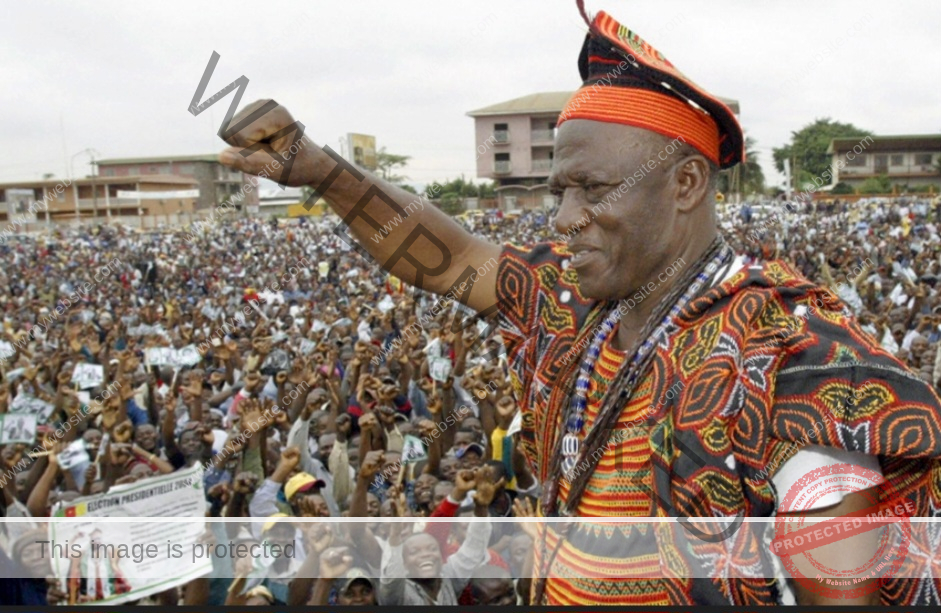


Decades later, Ni John Fru Ndi emerged as another towering charismatic figure. He electrified crowds, challenged authoritarianism, and became the symbol of opposition politics. Millions invested emotional hope in his leadership.Yet charisma without transformation is failure.
By the Independentist Political Desk
History is remarkably consistent on one point: leadership driven primarily by charisma — whether in religion or politics — is ultimately doomed when it is not anchored in ideology, institutions, and safeguards. Charisma can mobilize people, awaken pride, and galvanize resistance. But when emotional attachment replaces critical judgment, the result is often tragedy rather than transformation.This is not uniquely African. It is profoundly human.
The universal danger of charisma: a lesson from America
Even in the United States, a country with comparatively strong institutions, charisma has repeatedly produced cult-like movements with devastating outcomes. One of the most sobering examples is the Branch Davidian cult in Waco, Texas. David Koresh did not rise through ideas, accountability, or institutions. He rose through personal magnetism, religious certainty, and emotional domination. Followers surrendered independent judgment, believing loyalty to the man equaled loyalty to truth. The result was catastrophic: isolation, radicalization, and ultimately death.
The tragedy of the Branch Davidians reminds us of a universal rule: When loyalty to a personality overrides critical thinking, disaster becomes inevitable — regardless of culture, race, or geography. If a society with strong legal and institutional guardrails could not fully prevent such a collapse, emerging or fragile political systems face even greater danger when charisma is left unchecked. Charisma creates believers. Democracy requires citizens.
Africa’s painful lesson with symbolism
Africa has repeatedly paid the price for confusing inspiration with strategy. Leaders have been celebrated for who they appeared to be rather than for the systems they built. Pride surged, songs were sung, hopes were raised — yet institutions remained hollow.
The emotional attachment of many Africans to Barack Obama illustrates this danger. Obama’s rise was historic and psychologically powerful. A man of African descent reached the pinnacle of Western power. That mattered deeply for Black dignity worldwide. But Africa mistook representation for transformation.
Obama governed American interests, not African liberation. Trade regimes remained extractive, dependency persisted, and Libya’s collapse under NATO intervention destabilized the Sahel. Africa gained symbolism, not leverage; pride, not power. This is not a personal indictment of Obama. It is a warning about what happens when symbolism substitutes for strategy.
Our own history: Foncha and the tragedy of one false move
Ambazonia’s history offers an even more painful illustration. John Ngu Foncha rose at a moment of extraordinary promise. He did many things right — courageously leaving the Eastern House of Assembly in Enugu to return to Buea, asserting Southern Cameroons’ political distinctiveness, and articulating popular aspirations with resolve.
Yet history is unforgiving. One false move at Foumban, made without enforceable safeguards and institutional guarantees, plunged an entire people into what has become over seventy years of political subjugation. Charisma, goodwill, and personal trust proved powerless against calculated statecraft by others. Foncha was not malicious. He was human. But history does not grade intentions — it judges outcomes.
Fru Ndi: mass mobilization without transformation
Decades later, Ni John Fru Ndi emerged as another towering charismatic figure. He electrified crowds, challenged authoritarianism, and became the symbol of opposition politics. Millions invested emotional hope in his leadership.
Yet charisma without transformation follows a familiar arc. Mobilization became ritual. Strategy hardened into habit. The system he opposed outlived the movement that challenged it. In the end, his political journey closed not with institutional victory, but with a concrete tomb in his native Baforchu — a stark metaphor for a struggle that inspired millions but failed to dismantle the structure it confronted. Again, this is not a personal attack. Fru Ndi awakened a generation. But awakening is not liberation.
Balance matters: charisma is not evil — it is insufficient
Let us be clear and human. Charisma itself is not the enemy. Every major transformation in history involved leaders who could inspire courage and sacrifice. The danger arises when inspiration is not followed by ideology, when emotion suppresses scrutiny, and when loyalty to individuals outweighs loyalty to the nation. Charisma should open the door. Ideology must build the house.
The lesson for Ambazonia’s future
Ambazonia has paid too high a price to repeat this mistake. Patriotism tied to individuals dies with individuals. Patriotism anchored in institutions, policies, and accountable systems endures. This is why the future must be ideological: Clear economic and social policies grounded in reality. Institutions stronger than personalities, Leaders accountable to systems, not worshipped above them, Patriotism invested in the nation, not in names. The road ahead will be rough. That is unavoidable. This moment is a political bootcamp -uncomfortable, demanding, and necessary.
If Ambazonia learns from the Branch Davidians’ tragedy, from Foncha’s fatal miscalculation, from Fru Ndi’s unfulfilled promise, and from Africa’s infatuation with symbolism, it can emerge stronger, wiser, and more resilient. History is blunt: Nations are not saved by leaders they admire. They are saved by systems they protect.
The Independentist Political Desk