










Commentary

We are home to news on Cameroon and the CEMAC region. We are dedicated to honest and reliable reporting. We are the voice of the Cameroonian people and their fight for freedom and democracy at a time when the Yaoundé government is silencing dissent and suppressing democratic voices.

For Ambazonia, this episode is a reminder that facts, when patiently assembled, eventually speak louder than those who try to suppress them. And for Cameroon, it is a warning: a state that loses its voice abroad cannot expect to command legitimacy at home.
By The Independentistnews Political Desk
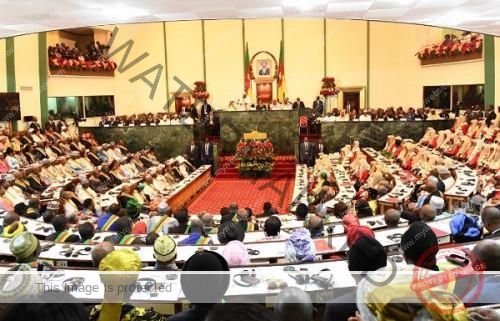
Recent reports circulating across Cameroonian and regional African media suggest that Cameroon has been suspended from exercising its right to speak at African Union (AU) meetings due to unpaid statutory contributions estimated at approximately 2 billion FCFA. While the sanction is described as procedural rather than political, its implications are anything but trivial.
If confirmed, this development marks a rare and telling moment: a founding member of the Organisation of African Unity (OAU)—once a central diplomatic actor in Central Africa—reduced to silence in Africa’s premier multilateral forum. This is not an expulsion. Cameroon reportedly remains a member of the AU. But in diplomacy, voice is power, and the temporary loss of that voice signals something deeper than a bookkeeping lapse.
The Facts, Without Spin
Under African Union financial rules, member states that fall more than six months in arrears on assessed contributions may face graduated sanctions, beginning with the loss of participatory rights, including the right to take the floor in meetings.
Multiple regional outlets report that Cameroon crossed this threshold. Yet, as of this writing, no official public communiqué from the African Union Commission has been widely circulated, and no formal statement has been issued by the Cameroonian government. This silence has left citizens, observers, and partners relying on leaks and media reports—an unacceptable situation for a state that claims seriousness and sovereignty.
A Procedural Sanction with Political Weight
Defenders of the regime will argue that this is merely a technical sanction. That Cameroon’s seat remains. That nothing fundamental has changed. This argument misunderstands how power works.
In international relations, perception is substance. A state that cannot meet its basic multilateral obligations, and cannot explain itself when questioned, hemorrhages credibility. A state that loses its voice—however temporarily—loses leverage, relevance, and authority and for a country that routinely insists on non-interference and “internal affairs,” the irony is stark.
Why This Matters to Ambazonia
For Ambazonia, this episode is not a curiosity. It is strategically relevant. Cameroon has long relied on African Union platforms to: Frame the Ambazonian conflict as an internal security issue, block or dilute international scrutiny, Silence calls for investigation, mediation, or protection. A Cameroon that is diplomatically weakened—or procedurally muted—cannot as easily control the narrative.
More importantly, this episode reinforces a central Ambazonian argument: The problem is not merely conflict; it is institutional failure. A state that struggles to pay dues, coordinate ministries, or communicate transparently with continental institutions is not a stable or credible administrator of a contested territory. This strengthens the case that the status quo is unsustainable, and that the crisis cannot be indefinitely buried under the label of “internal affairs.”
Not a Victory, but Evidence
This is not a moment for celebration. Ambazonia gains nothing from ridicule or triumphalism. What it gains is evidence—procedural, factual, and difficult to dismiss—that the occupying state is faltering at the very institutions it uses to marginalize Ambazonian voices.
Used responsibly, this moment can: Strengthen legal and diplomatic submissions, Support arguments for international re-framing of the conflict, Undermine the myth of a fully “functioning” Cameroonian state. History shows that peoples without formal recognition advance their cause not by noise, but by documentation, timing, and discipline.
A Final Word
If the reports are false, Cameroon should say so—clearly and immediately. If they are true, the arrears should be settled, and the public informed. Either way, silence is the worst response. States do not collapse the day they are sanctioned. They collapse the day institutional embarrassment becomes routine and unaccounted for.
For Ambazonia, this episode is a reminder that facts, when patiently assembled, eventually speak louder than those who try to suppress them. And for Cameroon, it is a warning: a state that loses its voice abroad cannot expect to command legitimacy at home.
The Independentistnews Political Desk
Share This Post:
Read and subscribe to The Independentistnews
Beating the Mortgage Trap: A Financial Awakening for the Middle Class
Related Post
The Delusion of Omnipotence at the Unity Palace
A Call for a Table of Truth: Why Military
The Path to Actualization: From Theory to Sovereignty
THE BLUEPRINT FOR OUR SOVEREIGNTY: BEYOND FONLON’S “WILL WE
CROCODILE TEARS AND BUSINESS JOURNALISM: THE GUARDIAN POST’S BETRAYAL
A Fervent reader of The Independentistnews Richard Kemiwo challenges