










Commentary

We are home to news on Cameroon and the CEMAC region. We are dedicated to honest and reliable reporting. We are the voice of the Cameroonian people and their fight for freedom and democracy at a time when the Yaoundé government is silencing dissent and suppressing democratic voices.

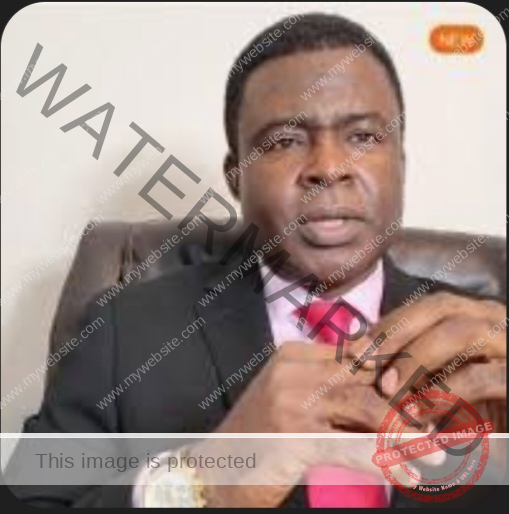
For many supporters of the independence cause, Dr. Samuel Ikome Sako represents a measure of continuity during a turbulent period in the movement’s history. Whether viewed as a unifying figure, a transitional leader, or one voice among several shaping the future of the struggle, his role in the unfolding narrative of Ambazonia is undeniable
By Timothy Enongene Guest editor The Independentistnews
BUEA – 8 March 2026 – For years, the struggle for the independence of the Federal Republic of Ambazonia has unfolded within a complex and often crowded leadership landscape. In the early phases of the conflict, several figures—including Ebenezer Akwanga, Ayaba Cho Lucas, and others—emerged as prominent voices in the movement. Many of them were frequently highlighted by the Yaoundé authorities as representatives of the resistance, sometimes in ways that appeared designed to shape external perceptions of the conflict.
Over time, however, the dynamics of leadership within the movement have shifted. Arrests, internal disagreements, exile politics, and the long duration of the conflict have altered the prominence of several early actors. Some leaders have faded from the forefront, while others have become associated with internal disputes that complicated the coherence of the independence movement.
Recognizing the current leadership landscape is not about declaring a personal victory for any individual. Rather, it reflects the reality that liberation movements often evolve through periods of fragmentation before consolidating around figures who are able to sustain political legitimacy and organizational continuity. In this evolving context, Dr. Samuel Ikome Sako has remained one of the most visible and enduring leaders associated with the Ambazonian cause.
The Challenges of the Early Leadership Era
The early years of the struggle were marked by a proliferation of movements, factions, and competing leadership claims. While many individuals contributed to raising international awareness about the plight of Southern Cameroons, internal disagreements sometimes weakened the movement’s ability to present a unified diplomatic and political strategy.
Recent legal developments have also shaped the conversation around leadership. Ayaba Cho Lucas, associated with the ADF, has faced legal proceedings in Europe connected to allegations arising from the conflict. Regardless of the eventual legal outcomes, such developments have inevitably influenced how different factions of the movement are perceived internationally.
For many observers within the Ambazonian community, these developments have reinforced an old lesson in liberation struggles: the credibility of a movement depends not only on its cause but also on the conduct, discipline, and unity of its leadership.
The Emergence of Dr. Samuel Ikome Sako
The turning point in the movement’s leadership came in January 2018 with the arrest and transfer of Sisiku Julius Ayuk Tabe and other leaders to Yaoundé. In the aftermath of those events, Dr. Samuel Ikome Sako assumed leadership responsibilities within the Interim Government structure.
Despite numerous internal disputes and attempts to challenge his authority over the years, Dr. Sako has remained a persistent figure within the political leadership of the movement. His tenure has been marked by several defining characteristics frequently cited by his supporters:
Lessons from History
History offers numerous examples showing that liberation movements tend to achieve diplomatic recognition and negotiation opportunities when they demonstrate coherent leadership structures.
In Ghana, Kwame Nkrumah’s Convention People’s Party presented a unified nationalist front that made it increasingly difficult for colonial authorities to dismiss the movement as fragmented dissent. In contrast, other struggles—such as the early Angolan independence movement—were weakened by prolonged internal divisions that allowed external actors to prolong the conflict.
International law and diplomatic practice often favor movements that are able to demonstrate representative legitimacy, institutional structure, and sustained political leadership. For many Ambazonians, the ability of the Government of the Federal Republic of Ambazonia to maintain continuity over the years has been an important factor in keeping the issue alive on the international stage.
The Question of Negotiation
After nearly a decade of conflict, many analysts believe that a durable resolution will eventually require dialogue between the authorities in Yaoundé and representatives recognized by the Ambazonian population.
From this perspective, Dr. Sako’s continued role as a leading political figure within the Ambazonian movement places him among the individuals who could potentially play a role in any future negotiations. Whether such negotiations occur, and under what framework, remains uncertain. Yet history suggests that conflicts of this nature rarely end without some form of structured political engagement.
A Movement Still in Formation
The Ambazonian struggle continues to evolve. The path toward peace, justice, and political resolution remains uncertain, and the sacrifices endured by civilians across the territory have been immense.
What is clear, however, is that the movement has entered a new phase—one defined less by the early turbulence of competing voices and more by the search for institutional credibility and political maturity.
For many supporters of the independence cause, Dr. Samuel Ikome Sako represents a measure of continuity during a turbulent period in the movement’s history. Whether viewed as a unifying figure, a transitional leader, or one voice among several shaping the future of the struggle, his role in the unfolding narrative of Ambazonia is undeniable.
The Road Ahead
The story of Ambazonia is still being written. Its outcome will depend not only on leaders but also on the resilience of its people, the evolution of international diplomacy, and the willingness of all parties to confront the realities of a conflict that has already lasted far too long.
If the past years have revealed anything, it is that the desire for dignity, recognition, and self-determination cannot be easily extinguished. The challenge now is to transform that determination into a coherent political path capable of leading the people of Southern Cameroons toward a peaceful and just future. God bless Ambazonia.
Timothy Enongene Guest editor The Independentistnews
Share This Post:
Beyond the Python’s Gullet: Why Ambazonians Reject Yaoundé’s Constitutional Reforms
When Elephants Clash: The Peril of African Silence in the US-Israel-Iran Crossfire
Related Post
The Debt Trap – Why Yaoundé is Borrowing to
The Blueprint for African Neutrality: Breaking the Proxy Cycle
FACT SHEET on the Ambazonian Sovereignty story
AMBAZONIA: A Proclaimed Sovereignty Backed by Law, History, and
The Only Chair at the Table: Why Dr. Samuel
Beyond the Python’s Gullet: Why Ambazonians Reject Yaoundé’s Constitutional