













When identity is reframed, representation is mediated, and participation is constrained, stability becomes a managed condition rather than a shared reality. Systems do not ultimately fail because they are opposed. They fail when the structure designed to control reality can no longer contain it.
By Ali Dan Ismael, Editor-in-Chief The Independentistnew
The Architecture of Continuity
Modern political systems do not endure by accident. They endure by design. The long rule of the Cameroon People’s Democratic Movement (CPDM), under Paul Biya, reflects a governing model that prioritizes continuity, predictability, and centralized authority over institutional uncertainty. This model is often framed through the doctrine of communal liberalism—a philosophy that, in principle, seeks to balance national unity with social diversity, but in practice has produced a system in which political stability is closely tied to the concentration of power at the center.
From Constitutional Union to Linguistic Framing
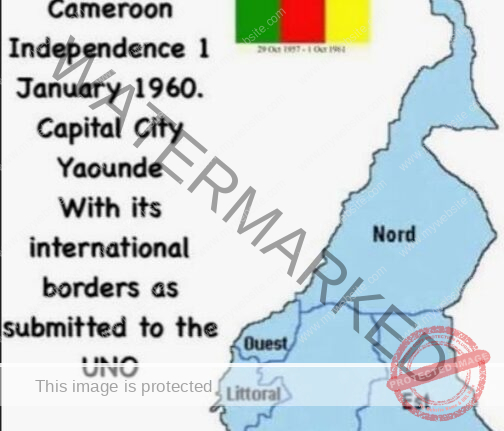
The 1961 federation between Southern Cameroons and La République du Cameroun was a constitutional arrangement between two political entities. Over time, however, this framework was reframed through the language of “anglophone” and “francophone” identity. This shift carried significant implications. It transformed a historically grounded political question into a broader cultural and linguistic issue—one that could be more easily integrated into a centralized national narrative. In this process, a political identity became a category, and a constitutional question became a matter of accommodation.
Communal Liberalism and Institutional Design
Cameroon has evolved along several consistent lines: centralized executive authority anchored in the presidency; extensive reliance on appointments in administrative and political roles; gradual and controlled decentralization; and the continuity of elite networks across political cycles. These features do not eliminate participation, but they shape it—ensuring that access to influence is mediated through alignment with central authority. Over successive constitutional changes, one principle has remained constant: power must not drift from the center.
An important component of this framework has been the state’s articulation of decentralization through official instruments and policy language. Among these, documents such as the glossary of decentralization have been presented as efforts to clarify and advance local governance. During key political moments—including dialogues framed as opportunities for reform—such materials were introduced as evidence of commitment to addressing long-standing grievances.
Critics, however, have argued that these initiatives often function more as narrative instruments than structural change, suggesting that the language of decentralization can, at times, mask the persistence of centralized control. The gap between policy articulation and implementation has therefore become a central point of contention, reinforcing perceptions that reform is promised rhetorically but constrained institutionally.
Representation and the Question of Legitimacy
Within this framework, debates about representation—particularly in the North West and South West regions—have persisted. Critics point to recurring patterns in administrative appointments and international representation that raise questions about how legitimacy is defined and who is authorized to speak for specific communities. Public figures such as Joshua Osih, Joseph Dion Ngute, and Felix Mbayu are often cited within these debates—not as isolated cases, but as illustrative of a broader concern: that representation may be increasingly shaped by institutional alignment rather than by historically rooted legitimacy. The issue, therefore, is not one of individual background, but of the structures through which authority is conferred and recognized.
Co-optation Alongside Substitution
Where questions of representation cannot be resolved through administrative alignment alone, critics argue that systems of centralized control often rely on co-optation—the incorporation of local actors into existing power structures. In the historical evolution of Southern Cameroons’ leadership, figures such as Solomon Tandeng Muna, who succeeded John Ngu Foncha, are frequently referenced in debates about how leadership transitions intersected with broader questions of autonomy and central authority. Long-serving figures such as Philemon Yang are also cited in discussions about elite continuity and the durability of political networks.
Additional figures are often referenced in public discourse to illustrate perceived patterns in representation across sectors such as media, academia, religion, public administration, and diplomatic service. Individuals such as Francis Wete, Peter Essoka, Julius Ngoh, Eric Chinje, Sylvestre Kwankam, Martin Ndumbe, Paul Tasong, Andrew Nkea, as well as figures associated with state and diplomatic networks such as Victor Mengot and Martin Mbeng, are cited by some commentators as examples in ongoing debates about how identity, language, and institutional roles intersect within the broader national framework.
These interpretations remain contested and should be understood as part of a wider debate rather than as definitive conclusions. Nonetheless, they highlight a recurring concern: that representation, identity, and access to influence may be shaped by structural alignment and institutional pathways as much as by historical or regional rootedness.
Information Control and the Role of the Press
No system of durable control operates without influence over information. Critics and media observers have long raised concerns about the extent to which segments of the local press function within constraints that limit editorial independence. Publications such as The Guardian Post and others are frequently cited in debates about media alignment, with allegations that sections of the press may reflect or reinforce official narratives.
At the same time, Cameroon has witnessed periods in which journalists have faced significant pressure, including harassment, detention, and, in some reported cases, fatal consequences. In such an environment, editorial choices are often shaped not only by professional judgment, but by broader institutional realities. These dynamics contribute to a media landscape in which narratives may be influenced by structural pressures, and where public discourse is shaped by both formal and informal constraints.
Managed Opposition and Constrained Political Space
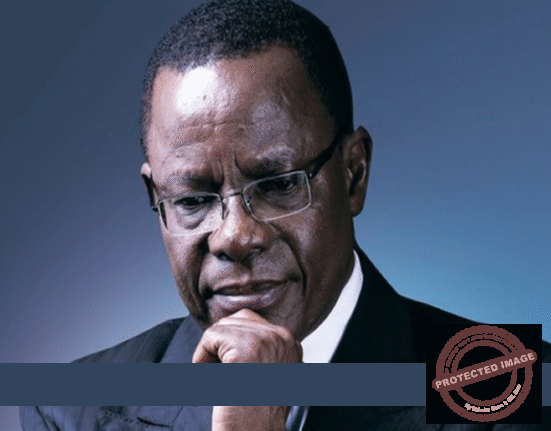
Political opposition exists in Cameroon, but within a highly structured environment. Figures such as Maurice Kamto operate in a context characterized by asymmetrical access to power, legal and administrative constraints, and a political landscape in which boundaries—though not always formally codified—are widely understood. This produces a form of managed pluralism, in which dissent is visible but often limited in its capacity to generate systemic transformation. Participation is permitted, but within limits that preserve the broader architecture of control.
The Durability—and Its Limits
The resilience of centralized systems often rests on their ability to manage three variables simultaneously: power concentration, identity framing, and political participation. The CPDM has demonstrated considerable success in stabilizing all three. Yet such systems also face an enduring challenge—the tension between control and legitimacy. Stability achieved through centralization can be sustained over time, but when questions of representation and identity remain unresolved, underlying pressures do not disappear. They accumulate.
Conclusion
The Cameroonian case illustrates a broader principle: systems built on continuity and centralized control can achieve remarkable durability. But durability is not the same as legitimacy.
When identity is reframed, representation is mediated, and participation is constrained, stability becomes a managed condition rather than a shared reality. Systems do not ultimately fail because they are opposed. They fail when the structure designed to control reality can no longer contain it.
Ali Dan Ismael, Editor-in-Chief The Independentistnew





Leave feedback about this