











The Tchiroma affair is not a peripheral issue. It is a major geopolitical fault line at the crossroads of regional identity, historical grievance, power politics, and transnational influence.
By Timothy Enongene The Independentist
Analysis of Issa Tchiroma’s Signaling
Garoua November 12th 2025 – Recent intelligence assessments indicate that Cameroonian political figure Issa Tchiroma is deliberately engaging with — or at minimum tacitly leaning on — influence networks tied to Northern Nigeria.
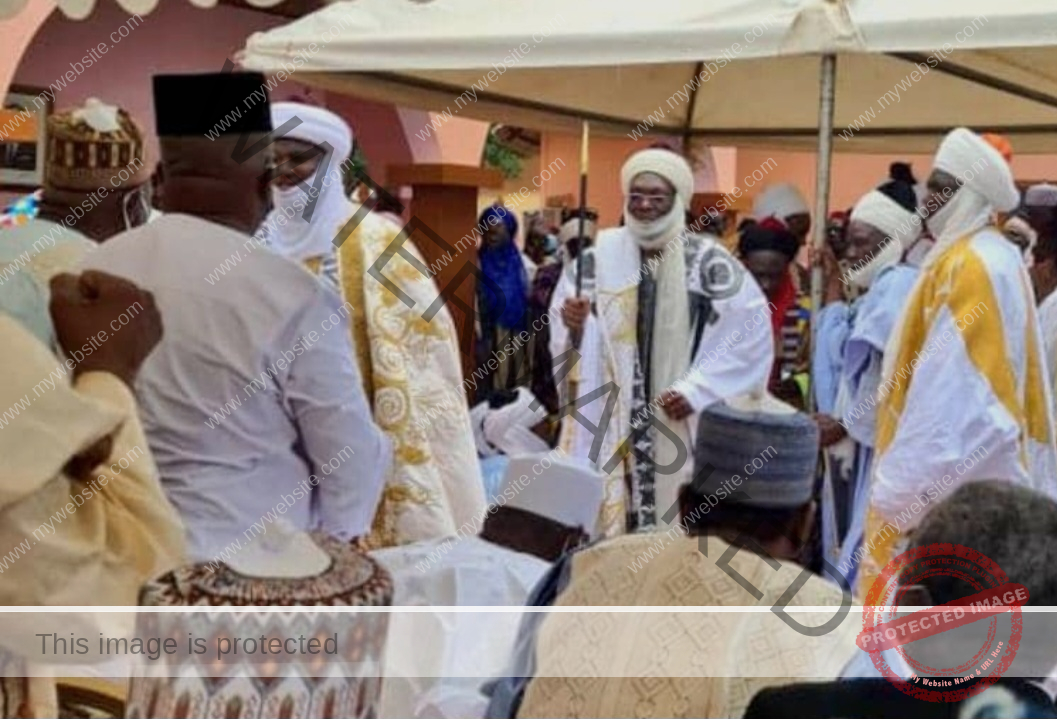
His recent public appearance wearing a traditional babariga adorned with the Arewa (Northern Knot) symbol is a culturally powerful statement. This emblem is deeply rooted in the identity and political heritage of Nigeria’s Hausa-Fulani power structure.
As a Fulani himself, Tchiroma’s choice of attire communicates solidarity, identity, and potentially political alliance. His visibly fatigued and unguarded demeanor suggests a man under pressure, operating within fast-moving political currents.
The silence from both Abuja and Yaoundé regarding his current status is equally revealing. Mutual restraint of this nature is typical when sensitive diplomatic backchannels are active and outcomes are still fluid.
A historical parallel exists: After the 1984 attempted coup in Cameroon, northern political figure Bouba Bello sought refuge in Kaduna, Nigeria, demonstrating the longstanding complexity of Cameroon’s northern political identities and their cross-border ties.
Nigeria–Cameroon Relations: A Concise and Nuanced Overview
The bilateral relationship between Nigeria and Cameroon, has always been pragmatic, tense, and shaped by deep history.The 1961 UN plebiscite, which aligned Northern Cameroons with Nigeria, created resentment within Cameroon’s ruling class, especially under President Ahidjo.
Tensions over the Bakassi Peninsula pushed the two countries to the brink of war in the 1980s and 1990s. The ICJ ruling (2002) and the Greentree Agreement (2006) resolved the dispute peacefully. In recent years, cooperation has been driven primarily by the shared security threat of Boko Haram, culminating in the Multinational Joint Task Force (MNJTF). The relationship has never been stable or sentimental — only strategic and transactional.
The Current Stalemate: Why Tchiroma Is Different Cameroon is almost certainly pursuing Tchiroma’s extradition, drawing from the precedent of the 2018 arrest and transfer of Sisiku Ayuk-Tabe and other Ambazonian leaders. But this case is far more complex.
The Tinubu administration does not hold unilateral influence over the key political actors who matter in this matter. During the 2023 Niger coup crisis, Nigeria’s Senate — heavily influenced by Northern political elites — blocked President Tinubu’s attempt to deploy troops. This revealed a fundamental truth: the Hausa-Fulani northern bloc is structurally autonomous within Nigeria’s federal system.
Tchiroma appears to have cultivated links within these networks. His situation is no longer merely administrative or legal — it is ethno-political and transnational. Any move against him will require consensus among Northern Nigerian circles whose priorities do not necessarily align with Cameroon’s interests — a consensus that may not be forthcoming.
The Strategic Implications for Cameroon (Realistic, Ominous, and Grounded in Fact) If mishandled, the Tchiroma affair poses significant long-term risks to Cameroon’s stability.
- Rising Northern Disaffection
If large segments of Cameroon’s northern population feel the 2025 Presidential Election was manipulated, resentment could strengthen. Cross-border ethnic and cultural links amplify the danger.
- A 1,500-Kilometer Border That Cannot Be Controlled
The Cameroon–Nigeria border — long, porous, and largely rural — becomes unmanageable if political grievances connect with cross-border sympathies.
Influence, materials, and informal support could move with ease.
- A State Under Multi-Directional Pressure
Cameroon is already confronting: the Anglophone conflict in the NW/SW, persistent insurgency in the Far North, and deepening economic pressures. A northern political crisis would stretch the state beyond its current capacity.
- Potential for a Slow-Burn Crisis
More likely than sudden collapse is a long-term erosion of authority. If Tchiroma keeps asserting his claim to the presidency — with even partial support from Northern Nigerian political structures — Yaoundé may be pulled into a destabilizing multi-year struggle.
Final Assessment
The Tchiroma affair is not a peripheral issue. It is a major geopolitical fault line at the crossroads of regional identity, historical grievance, power politics, and transnational influence.
Cameroon’s stability has always depended on quiet and careful management of internal fault lines. But here, the dynamics stretch beyond its borders, involve actors it cannot control, and tap into sensitive historical grievances within its own northern regions.
If mismanaged, this crisis could become one of the most consequential political challenges Cameroon has faced in decades — reshaping internal power dynamics, straining regional alliances, and testing the very cohesion of the state.
Cameroon must navigate this moment with precision, diplomacy, and a sober understanding of history, because the Tchiroma question — if allowed to deepen — may outlast the institutions attempting contain it.
Timothy Enongene The Independentist


Leave feedback about this