








News commentary

We are home to news on Cameroon and the CEMAC region. We are dedicated to honest and reliable reporting. We are the voice of the Cameroonian people and their fight for freedom and democracy at a time when the Yaoundé government is silencing dissent and suppressing democratic voices.

If the soldier’s voice signals anything, it is that even amid division, the human instinct for peace persists. The challenge now is to transform that instinct into a lawful and lasting resolution.
By Timothy Enongene
Guest Editor-in-Chief, The Independentistnews
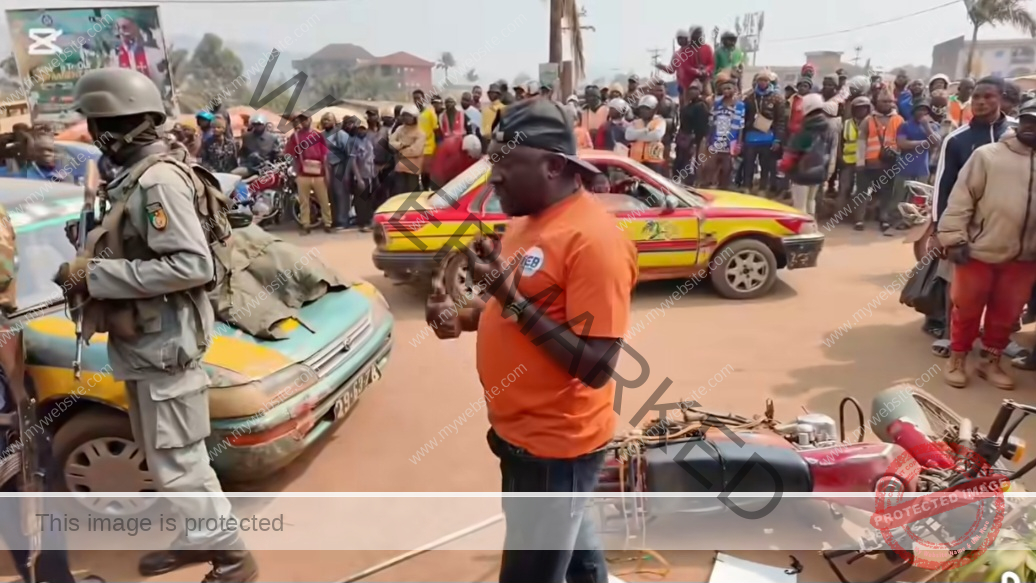
A remarkable scene recently stopped traffic in Bamenda. A soldier of La République du Cameroun (LRC), balancing on a motorbike, did something unexpected: he publicly called for peace. He urged President Paul Biya to end the war and appealed to Ambazonians, declaring that “Anglophones and Francophones are one.”
To that soldier: your courage deserves acknowledgment. In an atmosphere where silence often feels safer than speech, it takes conviction to speak publicly about ending bloodshed. Your plea reflects a growing fatigue with a conflict that has taken too much from too many.
Yet while the call for peace resonates, history and law cannot be brushed aside by sentiment alone. A shared humanity does not automatically resolve a disputed constitutional and international status. If peace is to be durable, it must address the underlying legal and political questions that have fueled the crisis.
The Legal Argument as Seen by Ambazonian Advocates
Supporters of Ambazonian self-determination ground their case in several historical and legal references:
League of Nations Mandate and UN Trusteeship Framework: Southern Cameroons existed as a distinct trust territory administered under international supervision prior to 1961.
UN General Assembly Resolution 1514 (1960): This resolution affirmed the right of colonial territories to independence and self-determination.
The 1961 Plebiscite and Constitutional Developments: Debate continues over whether the terms of union were fully and lawfully implemented, and whether the subsequent dissolution of the federal structure altered the original understanding.
The African Union’s Principle of Respect for Borders at Independence (Article 4(b)): Advocates argue that the territorial status at the moment of independence remains legally significant.
These arguments are contested internationally and regionally. But they remain central to why many Ambazonians see the crisis not merely as a grievance over governance, but as a question of sovereignty and legal status.
Peace Without Justice?
The soldier’s call for unity speaks to a moral instinct: that human beings sharing geography should find a way to coexist peacefully. Yet peace built on unresolved constitutional disputes may only postpone deeper tensions.
For many in Southern Cameroons, justice means acknowledgment—acknowledgment of historical processes, constitutional changes, and grievances over representation and autonomy. For many in Yaoundé, national unity remains the overriding principle.
Bridging this divide requires more than battlefield fatigue. It requires structured, good-faith dialogue—possibly under credible third-party facilitation—where both historical narratives and legal claims can be examined transparently.
A Message to All Sides
To the soldier who spoke: your appeal shows that even within state institutions there are individuals who yearn for an end to violence. That matters.
To Ambazonian advocates: the strength of any liberation argument ultimately rests not only on passion, but on discipline, unity, and moral consistency.
To the government in Yaoundé: sustainable stability is rarely achieved through force alone. Political conflicts rooted in identity and constitutional interpretation require political solutions.
The Threshold Moment
History offers many examples where conflicts reached a point of exhaustion before dialogue became possible. The key question for Cameroon—and for those who identify as Ambazonian—is whether that moment has arrived.
The path forward will not be simple. But if there is one truth both sides can agree on, it is this: the suffering of civilians must end.
Peace will endure only when it is anchored in legitimacy. And legitimacy grows from transparency, dialogue, and a willingness to confront uncomfortable truths.
If the soldier’s voice signals anything, it is that even amid division, the human instinct for peace persists. The challenge now is to transform that instinct into a lawful and lasting resolution.
Timothy Enongene
Guest Editor-in-Chief, The Independentistnews
Share This Post:
DIASPORA DIGITAL TOWN HALL: SYNCHRONIZING THE GLOBAL ENGINE FOR Q2 2026
The government of the Federal republic of Ambazonia (in exile) makes a preliminary statement ahead of the Papal Visit to Bamenda in Ambazonia
Related Post
DIASPORA DIGITAL TOWN HALL: SYNCHRONIZING THE GLOBAL ENGINE FOR
The government of the Federal republic of Ambazonia (in
A Wake-Up Call to the People of La République
The Nigeria Option Revisited: Why Southern Cameroons Would Have
As Pope visits, Muslim scholar and Prisoner of conscience
Monday Mandate: Confronting the Crisis Within