

Local leaders increasingly call for practical measures: improved civilian protection, humanitarian access, transparent investigations into attacks, and renewed political dialogue addressing the broader conflict that has destabilized the region for nearly a decade.
By Timothy Enongene, Guest Editor-in-Chief
Independentistnews
BAMENDA 17 February 2026 – The violent events reported in Nwa Subdivision on February 13 and 14 have once again drawn attention to the deepening insecurity affecting communities in Donga Mantung. While some political actors describe the attacks as part of a larger state-directed campaign, others characterize them as complex clashes involving multiple armed groups in an already volatile environment.
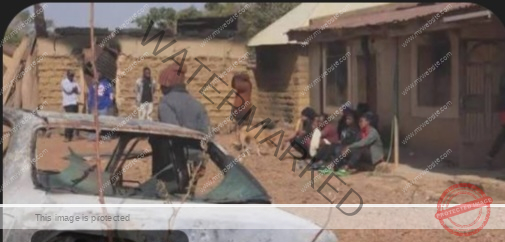
What remains beyond dispute is the human toll. Villages have been burned, families displaced, and livelihoods destroyed. Hundreds of civilians—many of them children and elderly residents—are now sheltering in surrounding forests or seeking refuge in neighboring communities, facing hunger, exposure, and uncertainty.
Local sources report extensive destruction of homes, farms, and food storage facilities in Lower and Upper Mbat. For many residents, the attacks appear systematic and deliberate, fueling suspicions that armed groups operate with significant freedom and coordination in the area.
Some community leaders argue that militia groups linked to pastoralist-farmer tensions have increasingly become involved in armed confrontations, sometimes overlapping with criminal activity and broader conflict dynamics. Others contend that insecurity in the region has created conditions where armed actors of different affiliations exploit weak governance and minimal protection for civilians.
At the same time, analysts caution that attributing responsibility requires careful, independent verification. In conflict zones where narratives quickly become politicized, establishing facts remains essential to preventing further escalation.
A Pattern of Civilian Vulnerability
Residents of Donga Mantung point to previous attacks in surrounding communities over recent years, arguing that rural populations have repeatedly borne the brunt of insecurity. Whether linked to separatist conflict, communal tensions, criminal gangs, or cross-border dynamics, civilians often find themselves caught between forces beyond their control.
Past incidents—including those in Ngarbuh and other affected localities—have underscored the urgent need for transparent investigations and accountability mechanisms. Many families continue to demand justice and protection rather than competing political narratives.
Questions of Protection and Responsibility
For communities in Nwa, the immediate concern is protection rather than political framing. Residents ask why security responses often arrive too late or fail to prevent repeated attacks. The destruction of schools, churches, and homes has deepened fears that civilian infrastructure remains dangerously exposed.
Civil society organizations and humanitarian observers continue to emphasize that authorities bear responsibility for ensuring civilian safety, regardless of political disputes surrounding the broader conflict. At the same time, they stress that all armed actors must be held accountable for abuses against civilians.
Moving Toward Solutions
Local leaders increasingly call for practical measures: improved civilian protection, humanitarian access, transparent investigations into attacks, and renewed political dialogue addressing the broader conflict that has destabilized the region for nearly a decade.
Observers note that continued cycles of violence only deepen mistrust and prolong suffering among ordinary families seeking safety and stability.
Final Word
For the people of Nwa and neighboring communities, debates over responsibility offer little comfort compared to the immediate realities of displacement and loss. Whatever the political interpretations, lasting peace will depend on credible efforts to protect civilians, ensure accountability, and address the grievances that continue to fuel instability in the region.