












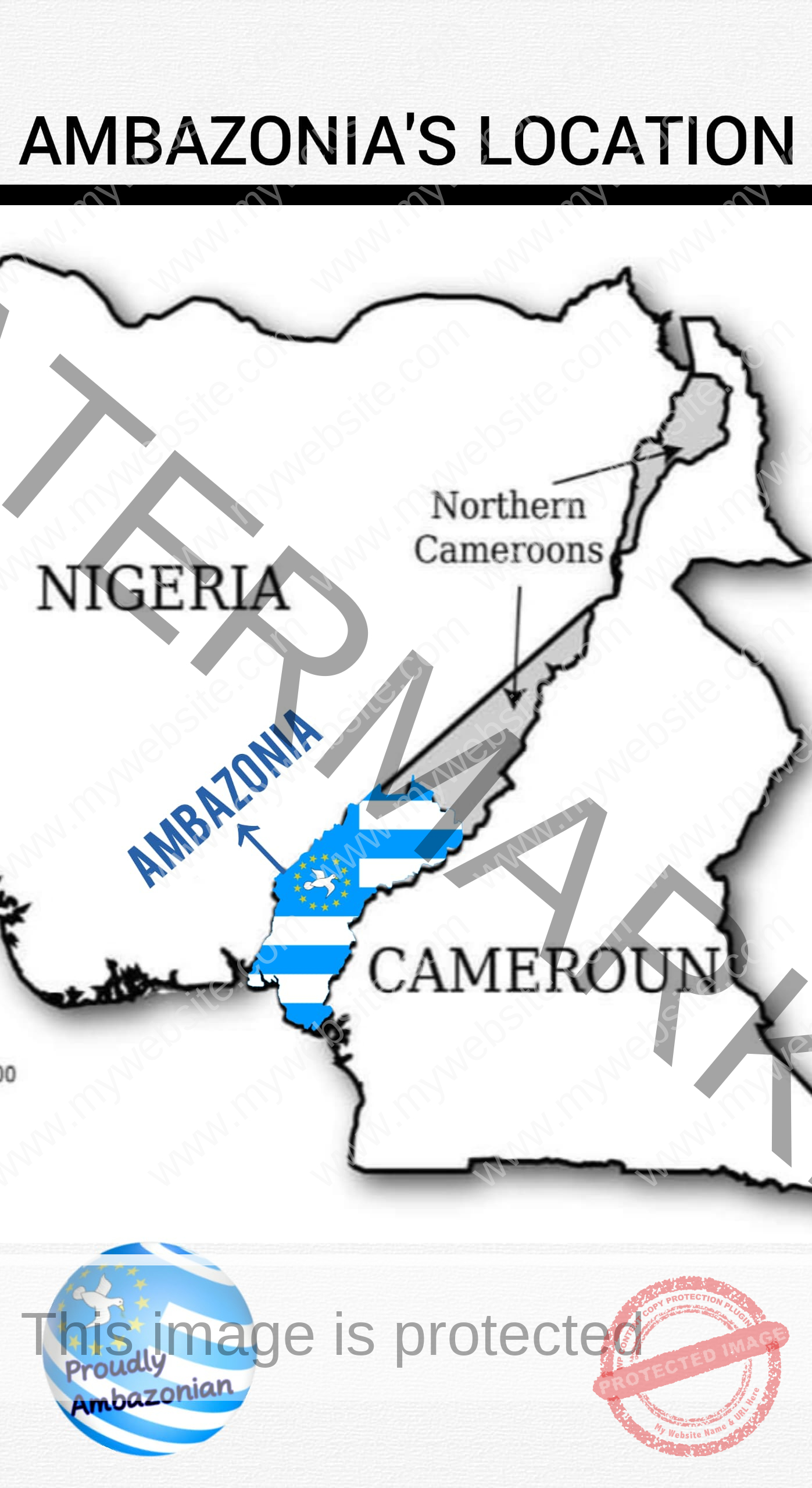
History cannot be reversed. The 1961 decision cannot be undone. But the debate over whether Nigeria would have been better must not distract from the present reality. Today, the structural question is no longer Nigeria versus Cameroon. The structural question is sovereignty.
By Ali Dan Ismael
Editor-in-Chief, The Independentistnews
The Social Media Revival of a Historical Question
Recent social media discussions have revived a familiar claim: that Southern Cameroons made a catastrophic mistake in 1961 by not choosing integration with Nigeria. According to this view, joining Nigeria would have guaranteed institutional continuity, democratic protection, economic stability, and freedom from the centralization that later characterized governance under Cameroon.
It is important to approach this argument calmly and historically. Yes, the Nigeria option carried certain advantages. But the suggestion that it would have secured lasting equality and autonomy for Southern Cameroons does not withstand structural scrutiny.
Institutional Compatibility: A Genuine Advantage
Southern Cameroons and Nigeria shared a common British colonial administrative orientation. Both operated under Common Law traditions, parliamentary frameworks, and similar educational systems. There was also currency continuity under the British West African monetary structure. These compatibilities were real and significant. Transition into a Nigerian federation would not have required abrupt legal or institutional adaptation. However, institutional similarity does not automatically translate into political equality.
Why the Delegates Left Enugu: The Buea Experience
One of the most important but often overlooked facts in this debate is why Southern Cameroons leaders chose to leave the Eastern House in Enugu and establish their own capital in Buea. The move was not symbolic. It was political.
While attached administratively to Nigeria’s Eastern Region, Southern Cameroons representatives increasingly felt overshadowed. Decisions affecting Southern Cameroons were often shaped within the broader political priorities of the Eastern Region. Budgetary allocations, development priorities, and administrative focus were perceived as centered elsewhere.
The relocation to Buea represented a deliberate assertion of political dignity. It signaled that Southern Cameroons desired self-governance within its own territory rather than permanent subordination within a larger regional structure.
In other words, dissatisfaction under Nigerian administrative attachment was not hypothetical. It was experienced. That experience turned many away from automatic confidence in the Nigerian option.
The Arithmetic of Minority Status
Southern Cameroons was demographically small compared to Nigeria’s dominant regions. Even during its attachment to Nigeria’s Eastern Region, many Southern Cameroonians expressed dissatisfaction with budgetary allocations, infrastructure prioritization, and administrative focus. Political influence was limited by numerical reality.
In any Nigerian federal configuration, Southern Cameroons would have remained a minority within a much larger political entity. Federal systems operate through arithmetic as much as principle. Where population determines influence, smaller units often struggle to protect distinct political identities without strong constitutional safeguards.
Nigeria’s Early Instability and Structural Risk
Nigeria’s early federal model provided regional autonomy, but autonomy within a federation is always subject to future restructuring. Within a few years of independence, the country experienced severe political instability, culminating in military coups and the devastating civil war between 1967 and 1970.
Had Southern Cameroons remained within Nigeria, its geographic position near the Eastern Region would likely have drawn it directly into that conflict. The assumption that it would have remained insulated from such turmoil is speculative at best.
The Question of Federal Restructuring
Nigeria’s federal regions were later fragmented into multiple states, diluting the power of larger regional blocs. If Southern Cameroons had remained part of Nigeria, its territorial coherence might similarly have been subdivided. Such fragmentation could have weakened its collective political leverage even further. Federal structures evolve; they do not remain static in their founding form.
Nigeria Today: A Fractured Federation
It is also necessary to look at Nigeria today. Despite the often-cited resilience of its federal system, Nigeria remains deeply fractured along federal, ethnic, and regional lines. Tensions between central authority and federating units persist. Agitations for restructuring, resource control disputes, and regional security crises continue to challenge national cohesion.
The federal system has endured, but it is far from harmonious. Structural inequality between regions remains a constant feature of Nigerian politics.
There is little evidence to suggest that Southern Cameroons would have been immune to these fractures. On the contrary, given its size and geographic positioning, it likely would have faced the same pressures that smaller federating units experience in large, contested federations.
The image of Nigeria as a stable, protective federal haven is therefore incomplete. The federation survives, but it remains strained.
Currency Disruption vs Political Subordination
The currency argument, often cited in these debates, reflects genuine economic disruption during the transition to the CFA franc under Cameroon. That shift was painful and controversial. Yet currency systems can be adjusted over time. Political subordination, whether through centralization or demographic overshadowing, is far more difficult to reverse.
Two Risks, Different Forms
This does not mean that integration with Cameroon produced better results. It means that both options carried structural risks. Under Cameroon, the dominant risk became centralization and erosion of federal guarantees. Under Nigeria, the likely risk would have been absorption through demographic dominance and political arithmetic, compounded by the broader fractures of a large and often unstable federation. These are different forms of vulnerability, but vulnerabilities nonetheless.
The Missing Third Option
The deeper issue, often overlooked in contemporary debate, is that Southern Cameroons was not offered a third path: full sovereign independence. The plebiscite presented two union options but excluded the possibility of complete statehood. That exclusion remains central to the historical grievance.
Conclusion: The Right Choice Today — Sovereignty
History cannot be reversed. The 1961 decision cannot be undone. But the debate over whether Nigeria would have been better must not distract from the present reality. Today, the structural question is no longer Nigeria versus Cameroon. The structural question is sovereignty.
Despite decades of political erosion, centralization, and conflict, Southern Cameroons retains a definable territorial identity, a documented trusteeship history, and a clear record of incomplete decolonization within its union with French Cameroon. The legal and historical framework surrounding that union remains contested. That contestation provides a clearer exit path than speculative integration into another federation would have offered.
Ironically, the very experience of marginalization and prolonged crisis has reshaped political consciousness. The colonial and post-colonial experience has emboldened a generation. It has cultivated a sense of patriotism and collective identity that was neither fully consolidated nor widely mobilized during the immediate independence era. What was once fragmented regional sentiment has matured into a more defined national consciousness.
The struggle has clarified identity.
Where 1961 presented constrained choices, today presents a clarified aspiration. The unfinished decolonization question is no longer theoretical; it is lived reality. The debate about Nigeria belongs to history. The question of sovereignty belongs to the present.
Ali Dan Ismael Editor-in-Chief






Leave feedback about this