












Let this be stated without apology: “Anglophone” is a manufactured label. It was introduced to replace a people with a category. It was designed to confuse ownership of land, dilute identity, and weaken political claims. And it has failed.
By Ali Dan Ismael, Editor-in-Chief, Thse Independentistnews
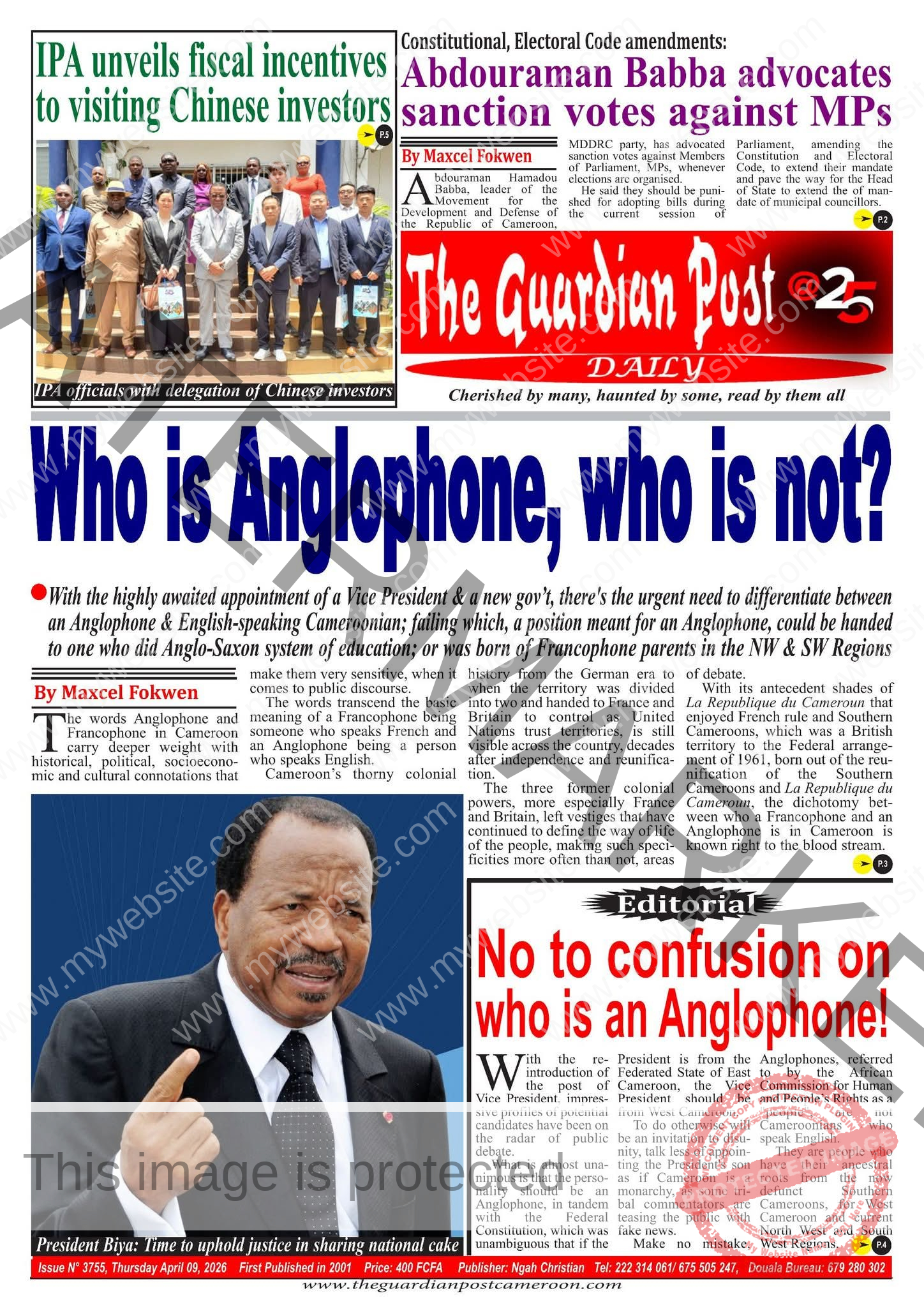
THE BIG LIE
There is a deliberate deception being repackaged and sold to the public under the harmless-looking question: “Who is an Anglophone?” Let us be clear—this question itself is the fraud. It is designed to confuse identity, dilute history, and ultimately erase a people. Because the crisis in Cameroon has never been about language. It has always been about territory, sovereignty, and political identity.
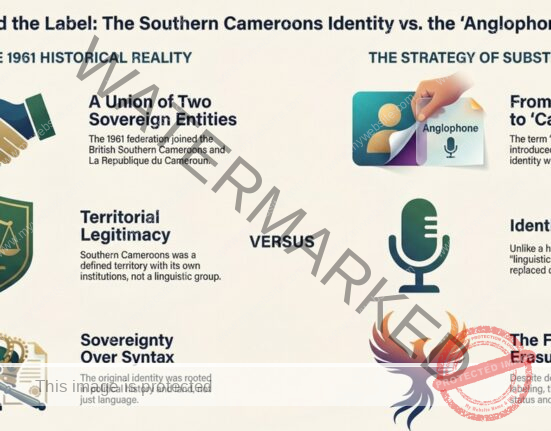
1961: WHAT WAS ACTUALLY CREATED
In 1961, there was no union between “Anglophones” and “Francophones.” There was no linguistic federation. What was created—under international supervision—was a federated state between two distinct political entities: The British Southern Cameroons and La République du Cameroun That is the historical and legal truth.
Southern Cameroons was not a language group. It was a defined territory, with its own institutions, governance system, and historical trajectory. To reduce that reality to “English-speaking people” is not ignorance. It is intentional distortion.
THE STRATEGY OF SUBSTITUTION
After 1961, a long-term strategy quietly took shape. A strategy not of integration—but of replacement. Step by step, the system began to: Erase the term Southern Cameroons. Replacing it with the vague label “Anglophone” Reducing a people into a linguistic minority Striping them of territorial legitimacy Why?
Because once a people are defined by language, they can be replaced by anyone who speaks that language. And that is exactly what followed.
REPLACING A PEOPLE WITH A CATEGORY
The regime engineered a system where: Individuals of Francophone ancestry, Individuals administratively inserted into the territory
Individuals trained in English but not rooted in Southern Cameroons history ..…could all be classified as “Anglophones.” This was not accidental. It was a calculated move to substitute Ambazonians with “English speakers.”
A category so flexible that it could be manipulated at will. A category that carries no historical claim, no territorial legitimacy, and no political weight.
WHY THE STRATEGY HAS FAILED
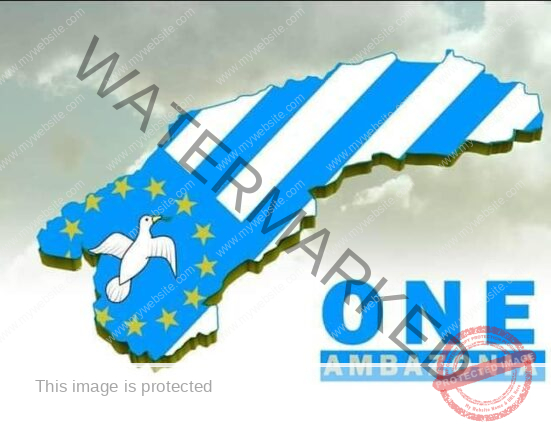
But here is the fundamental error of that design: You cannot erase a people by renaming them. Despite decades of manipulation: The history of Southern Cameroons remains intact The memory of federal status remains alive. The reality of annexation remains undeniable. And the people themselves understand one simple truth: They are not “Anglophones.” They are a people with a homeland.
THE DANGER OF TODAY’S DEBATE
The current obsession with defining “who is an Anglophone” is not harmless. It is a continuation of the same failed strategy. It shifts the conversation away from the real issue and into a linguistic trap. Because once the debate is reduced to language: Anyone can qualify Everyone can be included. And the original people can be permanently diluted. That is the objective.
THE TRUTH THAT MUST BE RESTORED
The correct framework is not complicated: The issue is not Anglophone vs Francophone. The issue is Southern Cameroons vs La République du Cameroun. The identity is not linguistic. The identity is historical and territorial. The claim is not about inclusion. The claim is about restoration
FINAL WORD: NO MORE CONFUSION
Let this be stated without apology: “Anglophone” is a manufactured label. It was introduced to replace a people with a category. It was designed to confuse ownership of land, dilute identity, and weaken political claims. And it has failed.
Because history does not recognize substitutions. And a people cannot be replaced by vocabulary. They remain. They remember. And they will define themselves—not by the language imposed on them—but by the identity that existed long before that language became a weapon.
Ali Dan Ismael, Editor-in-Chief, Thse Independentistnews





Leave feedback about this