

Can two populations with radically different interpretations of history, sovereignty, and constitutional legitimacy still imagine a shared future together? That remains the unanswered question haunting Cameroon today. And every silent May 20th makes that question harder to ignore.
By Timothy Enongene Guest Editor-in-Chief, The Independentist News
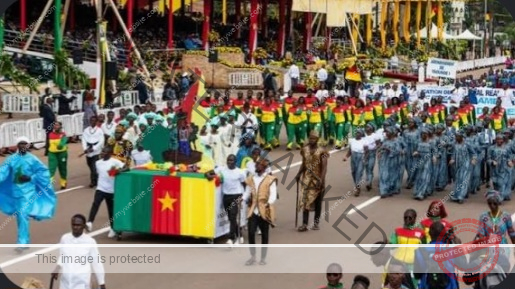
Bamenda – 20 May 2026 – A Silent Rebellion Across Southern Cameroons As La République du Cameroun rolls out military parades, official speeches, and carefully choreographed May 20th celebrations, a very different reality unfolds across large parts of Southern Cameroons (Ambazonia). The streets are empty. Markets are closed. Villages remain silent. And ghost towns once again dominate the landscape.
To the Cameroonian state, this annual day symbolises “National Unity.” But to many Southern Cameroonians, the lockdown represents something entirely different: a conscious political rejection of the constitutional order imposed since 1972. This silence is not interpreted by supporters of the Ambazonian cause as fear alone. They view it as political refusal. A collective declaration that they no longer recognise May 20th as their national celebration.
The Historical Dispute Behind May 20th
At the centre of this rejection lies a deeply contested interpretation of history. Ambazonian nationalists argue that Southern Cameroons never voted to become provinces or regions inside a unitary Cameroonian state. Rather, they maintain that the 1961 arrangements were presented as a federation between two distinct political entities entering into partnership as equals.
For many restorationist thinkers, the events surrounding the Foumban discussions in 1961 remain one of the most controversial constitutional moments in African post-colonial history. Critics argue that what was presented publicly as a federal union gradually evolved into political absorption. Over time: the federal structure weakened, centralisation intensified, regional autonomy disappeared, and the political identity of Southern Cameroons was progressively reduced into the administrative labels “Northwest” and “Southwest.” To many Ambazonians, May 20th therefore symbolises not unity, but the formal burial of the federal arrangement through the 1972 referendum that established a unitary state.
The Foumban Debate and the Question of Consent
One of the strongest grievances among Ambazonian intellectuals concerns the issue of consent. They argue that there was never a fully negotiated and mutually signed constitutional agreement guaranteeing permanent incorporation under a centralised unitary structure. Supporters of the Cameroonian state reject this interpretation and maintain that reunification created a legitimate sovereign framework recognised internationally.
But for many Southern Cameroonians, the emotional and political perception remains fundamentally different: they believe the original promise of equal partnership was never honoured. That perception continues to shape the psychology of the conflict today.
Reclaiming the Memory of Southern Cameroons
Another major theme behind the May 20th rejection is historical memory. From 1954 to 1961, Southern Cameroons possessed: its own parliament, its own Prime Minister, its own judiciary, and significant internal self-government under British administration. Ambazonian nationalists frequently invoke this period as evidence that Southern Cameroons functioned as a politically distinct territory before reunification. This historical memory directly fuels modern restorationist arguments.
To many supporters of independence, the struggle is not framed as secession from Cameroon, but as restoration of a previously existing political entity whose autonomy was progressively dismantled.
The Political Evolution of the Ambazonian Movement
The Ambazonian movement itself has evolved significantly since 2017. What began for many as protests over marginalisation, legal systems, education policy, and governance gradually transformed into a full-scale armed and political conflict centred on self-determination.
Supporters of the movement increasingly refer to the Government of Ambazonia as a permanent governing structure rather than a temporary revolutionary arrangement. Within this framework, figures such as Samuel Ikome Sako are presented by supporters as leaders of a continuing state project rather than merely protest movements.
Naturally, the Cameroonian government rejects these claims entirely and continues to regard Ambazonian structures as illegal separatist organisations threatening national sovereignty. That divide remains irreconcilable at present.
Why the Lockdowns Carry Political Meaning
To outside observers, ghost towns may appear simply as security reactions or acts of intimidation linked to the conflict. But to many Ambazonians, participation in lockdowns carry symbolic political meaning. The lockdowns have become: a rejection of state legitimacy, a refusal to participate in official nationalism, and a demonstration of collective political identity. Supporters argue that avoiding official ceremonies also reduces civilian exposure in militarised zones where tensions remain extremely high.
At the same time, critics argue that prolonged shutdowns continue damaging local economies, education, and civilian welfare, further deepening the humanitarian crisis affecting ordinary people. This illustrates the painful dual reality of the conflict: both participation and non-participation carry consequences.
The Crisis of “Unity”
The deeper issue exposed every May 20th is the collapse of a shared national narrative. The Cameroonian state continues promoting the vision of “One and Indivisible Cameroon.” Yet large sections of the Southern Cameroons population increasingly reject not only the slogan itself, but also the constitutional and historical foundations beneath it.
This is why military parades and official ceremonies often fail to generate emotional legitimacy inside many Anglophone areas. For supporters of the Ambazonian cause, unity without equality is viewed as domination. Unity without constitutional trust is viewed as coercion. And unity enforced militarily ceases to feel like unity altogether.
The International Dimension
The conflict also increasingly intersects with international legal and diplomatic debates. Ambazonian activists frequently invoke: self-determination principles, decolonisation arguments, UN Resolution 1608, and interpretations of international law related to historical statehood and treaty obligations.
The Cameroonian government, meanwhile, maintains that its territorial integrity is non-negotiable under international law and that the crisis remains an internal matter. The international community has largely continued supporting dialogue and territorial unity while expressing concern over humanitarian abuses committed during the conflict.
The Unfinished Political Future
The silence across Southern Cameroons on May 20th ultimately reflects something larger than a boycott. It reflects a profound crisis of political legitimacy and historical trust. For many Ambazonians, the central issue is no longer decentralisation, bilingualism, or administrative reform. It is the unresolved question of political identity itself.
Can two populations with radically different interpretations of history, sovereignty, and constitutional legitimacy still imagine a shared future together? That remains the unanswered question haunting Cameroon today. And every silent May 20th makes that question harder to ignore.
Timothy Enongene Guest Editor-in-Chief, The Independentist News