













History shows that minorities caught between warring powers often lose twice: once during the conflict, and again when peace returns and blame is apportioned.
By Timothy Enongene
Guest Editor-in-Chief, The Independent News
On special assignment in Ntumbaw
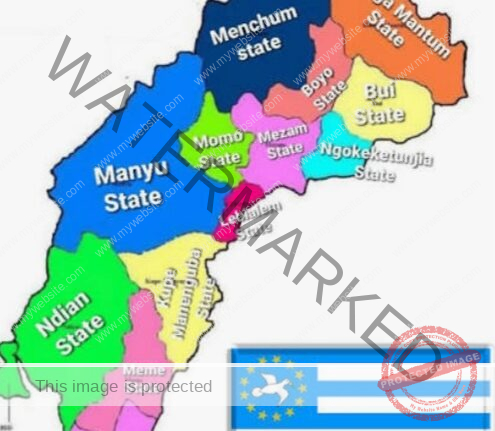
NTUMBAW January 21, 2026 – For centuries, the Mbororo community has been an integral part of the social and economic life of the Northwest and Southwest regions (today Ambazonia). Their cattle routes, markets, and traditions are woven into the broader fabric of local coexistence. Today, however, that long-standing relationship faces a dangerous strain.
As the Ambazonia conflict enters its ninth year, a troubling pattern is emerging: the increasing exposure of the Mbororo people to the frontline dynamics of a conflict that is not of their making. History warns us that when powerful actors clash, it is often the smallest and most vulnerable communities that bear the heaviest cost. This article is written not as an accusation, but as a plea for caution, survival, and long-term coexistence.
The Illusion of Protection: When Security Becomes Exposure
The Cameroonian state has often presented itself as a guarantor of Mbororo security. Yet developments on the ground suggest that this protection can sometimes come at a dangerous price. In several localities, Mbororo youth have reportedly been encouraged to participate in “self-defense” arrangements or to cooperate closely with security forces. While such measures are framed as protective, they risk blurring the line between civilian and combatant. In conflict zones, that distinction is not academic—it can be fatal.
When a civilian community becomes visibly associated with armed actors, it may unintentionally attract suspicion, retaliation, or collective punishment. This is not protection; it is exposure. And once that line is crossed, it is the community—not the architects of policy—that absorbs the consequences.
Lessons from the Past: The Cost of Political Instrumentalization
The use of minority communities to advance political or security objectives is not new. In previous years, particularly in parts of Fako Division, initiatives aimed at breaking civil disobedience saw minority participation placed at the center of public confrontation.
Measures such as assigning visible roles to Mbororo drivers during lockdown periods were officially framed as economic empowerment. In practice, they placed ordinary people in the direct path of anger, fear, and misunderstanding. What should have remained a political dispute was transformed into a communal fault line. Such strategies do not resolve conflict. They fracture trust that may take generations to rebuild.
Violence, Attribution, and the Danger of Manipulation
The killing of civilians in Gidado on January 14, 2026—including women and children—was a profound tragedy. As with many atrocities in this conflict, narratives emerged quickly, often before independent investigations could be conducted.
In conflicts of this nature, there is a well-documented risk of false attribution, infiltration, and provocation. Armed actors—state and non-state—have, in many wars, committed abuses while wearing the identity of their adversaries. The result is communal fear, revenge, and permanent rupture between neighbors who once lived side by side. This is why restraint, verification, and accountability are essential. Communities must not be pushed into hostility based on unverified claims or manufactured blame.
Words from Experience: Choosing Survival Over Sacrifice
African wisdom is clear on this matter: the hand that pushes you into a fight is rarely the one that will save you from its consequences. To the Mbororo youth, elders, and leaders, several lessons deserve reflection:
On alliances: Power rarely protects its instruments once they are no longer useful. Loyalty offered under pressure is seldom repaid with lasting security.
On neutrality: In a burning forest, survival belongs to those who avoid the flames, not those who rush toward them.
On coexistence: Long-term safety grows from mutual respect with neighbors, not from temporary alignment with armed force. These are not calls for passivity, but for strategic wisdom.
A Call for Community Agency and Strategic Autonomy
There remains a constructive path forward—one rooted in dignity rather than fear:
Reinforce Local Dialogue: Engage directly with neighboring communities to reaffirm non-aggression and revive traditional conflict-resolution mechanisms that predate the war.
Decline Auxiliary Roles: Participation in militias, guiding operations, or symbolic acts meant to provoke confrontation carries risks that outweigh any promised protection.
Document, Do Not Retaliate: Preserve evidence, testimonies, and timelines. Truth is a shield stronger than rumor, and documentation remains essential for future accountability.
Conclusion: Choosing the Future Over the Fire
The resilience of the Mbororo people is not in question. What is at stake is whether that resilience will be preserved—or consumed—by a conflict driven by forces far larger than any single community. History shows that minorities caught between warring powers often lose twice: once during the conflict, and again when peace returns and blame is apportioned.
The Mbororo are not expendable buffers, nor political tools. They are a people with a future that must extend beyond this war. To step back from instrumentalization is not weakness. It is foresight.
To choose peace is not betrayal. It is survival. For the sake of children yet unborn, and for the land that sustains all who live upon it, wisdom—not war—must prevail. In solidarity and peace, we should advocates for Communal Harmony
Timothy Enongene
Guest Editor-in-Chief,




Leave feedback about this