










People now recognize narrative laundering, identity substitution, representation engineering, political cosmetics, charity camouflage, biographical propaganda, and credential worship. The era where CVs silence suffering is over. The era where titles replace truth is over. The era where biographies erase blood is over.
By Ali Dan Ismael
Editor-in-Chief, The Independentistnews
Dictatorships do not survive by repression alone. They survive by manufacturing virtue. They build saints out of enablers, philanthropists out of predators, and heroes out of collaborators. The Biya regime has perfected this craft: a system of narrative laundering in which political operatives, regime beneficiaries, and conflict profiteers are rebranded as “visionary leaders,” “champions of social justice,” and “philanthropists.”
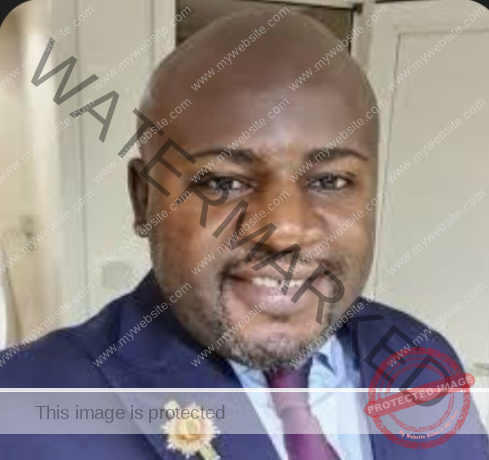
The glossy profile circulated about Honourable Barrister Ngala Gérard Ndombang is not biography — it is regime propaganda. It follows a familiar authoritarian template: inflate credentials, deify entrepreneurship, weaponize philanthropy, moralize wealth, erase political context, silence complicity, replace accountability with awards, and substitute truth with adjectives. This is not storytelling. It is political laundering.
The narrative reads like a script, not a life story: “Distinguished leader.” “Visionary entrepreneur.” “Champion of social justice.” “Revolutionized the construction industry.” “Multibillion chain of businesses.” “Over 300 employees.” “Iconic projects.” “Scholarships to over 10,000 students.” “Devoted philanthropist.” “Defender of women and children.” “Parliamentary Network for Circular Economy.” This is branding language, not evidence. Public relations, not accountability. Image construction, not truth.
In Biya’s Cameroon, wealth does not emerge from innovation — it emerges from proximity to power. Contracts flow from alignment, not merit. Protection comes from loyalty, not law. Expansion comes from access, not competition. This is not capitalism. It is kleptocratic patronage.
The propaganda omits the political economy of the regime, the militarized governance structure of the North-West, the conflict economy, the extraction networks, the patronage architecture, and the system of substitution politics. It erases the simple reality that in authoritarian systems, business success and political loyalty are inseparable.
Scholarships, roofing sheets, donations, cultural titles, and community projects are not neutral acts in authoritarian systems. They function as moral laundering, community insulation, silence purchasing, reputation engineering, and legitimacy transfer. This is not generosity. It is political camouflage.
Every authoritarian system has its enforcers — and its scribes. If the gun secures territory, the pen secures legitimacy. Vivian Lemfon is not a neutral writer. She is not an independent chronicler. She is a hired instrument of political sanitation. Her function is not journalism — it is reputation laundering. This is not her first deployment. Whenever facts about Biya’s enforcers surface, whenever public scrutiny begins to expose regime collaborators, whenever documentation leaks into the public domain, Vivian Lemfon goes into action. Profiles appear. Biographies are published. Narratives are reconstructed. Images are cleansed. Crimes are buried under credentials. She functions as the cleanup crew of the regime’s information war.
This pattern is not isolated to Ngala Gérard. She has performed the same narrative laundering for Eleventh Province enforcers such as Joseph Dion Ngute, whose origins trace to Nkongsamba, Paul Tasong from Dschang, and Félix Mbayu from Dschang. All are rebranded as “Ambazonian indigenes” — not by history, not by origin, not by self-determination — but through political substitution strategy. This is the Biya doctrine of substitution governance: using people of francophone ancestry who grew up in Ambazonian territory as regime “representatives,” while reducing indigenous peoples to the label “Anglophones,” erasing identity, replacing sovereignty with language, and transforming a people into a demographic category. This is not integration. It is colonial modernization.
Vivian Lemfon’s platform functions like a recruitment board for regime legitimacy — endless CVs of cabinet ministers, titles, degrees, committees, awards, positions. As if in the 21st century oppressed populations still measure leadership by certificates. This is a colonial-era mindset. In 2026, societies measure leadership by outcomes: Has your power transformed communities? Has your governance reduced suffering? Has your authority protected lives? Has your leadership built systems? Has your influence created dignity? Not paper. Not titles. Not biographies. Not branding. Transformation is the metric — not education. This is the reality Vivian Lemfon fails to understand — or refuses to acknowledge.
What the regime did not anticipate is this: social media educated Ambazonians faster than propaganda could adapt. People now recognize narrative laundering, identity substitution, representation engineering, political cosmetics, charity camouflage, biographical propaganda, and credential worship. The era where CVs silence suffering is over. The era where titles replace truth is over. The era where biographies erase blood is over.
The Biya regime does not govern only through force — it governs through fiction. It creates saints to hide systems. It creates heroes to hide hierarchies. It creates philanthropists to hide plunder. It creates entrepreneurs to hide extraction. It creates narratives to hide crimes. The profile of Ngala Gérard is not a biography — it is a political artifact, a product of image laundering in a system that cannot survive truth.
History will not remember the adjectives. It will remember the structures. It will remember the systems. It will remember who benefited. It will remember who enabled. It will remember who stayed silent. It will remember who profited. Because in regimes of injustice, neutrality is collaboration, success is alignment, and silence is participation. Whitewashing is not legacy. Propaganda is not history. Branding is not truth.
Ali Dan Ismael Editor-in-Chief


Leave feedback about this