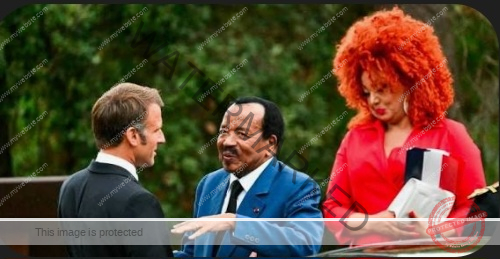


The French diplomatic dispatch is not historical background — it is structural evidence. It proves that: the crisis was known, the risks were documented, the grievances were real, the system was unsustainable and the collapse was predictable.
By Ali Dan Ismael, Kemi Ashu and Mankah Rosa Parks. The Independentistnews Political Desk
A Strategic International Communication Paper Ambazonia 1985 French Dispatch
Part I — Continuous Reconstructed Record (From French Diplomatic Dispatch No. /DAM, October )
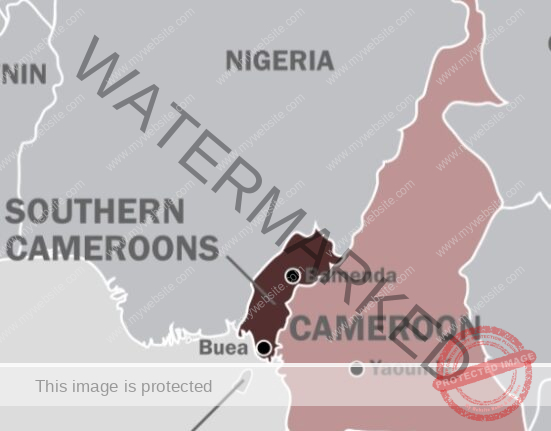
It is not by chance that the press devoted significant attention to recalling the achievements of the past twenty-four years and the importance of the reunification of the two Cameroons. The Anglophone problem, which had recently been eclipsed by the North–South divide, returned to the forefront of national debate. Since the spring, leaflets of often violent and polemical tone circulated in Anglophone circles, including the “Kumba Appeal,” which referred to possible “bloodbaths.” Agitation developed in schools and universities, with strikes notably in Bamenda, capital of the North-West Province.
The arrest of Mr. Gorji Dinka, traditional leader of the Widikum and a passionate Anglophone activist, did little to calm tensions. On September, the Minister of Territorial Administration warned provincial authorities that public order would be maintained “by all means” and that criticism must not go beyond “tolerable limits.” He denounced the press, “subversive leaflets,” and the weak support of the population for the authorities in power.
These elements formed the most visible part of a problem with deep roots that periodically resurfaced with intensity. Already between and , the Cameroon Action Movement had circulated leaflets calling for a return to federalism and an end to the “plundering of the wealth of Anglophone Cameroon.” Anglophone grievances were structured around multiple complaints, the most serious concerning education.
According to the leaflets, the South-West and North-West provinces suffered from a lack of road, rail, and port infrastructure. The few existing industries employed Francophones, and oil resources were allocated primarily to the development of other provinces. Tandeng Muna, since , had been confined to the post of President of the National Assembly, where his influence was in reality reduced. From that point onward, Anglophones had few illusions about their power within state institutions. President Biya’s decision in January to transform the United Republic of Cameroon into the Republic of Cameroon marked the final stage of this evolution.
The change of the party’s name at the Bamenda Congress weakened, if not eliminated, all reference to the fusion of political parties, to the great dismay of Anglophone leaders such as Mr. Ngu Foncha, former leader of the Kamerun National Democratic Party (KNDP), who, despite his position as First Vice-President of the Central Committee, was unable to oppose the change. Facing the concerns of the Anglophone community, the authorities sought to adopt a conciliatory posture and avoid exposing themselves to criticism.
The agro-pastoral fair and the party congress in Bamenda enabled the city to acquire new infrastructure. The Kumba–Mamfe road was intended to open up the South-West Province. Politically, representation of Anglophone provinces was formally maintained within government, the ruling party, and the army. In education, the project of creating a single national system remained on the agenda but met persistent resistance from Anglophones, suspicious of reforms initiated by Francophones.
Nevertheless, Anglophones had spokespersons within the system, including the Secretary of State for National Education, Mme Catherine Ngomba, and the Vice-Chancellor of the University, Mr. Jacob Ngu Lifanyi (Eleventh Provice). Another gesture of the authorities was the opening of a university center in Buea, in the South-West Province.
Part II — Strategic Analysis for Today’s Understanding, Predictability and Foreknowledge.
The French diplomatic record makes one fact unmistakably clear: the crisis that later erupted in Ambazonia was neither sudden nor unforeseen. Grievances were already known, unrest was already visible, and the pathways to radicalization were already documented. Repressive strategies had been identified, federalism demands were explicit, and the dynamics of escalation were clearly observable. What exists in the record is not surprise, but awareness. Not confusion, but recognition. Not ignorance, but foreknowledge. The present conflict did not emerge by accident. It followed a trajectory that had already been mapped. It was not spontaneous. It was predictable.
Managed Marginalization
What the record reveals is not a system seeking resolution, but one designed for management. The response to dissent was not structural reform, but containment. Infrastructure projects were used as appeasement tools rather than instruments of equity. Representation became symbolic rather than substantive. Inclusion was controlled rather than empowering. Narratives were engineered to preserve unity without justice. Dissent was repressed, and activism was criminalized. This was not conflict prevention. It was governance by containment — the administration of discontent rather than its resolution.
France’s Role
France emerges not as a neutral observer but as an informed external actor. It monitored Anglophone mobilization, understood the roots of the crisis, and aligned itself with stability narratives that prioritized state cohesion over political justice. Activism was treated as a risk factor rather than a legitimate political expression. In this posture, France positioned itself within a framework of geopolitical stabilization, not decolonization support. Stability became the overriding priority, even when stability was built on structural exclusion.
Transformation of the “Anglophone Problem” into the Ambazonian Conflict
What was once labeled the “Anglophone problem” has evolved into the Ambazonian liberation struggle, but the underlying structure has not changed. The same grievances persist. The same regions remain affected. The same institutions continue to operate. The same power structures endure. The same suppression mechanisms are deployed. The same centralization logic governs the system. The difference today is not in the cause, but in the scale. What was once managed unrest has become open political rupture. What was once containment has become collapse.
Legal and Political Meaning Today
In the present international legal and political context, this historical record carries clear weight. It supports the continuity of injustice framework, the doctrine of foreseeability, state responsibility principles, structural discrimination claims, crimes against humanity continuity logic, third-party complicity arguments, and failure-to-prevent doctrines. The record establishes not only harm, but knowledge; not only injustice, but predictability; not only suffering, but responsibility.
Strategic Reframing for the International Community
The Ambazonian conflict can no longer be honestly framed as an internal Cameroonian crisis, a linguistic dispute, a minority rights issue, or a separatist movement. Such frames distort reality and obscure structure. It must instead be understood as the consequence of a failed decolonization process, the dismantling of a political entity, the suppression of an autonomy structure, and a long-term governance failure. It is not fragmentation. It is restoration.
Meaning for Ambazonia Today
Ambazonia does not represent the breaking of a nation. It represents the restoration of political existence. It represents the correction of structural injustice. It represents the repair of a broken political contract. It represents a demand for sovereignty, dignity, and self-governance. It is not an act of destruction. It is an act of political reclamation.
Strategic Conclusion
The French diplomatic dispatch is not historical background — it is structural evidence. It proves that: the crisis was known, the risks were documented, the grievances were real, the system was unsustainable and the collapse was predictable. What the world calls instability today is the exposure of a long-concealed structure of domination. Ambazonia is not the cause of the crisis. Ambazonia is the consequence of it.
Ali Dan Ismael, Kemi Ashu and Mankah Rosa Parks.