











The birth of the internet and the rise of social media have broken the monopoly of historical storytelling. Small communities, suppressed peoples, and marginalized nations now document their own histories. Hidden pathways are being exposed. Manipulation networks are being mapped. Imperial strategies are being decoded. Narrative control is collapsing.
By The Independentistnews editorial Desk
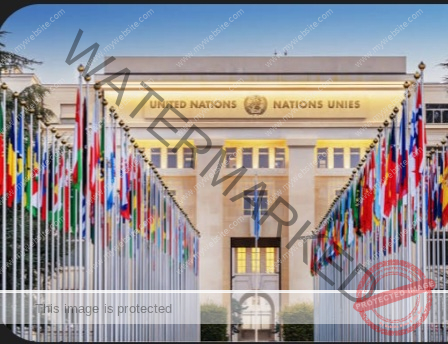
The world order has changed. Illegality has become normalized. Unilateralism has become policy. Global institutions no longer protect people — they protect systems. The United Nations has failed. The African Union has failed. The Arab League has failed. International organizations have become bureaucratic shields for rogue regimes rather than instruments of accountability.
And Europe must be named honestly. The European Union built its wealth by ripping Africa of its riches — through extraction, colonial exploitation, financial engineering, resource theft, and structural dependency systems that transferred African wealth into European capital for centuries. Today, Europe presents itself as a moral authority, but it is imploding from the inside, burdened by historical corruption, economic stagnation, demographic crises, institutional decay, and the long-term consequences of the very systems it created. The same structures that drained Africa are now destabilizing Europe itself.
Figures like Trump and Putin do not rise because they are anomalies. They rise because global governance structures collapsed. Power vacuums always produce strongmen. When institutions lose legitimacy, power politics replaces diplomacy.
If the world is condemning Trump, Cameroonians must be honest enough to look inward. Trump’s policies target foreigners. The Biya regime targets its own citizens. That distinction matters morally and politically.
The United States’ withdrawal from the World Health Organization was not only ideological; it was strategic. Why should a state continue financing institutions that fail to hold corrupt regimes accountable for theft, misuse of funds, and systemic abuse?
The Biya regime pocketed COVID funds. This is not speculation. It is common knowledge. The WHO knew. The international system knew. No accountability followed. No sanctions. No consequences. Yet funding continued to flow. That is not governance. That is institutional complicity. Cameroon does not suffer because of Trump. Cameroon suffers because of a corrupt domestic regime protected by a broken international system.
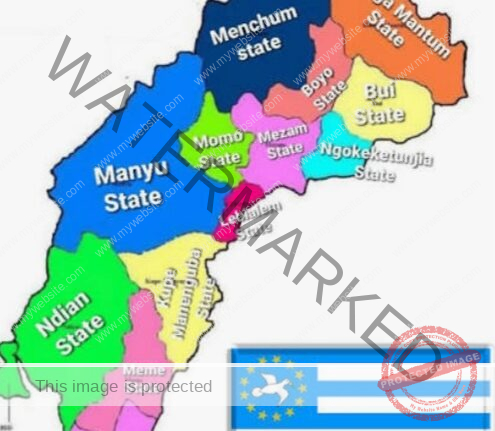
Ambazonians must also understand a deeper geopolitical reality: Trump has a strategic plan for Ambazonia — not rooted in sentiment, charity diplomacy, or symbolic politics, but in realpolitik: sovereignty, Atlantic access, regional security architecture, strategic positioning, economic leverage, and geopolitical balance. In the modern world order, interests matter more than declarations, and strategy matters more than sympathy.
At the same time, the need for new global trade routes that redefine America’s role as leader of the free world is rapidly taking shape and will soon take effect. Control of logistics corridors, Atlantic access points, energy routes, maritime security lanes, and strategic ports will reshape global influence. This is not theory — it is geopolitical restructuring in motion.
And Ambazonia’s geography places us at the center of this transformation. Our Atlantic coastline, deep-water access potential, proximity to global shipping lanes, gateway position into Central Africa, and strategic maritime corridor location place Ambazonia at the top of Trump’s Africa agenda from a purely strategic standpoint. Geography, not sentiment, determines priority in power politics — and Ambazonia sits on one of the most valuable geopolitical corridors on the continent.
This is not about Trump as a personality. It is not about Putin as a personality. It is not about individuals. It is about a collapsed global accountability architecture that enables dictators, shields criminal regimes, and normalizes impunity — and a new international order where power, leverage, and strategic value determine outcomes more than institutions and resolutions.
Ambazonia cannot build its future by begging broken institutions that failed to protect it. It cannot anchor its liberation strategy on declarations from organizations that have normalized silence. It cannot outsource its sovereignty struggle to bureaucracies that protect state power over human life.
The old order was built on rules. The new order is built on interests. The old system promised protection. The new system rewards strategic relevance. The old diplomacy relied on morality. The new diplomacy runs on power alignment. This is the geopolitical reality Ambazonia must confront.
The path forward is not emotional politics. It is strategic politics. Not symbolic alliances. But power-based partnerships. Not moral appeals. But geopolitical leverage. Not institutional dependency. But sovereign positioning.
In this world, legitimacy follows power — not resolutions. Recognition follows relevance — not petitions. Protection follows strategy — not sympathy. Ambazonia’s struggle must evolve accordingly. Because in the emerging global order, those who understand power shape history — and those who cling to failed systems become its casualties.
Britain’s Double Game: Smiles, Symbols, and Silent Complicity
Since Britain chose to go to bed with French Cameroon and deliberately cut off real cooperation with Ambazonia, it has perfected a strategy of cosmetic diplomacy. They left behind an innocent smiling face: speaking Lamso, making speeches in Pidgin English, performing cultural familiarity, projecting symbolic closeness, signaling emotional connection. This has been a remarkably effective diplomatic tool. For years, it worked. Cultural symbolism replaced political substance.
Language performance replaced policy. Gestures replaced accountability. Optics replaced truth. It created the illusion of connection while real cooperation was terminated.
But symbols cannot replace policy forever.
The contradiction became visible when the British High Commissioner’s representative toured polling stations in Ambazonia, posing for photographs to create the impression of democratic engagement ahead of October 12. Cameras rolled. Images circulated. Optics were manufactured. The narrative was clear: Britain presenting itself as a defender of democracy.
But one simple question exposes the entire performance: Where is the technical report? Where is the assessment? Where is the documented evaluation? Where is the institutional analysis?Where is the official publication? Where is the accountability framework?
No report. No findings. No documentation. No institutional follow-up. No transparency. No substance. Only images. Only optics. Only performance. This is not democracy promotion.
This is diplomatic theater.
And the illusion is deepened by another reality: Britain still works with the EU in multiple strategic domains despite Brexit — security cooperation, intelligence sharing, diplomatic coordination, development policy alignment, and geopolitical positioning. Brexit changed trade frameworks.
It did not change strategic alignment. Britain’s Africa policy still moves in coordination with European interests, not independently of them.
Which means Ambazonia is not excluded by accident. It is excluded by policy choice. This is not negligence. It is strategic positioning.
Symbolic engagement replaces real cooperation.
Cultural familiarity replaces political recognition.
Public gestures replace institutional commitment.
Smiles replace sovereignty. Ambazonians must understand this clearly: Language is not loyalty. Culture is not solidarity. Gestures are not partnership. Optics are not support. Photos are not policy. Visits are not recognition. Performances are not diplomacy.
Real diplomacy produces documents. Real engagement produces reports. Real partnership produces agreements. Real support produces policy shifts. Real cooperation produces structural change. Everything else is theater. And theater is not liberation.
Britain’s Imperial Shadow and the Return of History
Britain’s colonial exploitation and imperial greed are not history — they are architecture. From India, Afghanistan, Iran, Iraq, Yemen, Egypt, Palestine, and the Caribbean, to Australia, South Africa, Zambia, Zimbabwe, Nigeria, and Ambazonia, the traces of British manipulation are structural, not accidental. Borders were engineered. Conflicts were planted. Elites were manufactured. Economies were distorted. Societies were fragmented. Power systems were redesigned for control, not stability.
Empire did not end — it rebranded.
What changed was not the logic of domination, but the method: indirect rule, proxy governance, elite substitution, economic capture, narrative control, and institutional penetration replaced direct occupation. Exploitation became “administration.” Control became “partnership.” Colonization became “cooperation.” Theft became “development.” Ambazonia is not an exception. It is part of a global pattern. But history has entered a new phase. For the first time, empire no longer controls the narrative.
The birth of the internet and the rise of social media have broken the monopoly of historical storytelling. Small communities, suppressed peoples, and marginalized nations now document their own histories. Hidden pathways are being exposed. Manipulation networks are being mapped. Imperial strategies are being decoded. Narrative control is collapsing.
The truth is no longer filtered only through imperial institutions. The archive is no longer owned by empires. Memory is no longer controlled by former colonial powers. And because of this, the chickens are coming home to roost. Small countries are beginning to understand their histories.
Small communities are uncovering the patterns.
Suppressed peoples are connecting the dots.
Colonial legacies are being traced, compared, and exposed. Not through universities. Not through institutions. Not through imperial textbooks. But through digital memory, social networks, citizen documentation, and collective consciousness.
Empires survive on forgetting. Control systems survive on silence. Colonial structures survive on ignorance. Social media has shattered all three. This is not just a technological shift. It is a civilizational shift. And it is irreversible.
The Independentistnews editorial Desk


Leave feedback about this