

Governments are strongest when authority is transparent, constitutional processes are respected, and citizens are not left to speculate about who is making decisions in their name. Until greater clarity emerges, questions surrounding executive authority are likely to persist, not only within Cameroon but also among regional observers and the international community.
By Carl Sanders
Guest Writer, The Independentist News
SOHO, LONDON — As of Monday, July 27, 2026, President Paul Biya of La République du Cameroun has reportedly been absent from public view for approximately seven weeks following his departure from Yaoundé on June 7 for what official sources described as a private stay in Europe. During this period, there have been no verified public appearances, speeches, or direct engagements by the Head of State. Nevertheless, presidential decrees, military appointments, administrative decisions, and disciplinary measures have continued to be issued in his name.
An Executive Vacuum Without Explanation
This unusual situation has generated increasing speculation among political observers, constitutional scholars, and members of the Cameroonian diaspora regarding the exercise of executive authority. At the center of the debate is a simple but significant question: who is directing the affairs of state during the prolonged absence of the President?
Adding to these questions are analyses circulating in public discourse that compare recent presidential signatures with signatures appearing on official documents issued in earlier years. Some commentators have argued that noticeable differences exist between the signatures, while others caution that variations in signatures may occur naturally because of age, health, writing conditions, or digitization processes. Without an independent forensic examination, no definitive conclusion can responsibly be drawn. Nevertheless, the absence of transparency has fueled uncertainty and invited further scrutiny.
The Question Is Larger Than a Signature
The broader constitutional issue extends beyond handwriting. Modern governments derive legitimacy not only from legal authority but also from visible executive accountability. In constitutional systems, citizens reasonably expect to know who is exercising presidential authority, especially when decisions involving national security, military operations, senior appointments, and emergency governance continue uninterrupted during an extended presidential absence.
One Standard for Citizens, Another for the Presidency
This question becomes particularly important in light of the government’s treatment of ordinary public servants. In recent months, teachers, healthcare workers, and other civil servants have reportedly faced disciplinary measures, including salary suspensions and administrative sanctions, for prolonged absences from their assigned duties. Many of those affected had left the country in search of improved economic opportunities or personal security.
Critics therefore argue that a striking contrast exists between the rigorous enforcement of attendance requirements for ordinary civil servants and the limited public explanation surrounding the President’s own prolonged absence. A government that demands accountability from its workforce should also provide clarity regarding the presence, capacity, and functioning of its highest office.
Who Is Exercising Military Command?
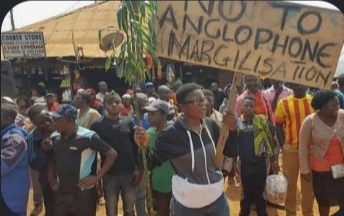
For communities affected by the conflict in Southern Cameroons/Ambazonia, these constitutional questions carry even greater significance. Military operations, security deployments, and administrative directives continue despite uncertainty surrounding the day-to-day exercise of presidential authority.
This has led observers to ask whether operational decisions are being directed personally by the Head of State or by other officials acting within the presidential administration under delegated or assumed authority. The distinction matters because military command must rest upon a clear legal and constitutional foundation.
Whatever the answer may ultimately prove to be, transparency serves the interests of both the government and the governed. Public confidence in state institutions depends upon clear constitutional procedures, especially during periods of uncertainty surrounding executive leadership.
The Danger of Internal Fragmentation
Another concern raised by analysts is the increasing reliance on local intermediaries and community actors within conflict-affected areas. Years of conflict have fractured communities, eroded trust, and placed immense pressure on local populations.
In such environments, accusations of collaboration, informant networks, proxy structures, and divided loyalties become commonplace, often deepening social divisions and prolonging violence. History demonstrates that internal fragmentation frequently becomes one of the most enduring and damaging legacies of protracted conflicts.
Communities can survive external pressure more easily than they can survive the complete destruction of internal trust. Once neighbors begin to fear one another, political conflict is transformed into social disintegration.
Superior Orders Do Not Remove Individual Responsibility
These realities underscore the importance of restraint. Regardless of political affiliation or perspective, every actor should remain mindful of both domestic law and international humanitarian law.
Individual responsibility for unlawful acts cannot automatically be transferred to institutions or superiors. Accountability mechanisms often examine the actions of individuals as well as governments. The claim that one was merely obeying instructions does not necessarily provide protection where the underlying acts were unlawful.
Those participating in abuses, unlawful killings, disappearances, arbitrary detention, collective punishment, or the targeting of civilians should therefore understand that political systems may change, but documentary records, witness testimony, digital evidence, and individual responsibility can endure.
A Crisis of Constitutional Legitimacy
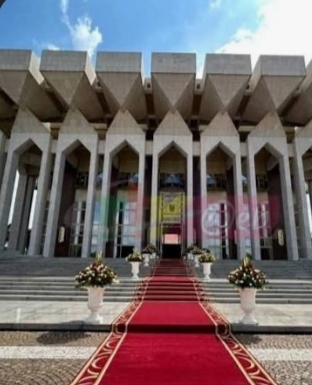
As political uncertainty continues in Yaoundé, one fundamental question remains unanswered: who is exercising executive authority in La République du Cameroun?
The answer is not merely a matter of political curiosity. It goes to the heart of constitutional legitimacy, democratic accountability, military command, and public confidence in state institutions.
Governments are strongest when authority is transparent, constitutional processes are respected, and citizens are not left to speculate about who is making decisions in their name. Until greater clarity emerges, questions surrounding executive authority are likely to persist, not only within Cameroon but also among regional observers and the international community.
Transparency Is the Test of Legitimate Power
The issue is therefore larger than one individual, one decree, or one disputed signature. It concerns the integrity of constitutional governance itself.
A state cannot credibly demand obedience, sacrifice, discipline, and accountability from its citizens while refusing to explain who is exercising power at the highest level. In times of national uncertainty, transparency is not a weakness. It is the foundation upon which legitimate authority rests.
Carl Sanders
Guest Writer, The Independentist News