

Empires rarely announce assimilation openly. They normalize it slowly. Through appointments. Through maps. Through schools. Through bureaucracy. Through language. Through dependency. Through time. The Roman Empire did it through citizenship and administration. The Soviet Union used ideological integration.
By Ali Dan Ismael
Editor-in-Chief, The Independentist News
The War Behind the War
Empires do not always conquer nations with tanks.Sometimes they conquer them with appointments. With schools. With language. With administrative restructuring. With psychological conditioning. And with time. That, many Ambazonians now believe, is the deeper story behind the long crisis consuming the former British Southern Cameroons.
For years, the international community has interpreted the conflict primarily through the language of separatism, terrorism, decentralization, humanitarian collapse, or governance failure. But for many Ambazonians, these explanations only describe the surface of the crisis. Underneath lies something older. A long process of political absorption. A slow-motion dismantling of identity. A deliberate transformation of a historically distinct territory into a permanently assimilated appendage of a centralized Franco-Cameroonian state.
Two Territories, Two Histories
To understand this fear, one must first understand what the former British Southern Cameroons actually was. Before reunification, Southern Cameroons possessed its own parliamentary traditions, educational orientation, administrative culture, and Common Law legal structure inherited from British colonial governance. It was not merely a “region.” It evolved under a separate colonial trajectory from La République du Cameroun, which itself emerged from the French-administered territory after independence. Two territories existed. Two colonial systems existed. Two political cultures existed. But instead of preserving coexistence through a durable federation between equals, power gradually centralized in Yaoundé. Federalism weakened. Autonomy disappeared. The federal structure collapsed.
And with every passing decade, institutions associated with Southern Cameroons identity were progressively diluted. To many Ambazonians, this was not administrative evolution. It was strategic absorption.
Language as an Instrument of Power
The replacement of Anglo-Saxon institutional culture with centralized Francophone administrative structures became increasingly visible across education, law, governance, territorial administration, and state bureaucracy. The issue was never simply bilingualism. Language became the instrument through which deeper political restructuring occurred.
This is why many Ambazonian thinkers reject the international framing of the conflict as merely an “Anglophone problem.” They argue that the term itself became part of the dilution strategy. Because once a people is reduced from a historically distinct political entity into merely a linguistic minority, the nature of the international conversation changes immediately. Decolonization becomes “inclusion.” Occupation becomes “governance challenges.” Political identity becomes “regional grievance.” And the original historical question slowly disappears. This is the danger many Ambazonians believe they are fighting today.
The Rise of Assimilation Elites
Over decades, prominent figures presented nationally and internationally as “Anglophone representatives” rose through structures controlled by the same centralized system accused of dismantling Southern Cameroons autonomy.
Figures such as Joseph Dion Ngute, Paul Tasong, Felix Mbayu, Fobi Nchinda, Francis Wete, and Julius Ngoh are viewed by many activists not merely as individuals, but as symbols of a larger assimilation structure designed to maintain loyalty to Yaoundé while weakening Southern Cameroons political consciousness. The resistance argues that the strategy operates on multiple levels simultaneously.
First, political integration.
Elevate elites who defend the centralized order while presenting them internationally as proof of “national inclusion.”
Second, administrative restructuring.
Gradually normalize Francophone systems inside historically Anglo-Saxon institutions until institutional distinction weakens over generations.
Third, demographic absorption.
Encourage economic and administrative integration patterns linking the Northwest increasingly toward the Ouest region and the Southwest toward the Littoral, reducing the psychological and political coherence of the former Southern Cameroons territory.
Fourth, historical dilution.
Replace the political identity of Southern Cameroons with the softer administrative label “Anglophone regions,” thereby disconnecting the struggle from its decolonization foundation.
Fifth, military exhaustion.
Force entire populations into survival mode through prolonged insecurity, displacement, economic collapse, and humanitarian fatigue until political resistance weakens naturally over time.
The French Post-Colonial Model
To many Ambazonians, this is not random governance failure. It resembles a classic post-colonial imperial model perfected across parts of Francophone Africa after formal independence. France rarely needed direct colonial rule after independence. Influence survived through systems. Centralized administrations. Military partnerships. Economic dependency. Political patronage. Intelligence networks. Elite co-option. And Cameroon became one of the clearest examples of that post-colonial architecture.
Many Ambazonian intellectuals now argue that the former British Southern Cameroons represented an institutional anomaly inside that structure. Its Anglo-Saxon traditions complicated full centralization. Its legal system resisted total harmonization. Its educational identity preserved separate political consciousness. Its people maintained memory of a distinct historical trajectory. That memory became dangerous. Because empires fear memory. A people that remembers its separate history is harder to absorb permanently.
2016: When Resistance Became Inevitable
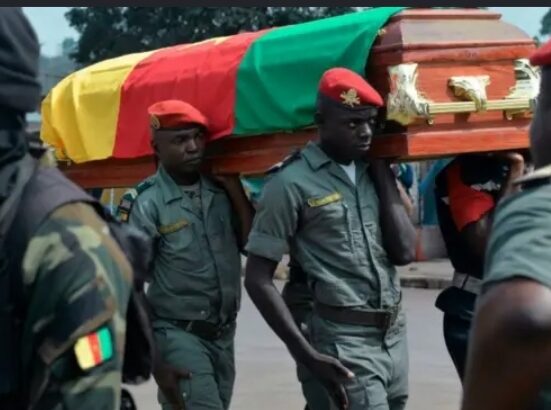
And this is why, many Ambazonians argue, the conflict escalated so violently once lawyers, teachers, students, and civil society groups began openly resisting institutional assimilation in 2016. The protests were initially peaceful. Lawyers defended Common Law traditions. Teachers defended the Anglo-Saxon educational system. Students protested marginalization. Civil society demanded restoration of constitutional protections. But once those demands collided with the rigid logic of centralized power, confrontation became inevitable. Arrests followed. Military deployments followed. Villages burned. Thousands died. Millions were displaced internally or forced into exile in places such as Nigeria and beyond. And as the war intensified, so did the psychological divide. For many Ambazonians today, the struggle is no longer viewed simply as political disagreement. It is viewed as resistance against gradual erasure.
The Battlefield of Memory
This is also why certain narratives provoke fierce reactions inside the movement. Some activists strongly reject ideological frameworks that attempt to dissolve Southern Cameroons identity into broader cultural or regional categories detached from the historical decolonization question. To them, the danger is existential. Not because they reject coexistence with other peoples. But because they fear permanent absorption into a system designed to erase the distinct political existence of the former British Southern Cameroons. History provides many examples of such processes.
Empires rarely announce assimilation openly. They normalize it slowly. Through appointments. Through maps. Through schools. Through bureaucracy. Through language. Through dependency. Through time. The Roman Empire did it through citizenship and administration. The Soviet Union used ideological integration. Modern states often rely on institutional harmonization and elite management. In the Ambazonian case, many believe the battlefield extends far beyond military confrontation. The war exists in classrooms. In courtrooms. In government appointments. In constitutional language. In demographic restructuring. In economic control. In media narratives. And ultimately, in memory itself. Because once a people loses memory of who they were politically, absorption becomes irreversible.
The Final Fear
That is why many Ambazonians continue to insist that this struggle is not merely about reform. It is about survival. Not survival as individuals. But survival as a historical people with a distinct political identity, institutional heritage, and territorial consciousness. And in their eyes, that is precisely why the resistance endures despite overwhelming military, economic, and diplomatic pressure. Because they believe history has already shown them the final consequence of silence: A nation that forgets itself eventually disappears inside another nation’s system.
Ali Dan Ismael
Editor-in-Chief, The Independentist News