










News commentary

We are home to news on Cameroon and the CEMAC region. We are dedicated to honest and reliable reporting. We are the voice of the Cameroonian people and their fight for freedom and democracy at a time when the Yaoundé government is silencing dissent and suppressing democratic voices.

Under this perspective, traditional leaders should function as non-partisan custodians of culture and unity, serving all members of their communities regardless of political affiliation. The ongoing dispute in Bangolan is therefore seen by some as part of a wider struggle to redefine the role of traditional authority in contemporary governance.
By Lester Maddox, Guest Writer
Independentistnews, Oakland County, California
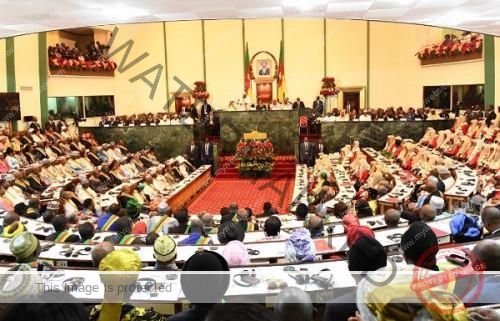
The controversy surrounding Fon Chafah reflects a broader dilemma facing many traditional rulers in the Southern Cameroons: the tension between customary authority and participation in national party politics. By accepting a seat as a Senator in Yaoundé, Fon Chafah moved from the strictly traditional sphere into the partisan political arena. Critics argue this reflects a longstanding strategy by central authorities to draw traditional institutions into state structures, thereby reducing their independence. In this view, once autonomous palaces risk becoming extensions of administrative authority rather than guardians of community interests.
This development raises an uncomfortable question for many in Bangolan and beyond: does a traditional ruler serving within party politics represent his people first, or the political system that elevated him? Observers point to recent controversies surrounding Fon Chafah’s public actions and statements as evidence, in their eyes, of a leader navigating competing loyalties between state expectations and ancestral obligations.
When a Fon assumes an overt political role, critics contend, it becomes increasingly difficult for him to challenge government authority on behalf of his people. Supporters of reform argue this dynamic has weakened trust in traditional institutions, with some communities now perceiving their rulers less as protectors and more as intermediaries for political interests.
For advocates of political and cultural reform in the region, the solution lies in restoring a clear separation between chieftaincy and party politics. Under this perspective, traditional leaders should function as non-partisan custodians of culture and unity, serving all members of their communities regardless of political affiliation. The ongoing dispute in Bangolan is therefore seen by some as part of a wider struggle to redefine the role of traditional authority in contemporary governance.
The Essential Truth:
For many observers, the dilemma remains unresolved: can a traditional ruler simultaneously embody ancestral authority and partisan political allegiance without compromising one or the other?
Lester Maddox, Guest Writer
Independentistnews, Oakland County, California
Share This Post:
A Fervent reader and contributor to The Independentistnews MC Folo, writes to The Apostolic Nuncio to Cameroon and Equatorial Guinea the most Reverend Archbishop José Avelino Bettencourt,
THE SDO IS NOT A KINGMAKER—ADMINISTRATIVE OVERREACH IN BANGOLAN
Related Post
Trump’s Deportation Deal With Cameroon Doesn’t Undermine Ambazonia—It Reveals
THE MEMORANDUM DISTRACTION: HOW THE GUARDIAN POST MANAGES A
THE FEDERALISM ILLUSION: A NECESSARY CORRECTION TO KAMTO’S MISREADING
An Ambazonian Patriot from Home Front, writes to The
Easter’s Verdict: Those Who Start Wars Must Be Named
The Architecture of Erasure: A Narrative