









Commentary

We are home to news on Cameroon and the CEMAC region. We are dedicated to honest and reliable reporting. We are the voice of the Cameroonian people and their fight for freedom and democracy at a time when the Yaoundé government is silencing dissent and suppressing democratic voices.

What is clear is that the conversation has moved beyond symbolism. It is no longer about representation alone, but about recognition—recognition of identity, of rights, and of the principles that define belonging.
By Carl Sanders
Guest Writer The Independentistnews
Soho, London
4 April 2026
For decades, a segment of the Anglophone elite has urged patience. The message was simple: assimilate, adapt, and acceptance will follow. Speak the language, align with the system, participate in its rituals, and equality will come. That promise has now been tested—and, for many, found wanting.
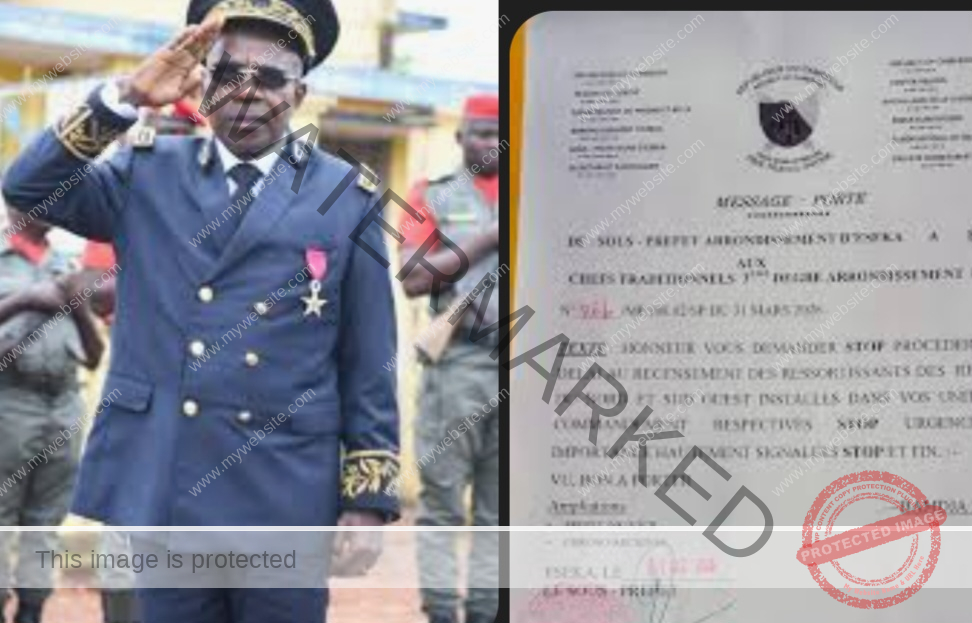
The recent directive in Eseka has brought a sharper clarity to long-standing concerns. In calling for the identification of individuals based on regional origin, the exercise did not distinguish between political affiliation, loyalty, or status. It reduced identity to origin. And in doing so, it reinforced a perception that, within the current framework, belonging may be conditional rather than equal.
This moment is being interpreted by many not as an isolated administrative action, but as part of a broader pattern—one where identity becomes a marker for scrutiny. Whether through security operations in urban areas or documentation exercises elsewhere, the effect is similar: a growing sense among some communities that they are viewed through a different lens.
The result is a shift in mindset. Where there was once an expectation of gradual inclusion, there is now a more direct questioning of the premise itself. If participation does not lead to parity, then what is the nature of the system being participated in? If identity continues to shape how individuals are treated, then can the promise of equal citizenship be sustained?
For those still invested in reform from within, these developments raise difficult but necessary questions. For others, they reinforce the belief that a different political arrangement may be required to address underlying grievances.
What is clear is that the conversation has moved beyond symbolism. It is no longer about representation alone, but about recognition—recognition of identity, of rights, and of the principles that define belonging.
The choices ahead will not be simple. But they will be shaped by a growing insistence on dignity, clarity, and a system that reflects both.
By Carl Sanders
Guest Writer The Independentistnews
Share This Post:
The Great Deception: How “Anglophone” Identity and Decentralization Are Erasing Southern Cameroons
The Invisible Occupation — Land Grabbing and the Economics of Erasure
Related Post
The Masquerade of Citizenship: Attached Without Belonging
ALERT: The Annexationist “20-Region” Plot—LRC’s Post-Papal Trap for Ambazonia
The Great Deception: How “Anglophone” Identity and Decentralization Are
The Invisible Occupation — Land Grabbing and the Economics
The Foumban Deception: Why Ambazonia’s Struggle Is the Ultimate
The Eseka Census — A Blueprint for State-Sponsored Segregation