










News commentary

We are home to news on Cameroon and the CEMAC region. We are dedicated to honest and reliable reporting. We are the voice of the Cameroonian people and their fight for freedom and democracy at a time when the Yaoundé government is silencing dissent and suppressing democratic voices.

For South African readers, the issue in Bamenda should not be viewed through the lens of confrontation, but through the lens of unfinished constitutional dialogue. Durable peace — whether through enhanced federalism, autonomy, or another lawful arrangement — must rest on clarity, consent, and constitutional legitimacy.
By Timothy Enongene Guest Editor-in-Chief The Independentistnews
BAMENDA February 2026 – South Africans understand, perhaps more deeply than most nations, that the struggle for political dignity is not simply emotional — it is legal, constitutional, and moral. The country’s own transition from apartheid to constitutional democracy stands as proof that entrenched political crises can be resolved through principled negotiation grounded in law.
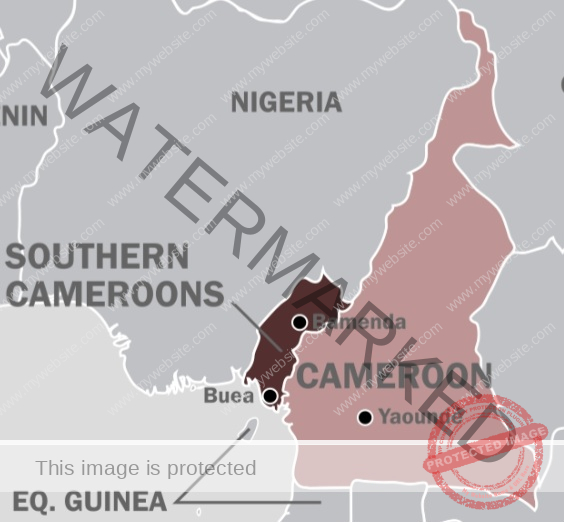
It is in this spirit that the question of the former British Southern Cameroons — today the North West and South West regions of Cameroon — deserves careful legal reflection.
The Trusteeship Legacy
The Southern Cameroons was not originally part of French Cameroun. It was a United Nations Trust Territory administered by the United Kingdom under Chapter XII of the UN Charter. As such, its decolonization process was subject to international oversight.
In 1961, a UN-organized plebiscite offered the population two options: integration with Nigeria or joining La République du Cameroun. Independence as a third option was not presented. The results were endorsed in UN General Assembly Resolution 1608 (XV), which called for negotiations between the parties to finalize arrangements before 1 October 1961.
The central legal debate today concerns whether those negotiations produced a binding and internationally registered treaty of union consistent with Article 102 of the UN Charter. Critics argue that no such treaty was formally deposited, raising questions about the legal architecture of the union. For South Africans, this resonates with a familiar principle: legitimacy flows from lawful process.
Self-Determination in International Law
The right to self-determination is embedded in: Article 1 of the UN Charter, Common Article 1 of the ICCPR and ICESCR, UN General Assembly Resolution 1514 (1960), Resolution 1514 declared that colonial peoples have the right to independence and that subjugation constitutes a denial of fundamental human rights.
International law distinguishes between internal self-determination — meaningful participation within an existing state — and external self-determination, which may arise in exceptional circumstances involving colonial rule or sustained denial of political rights.
The South African Constitutional Court, like the Supreme Court of Canada in the Quebec Secession Reference, has emphasized constitutional dialogue, negotiated settlement, and the rule of law as essential pillars in resolving sovereignty disputes.
The African Union Context
The African Union’s Constitutive Act emphasizes respect for borders existing at independence. This principle has been vital in preventing continent-wide instability.
Yet Africa has also witnessed negotiated outcomes in complex sovereignty questions — notably Eritrea and South Sudan — where internationally supervised processes were pursued after prolonged political crises.
The question for observers in South Africa is therefore not rhetorical but procedural: Was the decolonization of the Southern Cameroons fully completed in accordance with international legal standards? If ambiguities exist, can they be addressed through structured dialogue, mediation, or lawful referendum mechanisms?
Why This Matters to South Africa
South Africa occupies a unique moral and diplomatic position in Africa. Its peaceful constitutional transition demonstrated that entrenched disputes can be resolved without eroding regional stability.
The lesson of Soweto and the broader anti-apartheid struggle was not merely resistance; it was the eventual triumph of negotiated constitutionalism over coercion.
For South African readers, the issue in Bamenda should not be viewed through the lens of confrontation, but through the lens of unfinished constitutional dialogue. Durable peace — whether through enhanced federalism, autonomy, or another lawful arrangement — must rest on clarity, consent, and constitutional legitimacy.
International law does not automatically validate separation. Nor does it automatically sanctify inherited arrangements. It asks whether lawful procedures were followed and whether peoples enjoy meaningful political participation.
South Africa’s own history shows that when legitimacy is questioned, engagement — not suppression — is the path to stability.
The future of the Southern Cameroons question will not be determined by symbolism or rhetoric. It will be determined by law, documentation, negotiation, and principled mediation. For a continent still navigating the legacies of colonial cartography, that conversation is not only Cameroonian. It is African.
Timothy Enongene Guest Editor-in-Chief The Independentistnews
Share This Post:
The Ghost of Etoudi: Factional Strain and the Erosion of Authority in Cameroon
Open Letter from Bamenda, to the Government of the Republic of South Africa
Related Post
Trump’s Deportation Deal With Cameroon Doesn’t Undermine Ambazonia—It Reveals
THE MEMORANDUM DISTRACTION: HOW THE GUARDIAN POST MANAGES A
THE FEDERALISM ILLUSION: A NECESSARY CORRECTION TO KAMTO’S MISREADING
An Ambazonian Patriot from Home Front, writes to The
Easter’s Verdict: Those Who Start Wars Must Be Named
The Architecture of Erasure: A Narrative