

The fourteen people killed in Gidado were not “collateral damage” in a communal dispute. They were victims of a system that values political survival over human life. The blood is not only on the soil of Ntumbaw—it is squarely on the hands of those who rule in Yaoundé.
By Timothy Enongene
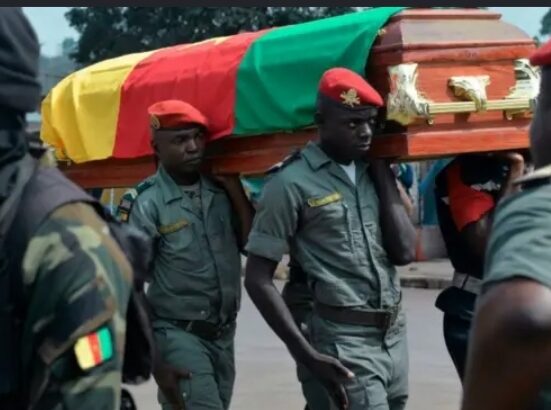
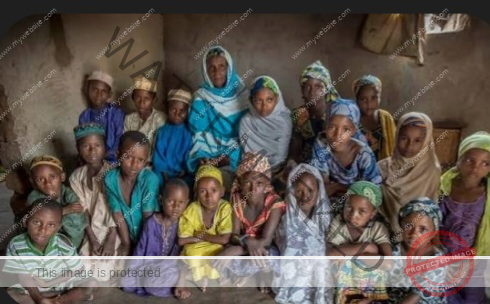
Yaoundé January 16, 2026 – The images emerging from Gidado village near Ntumbaw are not merely photographs of a crime scene; they are a direct indictment of a government that has turned the abandonment of its own citizens into a strategic weapon. As fourteen bodies are counted—seven of them children who will never sit in a classroom—the question is no longer who pulled the trigger, but who cleared the path for the bullets.
A Calculated Absence
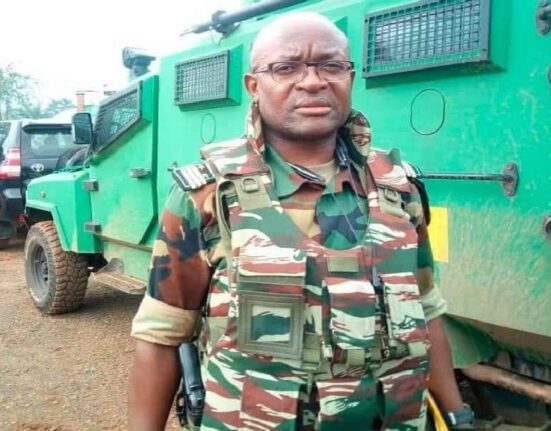
The Biya regime maintains a heavy military footprint across Donga Mantung Division. Yet on the morning of January 14, 2026, as families were being slaughtered in Gidado, the state’s so-called protectors were nowhere to be found. This is the signature of Yaoundé’s strategy: a deliberate absence that allows maximum carnage. By leaving the Mbororo community exposed, the regime manufactures the very “victims” it later deploys in international propaganda.
To the Biya administration, these fourteen lives are not a tragedy; they are a talking point. They provide cover for a war the regime once promised would be over in two weeks—a war now entering its ninth year of bloodshed and stalemate.
The “Communal War” Exit Strategy
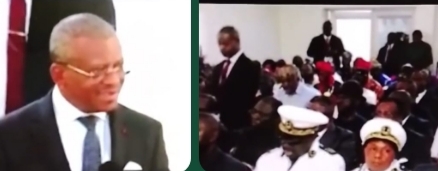
President Paul Biya’s December 31, 2025 address signaled a dangerous shift. By calling on “traditional rulers and local elites” to resolve the conflict, the state began washing its hands of the violence it created. In this new narrative, the massacre in Gidado is being framed as an “inter-communal clash” between the Mbororo and the Wimbum.
This is a lie. What is unfolding is a state-managed war being repackaged as a neighbor-on-neighbor feud so the regime can stage a clean exit. If the conflict is “communal,” Yaoundé can pose as a neutral referee rather than the chief arsonist. They want the world to see Mbororo versus Wimbum so it does not have to see Cameroon versus Ambazonia.
Echoes of a Dark Pedigree
The blood in Gidado is soaked into a history the regime hopes we have forgotten. These tactics—stoking ethnic tension to fracture resistance—were refined in the 1950s against the Bassa and in the 1970s against the Bamiléké. Divide and rule has always been the regime’s survival doctrine. Today, the Mbororo are its latest casualties: first instrumentalized as proxies, then abandoned to bear the consequences alone.
A Call for International Accountability
Yaoundé must answer for the security vacuum in Gidado. We cannot allow a regime to investigate itself—a farce that produced the initial cover-up of the Ngarbuh massacre in 2020.
We therefore demand: An International Fact-Finding Mission to investigate the January 14 massacre and determine why troops stationed nearby failed to intervene.
An End to Instrumentalization, including the arming and manipulation of vulnerable minority communities as paramilitary buffers.
Direct Accountability for the more than 70,000 lives lost in a conflict the regime continues to prolong instead of resolve through genuine political dialogue.
The fourteen people killed in Gidado were not “collateral damage” in a communal dispute. They were victims of a system that values political survival over human life. The blood is not only on the soil of Ntumbaw—it is squarely on the hands of those who rule in Yaoundé.
Timothy Enongene
Timothy Enongene is a legal and political commentator with interest in the Southern Cameroons conflict.