

Southern Cameroons received no sovereignty, no recognition, no prisoner release, no military withdrawal, no accountability mechanism and no credible roadmap. That is the gathering stripped of titles, broadcasts and political cosmetics. It was not a diplomatic breakthrough. It was the auction of Ambazonia. And the people must refuse to be sold.
By Ali Dan Ismael, Editor-in-chief The Independentist News
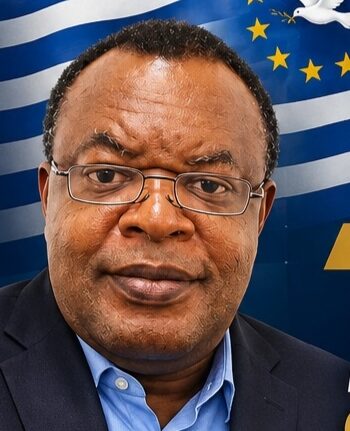
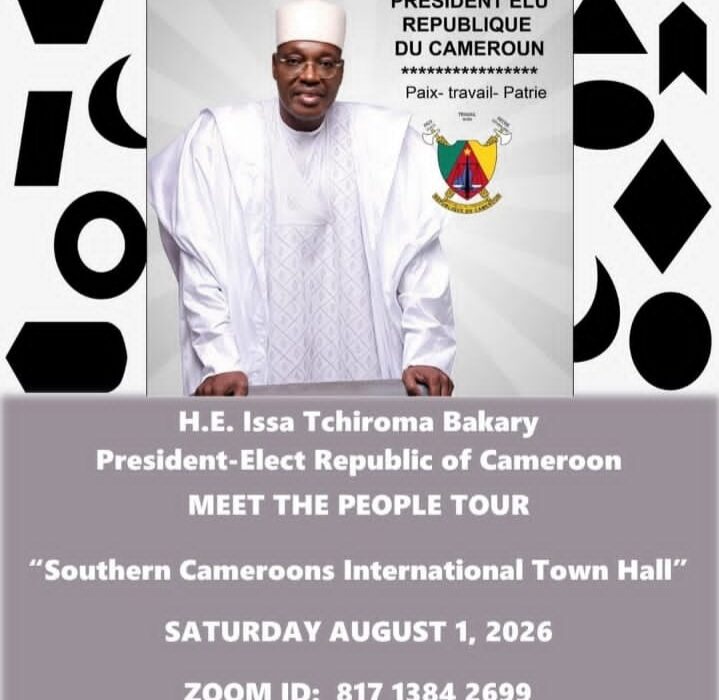
The reported virtual meeting between Issa Tchiroma Bakary and a collection of individuals whom this editorial describes, based on the political effect of their conduct, as disgraced Southern Cameroons anti-independentists was advertised as a serious engagement with the man its organizers presented as the “President-Elect” of Cameroon.
Those reportedly participating in or publicly associated with the gathering included Chris Anu, Dr. Ngwambe, Eric Chinje, Emmanuel Tita, Maggie Kilo, Dr. C. Agbor, Michael Takie, Francis Mbah, Eugene Ateh, Chris Ajua, Professor Gabilla Nubong, Francis Awokang, Marc Chinje, Tambu Ngang, Joyce Nyamboli, Fru Jonathan, Chief Luma Tennyson, Edmund Folefac and Armstrong Agbor Tabi. Because a complete authenticated attendance record has not been independently established, every named person has a responsibility to clarify publicly whether he or she participated, in what capacity, under whose mandate and with what political objective.
The spectacle was carried to a much larger audience by Mimi Mefo Info, whose public channels streamed or promoted Issa Tchiroma’s appearance at what was described as a Southern Cameroons town hall organized by diaspora actors. Mimi Mefo Info’s own announcement stated that Tchiroma was speaking at such a town hall, while the event’s promotional framing elevated his disputed presidential claim.
If the reported participant list and public framing are accurate, this was not a harmless conversation among private citizens. It was a coordinated political spectacle in which recognizable Southern Cameroons names, organizations and media platforms were assembled around Tchiroma’s contested claim to the presidency of Cameroon.
The meeting was marketed as dialogue. In political substance, however, it looked more like an auction at which the history, suffering and sovereign aspirations of Southern Cameroons were placed on the table as negotiable currency.
On one side sat Issa Tchiroma, the former Minister of Communication and government spokesman who spent years defending the political and security machinery of the Paul Biya regime. He left the government only in 2025 before challenging Biya in the October presidential election. Reuters described him as a former government spokesman and close Biya ally who later declared himself the election winner, while acknowledging that he had previously defended the government during the Southern Cameroons conflict.
On the other side sat Southern Cameroons figures who use different organizational titles and political labels but whose participation risked strengthening the claim of a man seeking to govern Cameroon without offering any corresponding recognition of Southern Cameroons as a separate political entity.
Behind the cameras stood a media architecture capable of converting a disputed gathering into a symbolic national event. Project C supplied the electoral narrative. Eric Chinje supplied intellectual and media respectability. Chris Anu supplied Ambazonian symbolism. Mimi Mefo Info supplied an international broadcast platform. The other participants supplied numbers, names and the appearance of a broad Southern Cameroons constituency.
Each party entered the gathering carrying a legitimacy deficit.
Tchiroma needed recognizable Southern Cameroonian faces to manufacture the appearance of national acceptance. Chris Anu needed proximity to a former minister and self-proclaimed president-elect to revive his disputed claim of diplomatic relevance. Eric Chinje needed another platform on which to prolong the life of Project C after its electoral projection failed to produce a transfer of power, international recognition or control of the state. Mimi Mefo Info obtained a politically explosive broadcast capable of attracting attention, engagement and influence. What emerged was not credible diplomacy. It was mutual legitimacy laundering.
Tchiroma Cannot Wash His Record with a Town Hall
Issa Tchiroma was not an obscure civil servant operating at the margins of the Biya government. He served as a senior minister and government spokesman before remaining in the cabinet as employment minister. When he broke with Biya in June 2025, he did so after years inside the political establishment he now denounces.
During some of the most consequential years of the Southern Cameroons conflict, Tchiroma was among the government’s most visible public defenders. He was not standing outside the system warning against its conduct. He stood behind official microphones defending its narratives and contesting reports that damaged the government’s credibility.
When Southern Cameroons lawyers protested against the erosion of the common-law system, when teachers resisted the destruction of the English educational heritage and when civilians demanded constitutional and political justice, the government did not initially respond with an honest examination of the historical grievance. It responded through arrests, internet restrictions, security deployments and official narratives that routinely framed the dispute as a problem of extremism, terrorism and public disorder.
As communications minister, Tchiroma occupied a position at the heart of that narrative machinery. One academic study hosted on the Mimi Mefo Info website itself recalls an incident in which Tchiroma rejected allegations against the military as false before later evidence forced a reconsideration of the official position.
Only after leaving the government and requiring votes from the English-speaking regions during the 2025 presidential campaign did Tchiroma publicly apologize for his past position. Reuters reported that he acknowledged military atrocities and apologized for defending government abuses during the conflict. The apology was politically significant, but it was insufficient.
No ministerial appointment compels a person to deny human suffering. No cabinet position morally requires a public official to minimize abuses or transform a constitutional dispute into a security slogan. Tchiroma cannot present himself today as courageous, independent and qualified to lead a country while portraying his former self as a powerless messenger who had no choice but to repeat the regime’s position.
He cannot be powerful enough to govern Cameroon today but claim that he was too powerless to tell the truth yesterday. An apology delivered when electoral support is required is not the same as accountability. Accountability requires disclosure. It requires an explanation of what Tchiroma knew, when he knew it and how official information was selected, concealed or distorted. It requires naming the officials and institutions responsible for abuses. It requires independent investigations, prosecutions, reparations and a political settlement that addresses the origins of the conflict.
Tchiroma has acknowledged enough to confirm that grave wrongs occurred, but he has not yet accounted for his own role in defending the system that committed them. He appears to be attempting a political reincarnation from regime spokesman to persecuted democrat without submitting to the moral and historical reckoning that such a transformation demands.
A Victim of the Machinery He Once Defended
There is bitter irony in Tchiroma’s present political condition. The former government spokesman who defended the Cameroonian state now accuses that same state of electoral theft, repression and institutional manipulation. After declaring victory in the October 12, 2025 election, he rejected the official results and maintained that the people’s choice had been stolen. The official result gave Biya 53.66 percent and Tchiroma approximately 35 percent, while Tchiroma and his supporters continued to claim that their own tallies showed victory. Southern Cameroonians had been describing the same machinery for years.
They had argued that the centralized state controls courts, electoral institutions, security forces, administrative appointments and public narratives. They had complained that constitutional demands were dismissed, peaceful demonstrations criminalized and state violence denied or justified.
Tchiroma discovered the injustice of the system most forcefully when it acted against his own political ambition. When Southern Cameroons communities were militarized, political leaders imprisoned and families displaced, Tchiroma stood inside the government. When the same establishment allegedly denied him access to Etoudi, the system suddenly became an intolerable dictatorship.
Tchiroma therefore appears to have learned that the Cameroonian state is unjust when it denies him power. He has not demonstrated that he understands why Southern Cameroons challenges the state’s assumed authority over its territory, identity and political future.
His disagreement with Biya does not automatically make him an ally of Ambazonia. It may simply mean that two products of the Cameroonian political establishment now disagree over who should inherit its machinery. A former spokesman for a repressive state does not become a liberator merely because that state later turns against him. A prison guard does not become an advocate for freedom merely because another guard locks him outside the prison gates.
“President-Elect” by Diaspora Coronation
The organizers’ use of the title “President-Elect” was not an innocent courtesy. It was a political concession. Tchiroma declared victory before official results were proclaimed, and Project C became one of the principal vehicles advancing that conclusion. Project C’s published materials rejected the official result and argued that polling-station evidence showed Tchiroma had won. Eric Chinje publicly signed or promoted communications defending that position.
Cameroon’s official electoral process may have been deeply flawed. Allegations of manipulation deserve independent scrutiny, and the Constitutional Council’s proclamation cannot automatically be treated as proof of a free and fair election.
Nevertheless, rejecting the official result does not itself transform a unilateral declaration into an internationally recognized presidency. No transfer of power occurred. No major government recognized Tchiroma as Cameroon’s president. He did not obtain control of state institutions, territory, security forces, the treasury or the diplomatic service. The expression “President-Elect” therefore remained a contested political claim promoted by Tchiroma and his supporters.
Yet the Southern Cameroons gathering granted him that recognition before obtaining any comparable political concession. Tchiroma’s disputed claim was honoured. Southern Cameroons’ claim was subordinated. His asserted mandate over Cameroon was treated as worthy of respect, while the right of Southern Cameroonians to determine their own political future remained subject to his vision of the state. This was not negotiation between equals.
It was a diaspora coronation performed by people who possessed no demonstrated authority to crown the president of Cameroon in the name of Southern Cameroons. Several of the participants claim to support an independent Ambazonia. That makes the contradiction even more severe. How can individuals claiming to represent a separate sovereign state recognize a claimant to the presidency of Cameroon without first requiring him to recognize Southern Cameroons as a separate political entity?
How can they validate his claim to govern a united Cameroon while insisting that their own independence position remains uncompromised? The two positions cannot comfortably coexist.
Anti-Independentism Is Measured by Conduct
The term “anti-independentist” should not be restricted to individuals who openly declare that they oppose Southern Cameroons independence. Anti-independentism can also be expressed through conduct that weakens, compromises or reverses the independence objective while preserving the language, symbols and titles of the struggle.
A person may wave an Ambazonian flag, describe himself as a president and speak repeatedly of restoration. But if his political actions legitimize the sovereignty claims of La République du Cameroun, reduce Southern Cameroons to a constituency in a Cameroonian election and subordinate the national cause to the ambitions of a claimant to Etoudi, then the effect of his conduct is anti-independentist.
Political identity must be judged not only by declarations but also by outcomes. If an action strengthens La République du Cameroun’s claim over Southern Cameroons, presents the conflict as an internal electoral grievance or recognizes a Cameroonian presidential claimant without obtaining reciprocal recognition of Southern Cameroons, that action works against independence.
The participants may insist that they were simply listening or engaging. But political meetings are not neutral because organizers call them conversations. Titles, introductions, symbols, media framing and participant selection all carry political meaning.
When Tchiroma is introduced as President-Elect of Cameroon and the Southern Cameroons attendees accept the platform without securing recognition of their own claimed sovereign status, the Cameroonian framework prevails. That is the political outcome.
The Eleventh-Province Mentality
The phrase Eleventh-Province rejects captures the contradiction at the heart of the gathering. These are figures who proclaim Ambazonian nationalism when addressing suffering Southern Cameroonians but revert to Cameroonian provincial politics when seeking access to prominent Cameroonian politicians.
They behave as though Southern Cameroons is sovereign when seeking loyalty, authority, financial support and organizational recognition from the diaspora. Yet they behave as though it is merely another region of Cameroon when presented with an opportunity to enter the orbit of a politician seeking control of Etoudi. This is not strategic flexibility. It is political identity without discipline.
A genuine liberation movement cannot declare independence in the morning and confer legitimacy upon the would-be president of a united Cameroon in the afternoon. It cannot demand sacrifices from the Home Front while positioning diaspora figures for access, accommodation or possible appointments inside a future Cameroonian administration.
The Eleventh-Province mentality rarely announces itself honestly. It hides behind the language of dialogue, pragmatism, peace, consultation and engagement. Its practitioners insist they are merely talking to everyone or exploring every possible solution.
But the decisive issue is not whether political conversations occur. Serious movements communicate even with adversaries. The decisive issue is the framework, mandate, objective and outcome of the conversation.
When Tchiroma is publicly elevated as President-Elect of Cameroon while Southern Cameroons receives no reciprocal recognition, the framework is clear. The participants have entered Tchiroma’s political house. He has not entered theirs. They are not being received as representatives of a sovereign nation. They are being treated as dissatisfied Cameroonians who may eventually be accommodated inside a reorganized state.That is the Eleventh-Province trap.
Chris Anu: From Independence Rhetoric to Tchiroma’s Waiting Room
Chris Anu’s role deserves the sharpest scrutiny. Anu presents himself as president of an Ambazonian Interim Government committed to completing the decolonization of Southern Cameroons. His organization’s website explicitly describes his mandate as finalizing the decolonization process and establishing a functioning government throughout the territory.
Yet the wider Ambazonian movement remains fragmented among several competing organizations and rival claimants to presidential or governmental authority. Publicly available descriptions acknowledge that multiple factions claim to constitute the legitimate Interim Government.
Chris Anu has not been elected by the Southern Cameroons population through a transparent, territory-wide democratic process. He may represent his faction and its supporters, but he does not possess an uncontested mandate to negotiate, confer recognition or speak in the name of the entire people.
He is free to meet Tchiroma as an individual or factional leader. He is not free to create the impression that Southern Cameroons has formally recognized Tchiroma as the legitimate president of a state whose territorial claim it disputes. The contradiction is glaring.
A man who calls himself president of an independent Ambazonia appeared at an event where Tchiroma was presented as president-elect of a Cameroon whose claimed territorial boundaries include Southern Cameroons.
What did Chris Anu obtain in return?
There is no publicly demonstrated evidence that Tchiroma recognized Southern Cameroons as a separate political party to the conflict. There is no evidence that he accepted the right of its people to determine their political status through a process whose outcome would not be predetermined by Yaoundé.
There is no visible commitment to unconditional prisoner releases, internationally mediated negotiations, military withdrawal, transitional justice or accountability for abuses committed by the state. Tchiroma received the title he wanted.
Chris Anu received access.
That is not diplomatic reciprocity. It is political asymmetry dressed in the vocabulary of engagement. Friendship Is Not Foreign Policy During the 2025 campaign, Tchiroma publicly portrayed Chris Anu as a friend and political contact. Chris Anu reportedly acknowledged that discussions had occurred while denying that he had formally endorsed Tchiroma.
That distinction becomes less persuasive when the relationship develops into public political engagement framed around Tchiroma’s presidential claim.
When a person claiming to lead a liberation government repeatedly communicates with a former regime minister, appears in events built around that minister’s ambition and produces no measurable concession for the people he claims to represent, the public is entitled to ask whether the relationship is strategic, diplomatic or merely personal. Friendship is not foreign policy. Access is not recognition.
A telephone call is not a diplomatic achievement.
Appearing beside a self-proclaimed president-elect does not elevate an unrecognized factional leader into a recognized head of state. It may instead reduce a liberation struggle to a supporting role in another politician’s campaign to capture Yaoundé.
Chris Anu must explain whether he is pursuing Southern Cameroons sovereignty or negotiating his faction’s relevance inside Tchiroma’s imagined Cameroon.He cannot credibly do both at the same time.
The Washington “Embassy” Mirage
Chris Anu’s Washington office offers another example of symbolism being presented as diplomatic progress.. In December 2023, reporting described the Chris Anu-led faction as opening a “diplomatic office” in Washington, D.C. The public report called it an office and associated it with one faction of the Ambazonian Interim Government. Supporters later referred to the operation as an embassy or diplomatic mission.
But an embassy is not created merely by renting or acquiring premises, displaying a flag, printing letterhead and organizing an inauguration. An embassy ordinarily exists within a recognized diplomatic relationship. Its representatives are accredited to a host government and derive their authority from a recognized sending state.
There is no publicly established evidence that the United States recognized Ambazonia as a sovereign state, accepted an Ambazonian ambassador or accredited Chris Anu’s office as a foreign embassy.
The office may serve as an advocacy centre. That could be valuable. It could engage members of Congress, human-rights organizations, journalists, universities and diaspora communities. It could document abuses and promote the Southern Cameroons case. There is no shame in calling an advocacy office an advocacy office.
The problem begins when branding creates the impression that diplomatic recognition has been achieved when it has not. Which United States authority accepted diplomatic credentials from the office? What formal document established a recognized bilateral mission? What accredited consular functions does it perform? Which government communicates with it as the official representation of a recognized foreign state? A flag cannot answer those questions. A signboard is not sovereignty. An office is not automatically an embassy. A faction-appointed representative is not automatically an accredited diplomat.
The danger is not only institutional embarrassment. It is the inflation of expectations among Southern Cameroonians who may believe that a major recognition breakthrough has occurred when the tangible achievement is an advocacy presence in Washington. The people deserve institutional truth rather than theatrical diplomacy.
From the Washington Mirage to Tchiroma’s Virtual Court
The weakness of the Washington “embassy” claim becomes more visible when set beside the Tchiroma meeting. A sovereign government represented by a functioning embassy would not ordinarily allow its supposed president to attend an event recognizing a claimant to the presidency of the opposing state without first securing recognition of its own sovereign standing.
A credible diplomatic mission would not permit the territorial claim of the other state to be ceremonially affirmed while its own status remained unrecognized.
The Washington office was promoted as evidence that Chris Anu’s faction had entered international diplomacy. The Tchiroma gathering instead revealed the limits of its diplomatic leverage. Tchiroma did not approach Chris Anu as one president meeting another.
He appeared before a collection of Southern Cameroons figures as the man they were invited to treat as the future president of Cameroon. Chris Anu’s presence helped elevate Tchiroma’s claim. Tchiroma’s participation did not establish Chris Anu’s authority. One side received political validation. The other received a livestream and another opportunity to present activity as achievement.
Project C: A Projection Without a Presidency
Eric Chinje’s involvement places Project C at the centre of the controversy. Project C presented itself as a diaspora-driven initiative seeking to defend votes and facilitate democratic transition during Cameroon’s 2025 election. It projected Tchiroma as the winner and later rejected the Constitutional Council’s official results. Its own website identifies Eric Chinje as a promoter and includes statements advancing Tchiroma’s victory claim.
Project C may have assembled significant polling data. It may have documented genuine inconsistencies. Cameroon’s electoral system has long faced credibility concerns, and an official proclamation cannot automatically invalidate every alternative tabulation. Political projects, however, must be evaluated by outcomes as well as declarations.
Project C projected Tchiroma as the winner, but Biya remained in power. It demanded a transition, but no transition occurred. It published figures, but those figures were not converted into institutional control. It appealed to the international community, but no major government recognized Tchiroma as president.
Project C announced the political birth of a new republic, but no new republic emerged. This does not prove that every number Project C published was false. It demonstrates that Project C failed to translate its claimed electoral mandate into sovereign authority.
Votes without enforceable institutions remained figures on paper. Declarations without recognition remained political statements. A president without state power remained a claimant.
Project C confused the announcement of victory with the acquisition of power. Data, media influence and diaspora advocacy were not enough to compel an entrenched state apparatus to surrender control. The project’s failure was therefore not necessarily one of arithmetic. It was a failure of political strategy, institutional preparation and enforceable transition planning.
Eric Chinje Was Not a Neutral Moderator
Eric Chinje cannot credibly present himself as a detached journalist or elder merely facilitating dialogue. He was publicly identified as a Project C promoter and a prominent advocate of Tchiroma’s claimed victory. His political investment in the Tchiroma project was therefore visible. That does not eliminate his right to convene or participate. It eliminates the appearance of neutrality.
When Eric Chinje participates in a meeting at which Tchiroma is introduced as President-Elect, he is not merely hosting an exchange of views. He is advancing the political narrative Project C constructed after the election.
The Southern Cameroons attendees consequently risked becoming supporting actors in a Project C production. Project C needed recognizable Southern Cameroonians to demonstrate that Tchiroma’s appeal extended beyond his northern base and conventional Cameroonian opposition constituencies. Tchiroma needed Ambazonian-linked faces to suggest that even independence advocates were prepared to treat him as Cameroon’s legitimate leader.
Chris Anu needed association with Tchiroma and Eric Chinje to reinforce his own claims of diplomatic relevance. Each party borrowed legitimacy from the others. None demonstrated a measurable outcome for Southern Cameroons.
Mimi Mefo: From Journalism to Political Amplification
Mimi Mefo’s role requires separate examination because journalism is not simply another seat at a political meeting. A media platform determines which claims are amplified, what titles are repeated, which political actors are normalized and what context audiences receive.
Mimi Mefo Newuh is an award-winning Cameroonian journalist and founder of Mimi Mefo Info. She studied journalism at the University of Buea and built part of her early career in English-language broadcasting. Her public biography records her press-freedom advocacy, her arrest in 2018 and her subsequent international journalism work.
That record deserves acknowledgement. It does not place her platform beyond scrutiny. Her training at the University of Buea gave her direct exposure to the English-language media environment and the political sensitivities surrounding Southern Cameroons. Her birthplace or family ancestry, however, neither proves bias nor establishes disloyalty. Political responsibility must be measured by professional conduct, not ethnicity.
The legitimate criticism is therefore not that Mimi Mefo is of any particular ancestry. It is that her platform’s handling of the Tchiroma event risked reinforcing an Eleventh-Province political narrative.
MMI publicly announced that Tchiroma was live on its platform speaking at a Southern Cameroons town hall. The broadcast gave the gathering a large audience and increased the political value of its imagery, titles and participant list.
Broadcasting a controversial event is not inherently improper. Journalists interview disputed politicians, armed actors, government officials and opposition leaders. The problem arises when a media platform transmits a political spectacle without sufficiently interrogating its assumptions.
Did MMI clearly and repeatedly explain that “President-Elect” was a disputed political designation rather than a recognized office? Did it confront Tchiroma with his role as government spokesman during the early and violent years of the Southern Cameroons conflict? Did it ask what information he possessed about state abuses and why he defended the government until his own political fortunes changed?
Did it demand that Tchiroma explain whether Southern Cameroons is a distinct party to an international political dispute or merely an internal constituency awaiting accommodation?
Did it ask Chris Anu how a self-proclaimed president of Ambazonia could participate in a ceremony built around recognizing the president-elect of Cameroon? Did it test the mandate of the other participants? Did it explain Project C’s political interest in promoting Tchiroma’s title?
These are the questions separating reporting from political amplification. A media platform becomes part of an event when it carries ceremonial titles, adopts promotional framing and provides mass distribution without applying adequate editorial scrutiny. The camera then does not merely observe the transaction. It increases its political value.
The Eleventh-Province Poster Image
For critics of the broadcast, Mimi Mefo risks becoming the media poster image of the Eleventh-Province mentality—not because of her birthplace or ancestry, but because of the political frame her platform helped distribute.
The Eleventh-Province narrative treats Southern Cameroons not as a people entitled to decide their political future, but as a dissatisfied regional constituency waiting for a better president in Yaoundé. Under that narrative, the problem is not the constitutional and historical relationship between Southern Cameroons and La République du Cameroun. The problem is merely bad governance under Paul Biya.
The proposed solution is therefore not a settlement based on consent and self-determination. It is a change of leadership at Etoudi.
By broadcasting Tchiroma to a Southern Cameroons audience under a disputed presidential frame, without visibly obtaining reciprocal recognition of Southern Cameroons’ political claim, MMI risked helping convert a decolonization struggle into a Cameroonian opposition campaign. That is the core criticism.
Mimi Mefo’s Southern Cameroons journalism training should have increased her sensitivity to this danger. It should have produced harder questioning, clearer distinctions and more rigorous contextualization.
Instead of presenting Tchiroma primarily as a democrat challenging Biya, the platform should have confronted the contradiction between his claimed right to have an electoral mandate respected and his apparent unwillingness to permit Southern Cameroonians to determine their own political status. A Southern Cameroons audience needed interrogation, not coronation. It needed context, not ceremonial titles. It needed journalism that exposed the political transaction rather than magnifying it.
Disinformation, Misinformation, or Narrative Laundering?
The charge of a deliberate disinformation campaign requires evidence that false or misleading information was knowingly or systematically disseminated. The public record reviewed here does not establish Mimi Mefo’s personal intent to deceive.
It does, however, justify serious criticism of misleading political amplification and narrative laundering. When a contested claimant is repeatedly described or visually framed as President-Elect without adequate qualification, audiences may mistake a partisan claim for an established fact. When factional actors are presented as Southern Cameroons interlocutors without explaining their disputed mandates, viewers may mistake selected participation for representative consent.
When an advocacy office is described through diplomatic terminology without clarifying the absence of United States recognition, viewers may mistake symbolism for sovereignty. When Project C’s projection is repeated without an equally prominent explanation that it produced no transfer of power or international recognition, political aspiration may be mistaken for institutional reality.
These distortions do not require invented facts. They can be produced through omission, emphasis, ceremonial language and selective framing. That is how narrative laundering operates.
A political claim begins within a faction. A respected media figure repeats it. A large platform broadcasts it. Familiar participants appear around it. The image then circulates as though legitimacy has been independently established. The public begins to remember the ceremony rather than the unresolved facts.
Whether one calls this misinformation, propaganda amplification or editorial failure, its effect can be damaging. It narrows public understanding and strengthens a political narrative that may be fundamentally opposed to Southern Cameroons independence.
Journalism Must Interrogate Power, Not Decorate It Mimi Mefo’s professional history creates a higher obligation, not automatic immunity. She knows the risks journalists face under authoritarian systems. She has experienced imprisonment and pressure connected to reporting on the conflict. Her platform has built credibility among audiences seeking information outside official government channels.
That credibility is an asset. It is also a responsibility. MMI should clarify whether it accepted or merely reported the “President-Elect” designation. It should explain what editorial safeguards were used to distinguish Project C’s claim from established fact. It should publish or preserve the full unedited record of the meeting and identify which participants were organizers, speakers, invitees or observers.
It should also explain whether Tchiroma was challenged concerning his ministerial record, whether Chris Anu was questioned about the contradiction between Ambazonian sovereignty and Cameroonian presidential recognition, and whether the participants’ mandates were independently verified. Journalism must illuminate power, not decorate it.
A media platform should not become the communications wing of borrowed legitimacy. Until MMI answers these questions, critics are entitled to argue that the platform did not merely report the auction of Ambazonia. It helped provide the auctioneer with a microphone.
An Electoral Failure Seeking an Ambazonian Lifeline
Project C’s intervention in Southern Cameroons politics appears capable of extending the life of a presidential project that did not achieve its declared objective.
Unable to install Tchiroma in Yaoundé, its promoters can now reposition him as the opposition leader best qualified to resolve the Southern Cameroons conflict. By drawing selected diaspora figures into his orbit, they can construct the image of a national reconciliation coalition.
Southern Cameroons must not become a rehabilitation centre for unsuccessful La République du Cameroun presidential projects.
Its struggle is not an electoral reserve to be activated whenever a politician requires additional legitimacy. Southern Cameroonians are not responsible for compensating Project C for its inability to convert polling data into political power.
Nor should anyone assume that a Tchiroma presidency would produce liberation merely because Tchiroma now claims persecution by the system he once served.
A change in the occupant of Etoudi is not automatically a change in the political architecture of the state.
Replacing Paul Biya with Issa Tchiroma could merely give the same centralized system a new manager, new vocabulary and a more internationally marketable face. Tchiroma’s Struggle Is Not Ambazonia’s Struggle Tchiroma’s dispute concerns who should control Cameroon. The Southern Cameroons dispute concerns whether Cameroon possesses a legitimate and consensual constitutional claim over Southern Cameroons in the first place.
Tchiroma seeks recognition of votes he says were stolen in 2025. Southern Cameroons demands examination of a political relationship whose constitutional foundations have been disputed for generations. Tchiroma seeks entry into Etoudi. Southern Cameroons seeks freedom from subordination to Etoudi.
Tchiroma wants the machinery of the Cameroonian state transferred to him. Southern Cameroons challenges that machinery’s presumed authority over its territory and people. These are not identical struggles.
The fact that Tchiroma opposes Biya does not make him an ally of Ambazonia. His experience of electoral injustice does not erase his years of service to a system accused of inflicting far more destructive injustice upon Southern Cameroons. A quarrel between two Cameroonian politicians over the keys to Etoudi must not be confused with a struggle for decolonization and self-determination.
The Disgraced Southern Cameroons Anti-Independentist Class
The reported participants reveal a deeper crisis within the Southern Cameroons movement.For years, self-appointed leaders have announced governments, cabinets, diplomatic missions, restoration councils, coalitions and military structures. Some have issued decrees, awarded titles and claimed national authority without facing the people through a credible election or accountability process.
The Home Front has buried the dead. Refugees have endured displacement. Political prisoners remain separated from their families. Communities have lost homes, livelihoods and security.
Meanwhile, sections of the diaspora political class have fought over titles, social-media platforms, organizational accounts and ceremonial recognition. Too many have confused visibility with legitimacy. Too many have treated livestream audiences as electoral constituencies. Too many have mistaken organizational letterhead for governmental authority. Too many have called themselves presidents, ambassadors and cabinet ministers without building the institutions that would give those titles meaning.
This is how anti-independentism develops inside a movement that publicly invokes independence. It begins when titles become more important than outcomes. It grows when access to Cameroonian politicians is marketed as diplomacy. It matures when factional figures become willing to subordinate the national objective to their own visibility, survival or possible inclusion in future political arrangements.
The Tchiroma meeting was therefore not merely an embarrassing gathering. It was the predictable consequence of a political culture in which personal relevance repeatedly takes precedence over collective strategy.
A movement that permits anyone with a website, faction and social-media following to claim national authority will eventually discover that its cause is being traded at meetings the people never authorized.
Who Mandated the Anti-Independentists?
Chris Anu, Dr. Ngwambe, Eric Chinje, Emmanuel Tita, Maggie Kilo, Dr. C. Agbor, Michael Takie, Francis Mbah, Eugene Ateh, Chris Ajua, Professor Gabilla Nubong, Francis Awokang, Marc Chinje, Tambu Ngang, Joyce Nyamboli, Fru Jonathan, Chief Luma Tennyson, Edmund Folefac, Armstrong Agbor Tabi and every other reported participant must clarify whether he or she attended and in what capacity.
Were they private citizens, organizational representatives, advisers, intermediaries or negotiators? Did they approve the use of Tchiroma’s contested “President-Elect” title? Did they know their names and images could be used to suggest Southern Cameroons acceptance of his Cameroonian political project?
Who approved the agenda? What positions were agreed upon before the meeting? What concessions were demanded? What commitments were obtained? Was a written record produced? The complete and unedited discussion should be released.
Each participant should state whether he or she recognizes Tchiroma as president-elect of a state claiming Southern Cameroons as part of its territory. Each should clarify whether participation implied support for Project C, federalism, decentralization, continued union or a future Tchiroma-led Cameroonian government.
Silence will deepen suspicion that the meeting was designed to manufacture political optics rather than secure substantive outcomes. No factional figure possesses the right to negotiate the political future of Southern Cameroons in exchange for promises of appointments, amnesty, federalism or inclusion in a future administration.
The people did not endure war so diaspora actors could negotiate positions in another version of Yaoundé. Any legitimate negotiation must be transparent, representative, professionally prepared and accountable to the people who will live with its consequences.
Anything less is political freelancing. Dialogue Is Not the Problem Dialogue itself is not betrayal.Serious liberation movements communicate with adversaries, governments, mediators and international institutions. They examine divisions inside opposing systems, cultivate contacts and assess strategic opportunities.
Refusing every conversation would be politically foolish. But serious dialogue requires discipline. A representative does not enter a meeting without a mandate. He does not grant titles without reciprocity. He does not validate the sovereignty claims of the opposing state while obtaining no equivalent recognition.
He does not confuse personal access with diplomatic achievement. He does not emerge from a meeting with publicity but no written concessions. Dialogue must advance a defined national objective. Otherwise, it becomes theatre. The Tchiroma meeting appears to have advanced Tchiroma’s objectives much more effectively than those of Southern Cameroons.
What Tchiroma Must Answer
Before Tchiroma receives another Southern Cameroons platform, he must state whether he accepts Southern Cameroons as a distinct political party to the conflict rather than merely a dissatisfied population inside Cameroon.
He must explain whether he supports internationally mediated negotiations between La République du Cameroun and duly mandated Southern Cameroons representatives. He must state whether he accepts that the final outcome cannot be predetermined by Yaoundé.
He must explain whether he will support independent investigations into abuses, accountability for responsible officials, the release of political prisoners and the withdrawal of military forces from civilian communities.
Above all, he must state whether he recognizes the right of Southern Cameroonians to determine their political future and whether he is prepared to disclose what he knew as government spokesman about military conduct and the state’s communication strategy.
Without clear answers, Tchiroma is not proposing a new relationship. He is asking Southern Cameroonians to help him inherit the existing state.
What Chris Anu, Eric Chinje, Mimi Mefo, and the Others Must Explain
Chris Anu must explain why a person claiming to be president of Ambazonia participated in an event recognizing Tchiroma as President-Elect of Cameroon. He must state whether he challenged the title, demanded recognition of his own claimed government or confronted Tchiroma over his years defending the regime. Eric Chinje must explain whether the gathering represented an extension of Project C’s effort to establish Tchiroma as Cameroon’s legitimate president.
Mimi Mefo must explain whether her platform merely broadcast the meeting or adopted its political framing. She must state whether MMI regarded “President-Elect” as a reported partisan claim or an established fact and disclose what editorial scrutiny was applied. The remaining reported participants should identify the capacities in which they attended and the political positions they advanced.
They should disclose whether the meeting produced commitments regarding political status, prisoners, military withdrawal, accountability or international mediation. They should explain whether Project C, Chris Anu’s Washington office or MMI participated in organizing or facilitating the event.
If appointments, electoral alliances or future governing arrangements were discussed, the people deserve to know.
These questions are not private. They concern the integrity of the Southern Cameroons struggle. No participant can invoke dialogue while refusing accountability for the political meaning of his or her presence.
No More Eleventh-Province Politics
Southern Cameroons has suffered too much to be represented by Eleventh-Province rejects and anti-independentists.
It does not need paper embassies without recognition, presidents without elections, governments without territory, electoral projects announcing victories they cannot enforce or former government propagandists repackaged as liberators.
It does not need media platforms laundering disputed political titles through uncritical amplification.
It does not need disgraced Southern Cameroons anti-independentists conferring legitimacy upon politicians committed to preserving Yaoundé’s inherited territorial claims.
The distinction between symbolism and institution must be understood. An office is not an embassy. A livestream is not diplomacy. A projection is not a presidency. A faction is not a nation. An apology is not accountability. A broadcast is not verification. A meeting is not an achievement.
Southern Cameroons cannot be sovereign in fundraising speeches and provincial in political negotiations. Its leaders cannot demand sacrifice while behaving like applicants seeking positions in another Cameroonian government.
Its journalists cannot claim to speak truth to power while lending their platforms to political coronations that escape rigorous scrutiny. The Eleventh-Province mentality must be confronted because it reduces a struggle for national determination to a competition for accommodation inside the state being challenged.
The Auction Must End
The gathering should be remembered as a warning. It exposed how rapidly a former defender of the regime can reinvent himself as a democrat once excluded from power. It showed how Project C’s unsuccessful attempt to install Tchiroma could seek a second life through Southern Cameroons politics.
It revealed how Chris Anu’s Washington “embassy” symbolism has failed to generate the diplomatic leverage its promoters implied. It demonstrated how Southern Cameroons figures without clearly established mandates could place the image of an entire people at the service of another politician’s ambition.
It also demonstrated the power of media to magnify a political transaction. By carrying the event to a mass audience without visibly dismantling its disputed assumptions, Mimi Mefo Info risked converting political theatre into apparent legitimacy.
Tchiroma cannot borrow Southern Cameroonian suffering to cleanse his record. Eric Chinje cannot convert Project C’s unfulfilled projection into a presidency by surrounding Tchiroma with selected Southern Cameroons anti-independentists.
Chris Anu cannot transform an unrecognized Washington office into an embassy by repeatedly describing it as diplomatic. Mimi Mefo cannot allow the credibility of journalism to become a laundering mechanism for contested political claims.
The other reported participants cannot lend their names to Tchiroma’s political project and then avoid explaining what their presence represented.
Eleventh-Province rejects cannot present themselves as Ambazonian nationalists before the people while seeking acceptance inside the political structure of La République du Cameroun. None has the right to borrow the name of Southern Cameroons without the people’s consent.
The political transaction is visible.
Tchiroma received recognition as President-Elect. Project C received another platform. Chris Anu obtained another opportunity to appear diplomatically connected. MMI gained an attention-generating political broadcast. The other participants received exposure and proximity to a prominent Cameroonian opposition figure.
Southern Cameroons received no sovereignty, no recognition, no prisoner release, no military withdrawal, no accountability mechanism and no credible roadmap. That is the gathering stripped of titles, broadcasts and political cosmetics. It was not a diplomatic breakthrough. It was the auction of Ambazonia. And the people must refuse to be sold.
Ali Dan Ismael, Editor-in-chief The Independentist News