

What the country cannot accept is a presidency conducted like a political séance—an invisible ruler, inaccessible to the public, invoked by ministers and represented by papers emerging from behind closed doors. Fame Ndongo may call this continuity. To millions of people, it looks increasingly like government without a publicly accountable governor.
By Timothy Enongene
Associate Editor-in-Chief, The Independentist News
YAOUNDÉ – July 22, 2026 – As President Paul Biya’s absence grows longer, the silence surrounding the presidency has become more politically revealing than any official statement. Biya, now ninety-three, left Cameroon on June 7 for what the presidency described as a brief private stay in Europe. Forty-five days later, he has not returned, and the government has offered no clear information about his location, condition, or expected date of return. His prolonged disappearance has intensified public concern over whether the country is still being governed by its elected president—or by unelected officials acting behind the authority of his name.
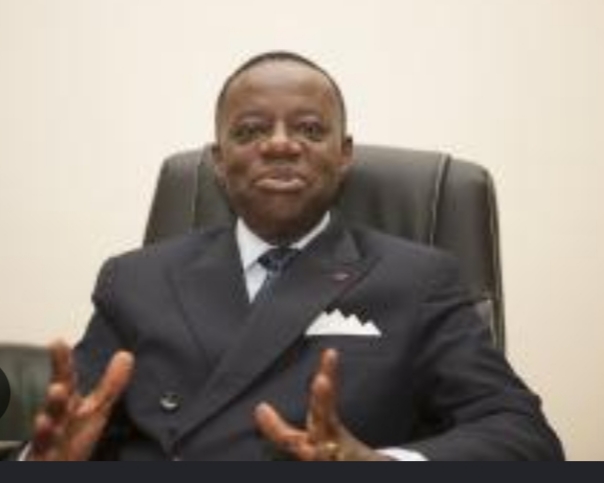
Into this expanding vacuum has stepped Professor Jacques Fame Ndongo, Minister of State and Minister of Higher Education, with an extraordinary defense of presidential absenteeism. According to the regime’s reasoning, the Constitution imposes no limit on how long the president may remain abroad, government business continues uninterrupted, and Biya can exercise his authority from wherever he happens to be.
This argument may satisfy those whose positions depend upon the survival of the Biya system. It should not satisfy a population entitled to visible, accountable and constitutionally verifiable leadership.
From an Ambazonian perspective, Fame Ndongo’s intervention is more than another display of political loyalty. It is evidence of the profound institutional decay produced by more than four decades of personalized rule.
An Absence the Constitution Does Not Automatically Resolve
The criticism of Biya’s absence must begin with constitutional accuracy. Contrary to claims circulating in some political discussions, Cameroon’s Constitution does not establish a forty-day or forty-five-day limit after which the presidency automatically becomes vacant.
Article 6(4) provides for a vacancy following the president’s death, resignation or permanent incapacity formally established through the prescribed constitutional process. Prolonged absence from the country—however irresponsible or politically destabilizing—is not itself identified as an automatic ground for vacancy.
That legal distinction matters. The case against the Biya system should not rest upon an imaginary constitutional deadline. It rests upon something more serious: a constitutional order so dependent upon one man that the public cannot reliably determine whether he remains capable of exercising presidential authority. The absence may not automatically create a legal vacancy, but it has unquestionably created a crisis of accountability.
If Biya remains healthy and capable of governing, he should address the country directly. If he is temporarily unable to perform public duties, the government should explain the arrangements ensuring constitutional continuity. If he has become permanently incapacitated, the institutions empowered to establish that fact must fulfill their responsibilities.
What cannot be accepted is indefinite government by silence, rumor and documents issued in the name of a president whom the public cannot see or question.
The Fiction of “Remote-Control” Government
Fame Ndongo’s defense reduces constitutional leadership to the movement of files. Under this theory, a president need not appear before his citizens, answer questions, chair publicly verifiable meetings or explain his prolonged disappearance. As long as decrees and instructions continue to emerge bearing his name, the country is expected to believe that he remains fully in command. But government is not merely the circulation of paperwork.
A functioning presidency requires identifiable decision-making, public accountability and confidence that constitutional authority is being exercised by the person entrusted with it. It requires more than assurances from ministers whose offices and influence depend upon the continuation of that authority.
The government has not publicly established that Biya is confined to a Swiss hospital, nor has it demonstrated that he is medically incapacitated. Those allegations should therefore not be presented as proven facts. But the regime’s refusal to provide credible information has created the environment in which such speculation flourishes. Fame Ndongo cannot condemn rumors while defending the secrecy that produces them.
A nation should not have to infer the health and capacity of its president from official letters, undated photographs, social-media posts or decrees bearing signatures whose circumstances cannot be independently examined. If the government wants the public to accept that Biya is directing state affairs from abroad, it bears the responsibility of demonstrating that claim credibly.
The Presidency Is Not Private Property
Fame Ndongo’s constitutional argument exposes a deeper problem. By insisting that there is no limit to presidential absence, he effectively portrays the state as the personal estate of its ruler.
Under that interpretation, the president may remain abroad for an indefinite period while unelected officials manage the country in his name. Citizens must accept anonymous assurances that decisions originate with him. Parliament exercises little meaningful scrutiny. The public receives no explanation of how presidential instructions are transmitted, authenticated or implemented. That is not constitutional continuity. It is personalized government protected by institutional opacity.
The central question is not whether modern communications make it technically possible to receive documents abroad. The question is whether the presidency can be reduced to electronic transmissions without undermining public accountability, national security and the constitutional distinction between the elected head of state and the officials surrounding him.
Who is presenting files to Biya? Who determines which matters reach him? Who verifies that he reads and understands them? Who authenticates his decisions? What authority is exercised by the Secretary-General of the Presidency, the Civil Cabinet and other members of the presidential establishment during his absence? These are legitimate constitutional questions. Fame Ndongo’s declarations do not answer.
A System Built Around One Man
For more than four decades, the Biya establishment has cultivated an image of presidential permanence. State institutions were subordinated to the personality of the ruler. Ministers became interpreters of his silence. Administrators learned to wait for instructions from the presidency. Political careers depended less upon public performance than upon proximity, loyalty and survival within the palace hierarchy.
The result is now visible.
When the president disappears, the system does not demonstrate institutional strength. It produces competing statements, unexplained decrees, rumors about succession and increasingly theatrical professions of loyalty.
Fame Ndongo’s intervention therefore reveals the weakness it was intended to conceal. If the institutions of La République du Cameroun were genuinely functional, the country would not depend upon a higher-education minister to assure citizens that an unseen president remains in control.
The Constitution should provide continuity. Parliament should provide oversight. The courts should safeguard legality. The government should communicate transparently. Instead, the public is offered political declarations demanding faith in an inaccessible leader.
The Coming Succession Struggle
Biya’s eventual departure—whether through resignation, incapacity or death—will not automatically dismantle the political system constructed around him. The institutions, security networks, economic interests and administrative factions that have benefited from his rule will attempt to preserve themselves.
There is widespread speculation about rival centers of power within the presidential establishment, including figures associated with Secretary-General Ferdinand Ngoh Ngoh and members of the president’s family. But speculation about particular succession factions should not be stated as established fact without evidence.
What can safely be concluded is that prolonged uncertainty increases the danger of an opaque transfer of power. The longer the presidency conceals the president’s condition and governing arrangements, the greater the possibility that decisions about succession will be negotiated within elite circles before the public is informed.
That danger is intensified by the concentration of authority created under Biya. A system designed around one ruler does not easily transition into impersonal constitutional government. It tends instead to produce a struggle over who will inherit control of the machinery assembled around him.
The Ambazonian Lesson
For Ambazonians, the crisis in Yaoundé should not become an occasion for premature celebration. The disappearance of one ruler does not guarantee the disappearance of the system that has denied Southern Cameroons meaningful constitutional equality, dismantled the federal arrangement and answered legitimate grievances with military force.
A successor may promise dialogue, decentralization, reconstruction or reconciliation while preserving the essential structure of centralized control. International partners concerned primarily with regional stability may accept a new face as sufficient evidence of political renewal. Southern Cameroonian personalities may be recruited to market cosmetic reform as a permanent settlement.
Ambazonia must therefore distinguish the end of Biya’s rule from the resolution of the Southern Cameroons question. The immediate lesson is not that freedom will arrive automatically when the presidency changes hands. It is that Ambazonians must prepare politically, diplomatically and institutionally for the uncertainty surrounding the transition.
Unity, civilian protection, credible representation, accountable leadership and a coherent international message will matter more than predictions about the precise moment at which the Yaoundé system may fracture. A divided movement could watch others negotiate its future. An organized people could ensure that its demands cannot be excluded.
An Empty Presidency Cannot Command Public Confidence
Fame Ndongo is correct about one narrow point: extended absence alone does not automatically activate Article 6(4). But constitutional silence on the duration of presidential travel is not permission for indefinite government by invisibility.
The absence of a fixed deadline does not eliminate the requirements of accountability, capacity and legitimate authority. Nor does it convert every document issued in Biya’s name into conclusive evidence that he personally considered and approved it. The government has created this crisis of confidence. It can begin resolving it through transparency.
If Paul Biya is capable of governing, let him appear and speak directly to the population. If he is exercising presidential authority from abroad, let the presidency disclose the arrangements through which decisions are made and authenticated. If he is temporarily unable to perform his duties, let the government explain the constitutional measures in place. If he is permanently incapacitated, let the responsible institutions act.
What the country cannot accept is a presidency conducted like a political séance—an invisible ruler, inaccessible to the public, invoked by ministers and represented by papers emerging from behind closed doors. Fame Ndongo may call this continuity. To millions of people, it looks increasingly like government without a publicly accountable governor.
For Ambazonia, the conclusion is equally clear. Its future must not depend upon the health, return or succession of the ruler in Yaoundé. Nor should Ambazonians mistake the possible departure of one man for the achievement of self-determination. The Biya era will end. The structures surrounding it will struggle to survive. Ambazonia’s responsibility is to remain vigilant, united and prepared.
An empty presidency cannot command public confidence. An absent ruler cannot indefinitely substitute secrecy for constitutional leadership. And no ministerial declaration can silence the question now confronting La République du Cameroun: Who is governing the country—and under whose verifiable authority?
Biya’s June 7 departure, forty-five-day absence and the government’s prior claim that he can govern from abroad were reported by Reuters. Article 6(4) addresses death, resignation and formally established permanent incapacity; it does not create an automatic forty-day or forty-five-day absence threshold.
Timothy Enongene
Associate Editor-in-Chief, The Independentist News