











A free Ambazonia must reject the “auxiliary” model completely. The County Council of Fons and Chiefs must stand as an independent, constitutional institution — the cultural, moral, and territorial guardian of our three foundational zones: the Savannah, the Midland, and the Atlantic.
By Lester Maddox
The Independentistnews Guest Writer, Oakland County, California
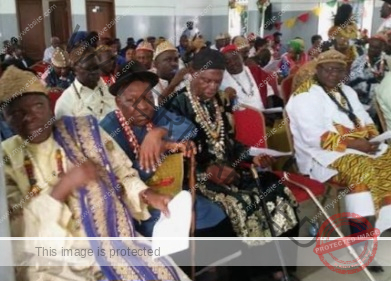
The soul of a nation does not live in government buildings or bureaucratic offices. It lives in memory, culture, and tradition. For the people of the former British Southern Cameroons, that soul has always been carried by our Natural Rulers. Our Fons and Chiefs were never just symbols of culture; they were guardians of land, law, identity, and continuity.
As we imagine the future of a free Ambazonia, we must recover one of our most powerful institutions — the House of Chiefs, reborn for a new era as the County Council of Fons and Chiefs.
The Golden Era: 1960–1972
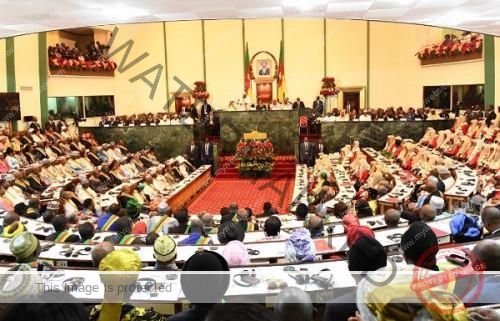
Between 1960 and 1972, the House of Chiefs stood at the heart of our political system. Created after the 1957 London Constitutional Conference, it served as the upper chamber of a bicameral legislature. This was not symbolic politics. It was a serious power-sharing arrangement between modern democratic governance and ancient traditional authority.
That balance was destroyed in 1972 with the creation of the unitary state. The House of Chiefs was abolished. Our Fons were stripped of their legislative voice and reduced to “administrative auxiliaries” of the central government — effectively turning sovereign traditional rulers into minor civil servants operating inside their own palaces.
The Continental Contrast: Sovereignty vs. Subservience
To understand what was lost, we only need to look across Africa. In Ghana, the 1992 Constitution recognizes the National House of Chiefs as a sovereign institution and the primary custodian of nearly 80% of the land.
In Nigeria, traditional rulers function as security gatekeepers, mediators, and community stabilizers, wielding enormous moral authority and social influence.
In contrast, Cameroon’s so-called “Special Status” reduces traditional rulers to extensions of the Ministry of Territorial Administration. Chiefs are treated as tools of the state, not servants of the people. This has deeply politicized traditional leadership, forcing rulers to choose between loyalty to their communities and obedience to central authority.
The Vision: The County Council of Fons and Chiefs
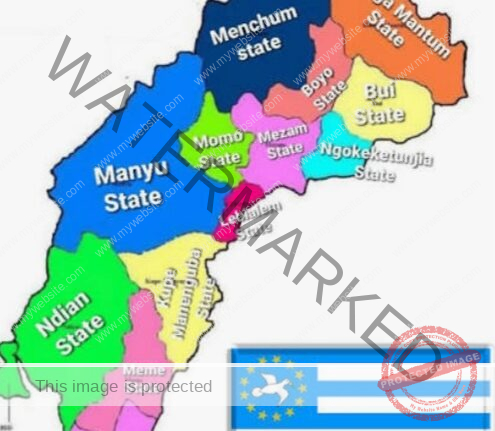
A free Ambazonia must reject the “auxiliary” model completely. The County Council of Fons and Chiefs must stand as an independent, constitutional institution — the cultural, moral, and territorial guardian of our three foundational zones: the Savannah, the Midland, and the Atlantic.
- Zonal Representation and Paramountcy
Each zone must be anchored by its historic thrones and paramount rulers to ensure balance, legitimacy, and inclusion: Savana and Midland zones
Permanent representation for the great thrones of Kom, Nso, Mankon, Bafut, Bali, and Mbu, alongside the Paramount Rulers of Manyu, who have preserved the cultural heartbeat of the hinterlands for generations.
Atlantic Zone: Full constitutional recognition for the Paramount Chiefs of the Bakweris, Orokos, Bafaws, Bakossis, and Balongs — the custodians of our maritime heritage and the guardians of our Atlantic gateway, whose authority over coastal lands and waters is non-negotiable.
- Economic Sovereignty: Land and Mineral Rights
Trustees of the Soil: The Fon must once again be recognized as the trustee of the land. No land transaction, mineral concession, or resource agreement should be valid without community consent and the Seal of the Council.
Royalties for Development: A defined percentage of revenues from local minerals, timber, and oil must flow directly into Traditional Community Trust Funds, allowing communities to build schools, clinics, roads, and water systems without being trapped in central bureaucratic bottlenecks.
- Safeguarding the Throne: Ending State Interference
The state must have zero authority to confirm, reject, or manipulate traditional succession.
Customary Selection: The process must remain exclusively in the hands of the Kwifon, Ngumba, and traditional Kingmakers, according to each community’s customs.
Judicial Committee of Peers: Succession disputes should be resolved by a Judicial Committee within the County Council itself, modeled on Ghana’s National House of Chiefs. Only those who understand the customs of a people should judge their traditions.
Conclusion
Safeguarding the Throne: Ending State Interference clear. A stable and legitimate Ambazonian state cannot be built by weakening the institutions that have sustained our society for centuries. It must be built by strengthening them.
It is time to bring our Fons and Chiefs out of the corridors of central administration and back into their rightful place as guardians of land, culture, and governance. By restoring the County Council of Fons and Chiefs, we create a state where modern institutions are guided by ancestral wisdom, where democracy is rooted in tradition, and where sovereignty flows from the people upward — not from the center downward. This is not a return to the past. It is a restoration of dignity, legitimacy, and continuity. It is the foundation of a truly free Ambazonia.
Lester Maddox
The Independentistnews Guest Writer, Oakland County, California





Leave feedback about this