












Are these incidents isolated, or indicative of a broader operational pattern? What oversight mechanisms exist to investigate such allegations? How are civilians protected during security operations?
By Ali Dan Ismael
Editor-in-Chief, The Independentistnews
April 2026
Part I: Formal Petition to the United Nations
TO:
Mr. Morris Tidball-Binz, Special Rapporteur on extrajudicial, summary or arbitrary executions
Working Group on Arbitrary Detention
Dr. Alice Jill Edwards, Special Rapporteur on Torture
DATE: April 4, 2026
SUBJECT: Urgent Appeal Regarding Allegations of Systematic Human Rights Violations and Arbitrary Detentions in Bamenda, Cameroon
I. Statement of Facts
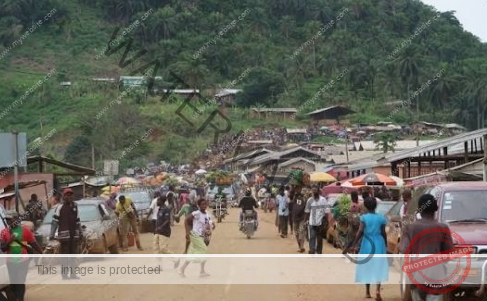
On April 1, 2026, security forces of the Republic of Cameroon conducted a large-scale operation—locally referred to as a “kale kale”—on Ndamukong Street in Bamenda. According to multiple eyewitness accounts, the operation involved forced entry into private residences without warrants and the arrest of more than 40 individuals, primarily young men and students.
II. Violations Cited
Arbitrary detention
Individuals are reportedly being held without formal charges, with release in some cases allegedly contingent on unofficial financial payments.
Language-Based Discrimination
Witnesses report that security personnel communicated exclusively in French when addressing an English-speaking population, contributing to confusion and heightened coercion.
Inhuman or Degrading Treatment
Accounts include allegations of forced undressing at gunpoint, intimidation, and physical threats during house-to-house searches.
III. Requested Action
The petition respectfully calls for an Urgent Appeal to the Government of Cameroon to: – Disclose the location and legal status of all individuals detained during the Ndamukong operation. – Investigate and halt alleged practices of extortion linked to detention and release. – Permit an independent, UN-led fact-finding mission to assess the scope and nature of these operations.
Part II: The Ndamukong Incident — A Night That Raised Questions
Beyond the formal petition, the events of April 1 have left a deep imprint on residents of Bamenda. Eyewitnesses describe a coordinated security sweep carried out in the early hours, marked by door-to-door searches and widespread detentions. Residents allege that personal property was confiscated, and that detainees were pressured to make payments to secure their release.
Reported amounts range from 10,000 to 25,000 XAF per individual. While official confirmation remains absent, the consistency of these accounts has raised broader concerns. The central question persists: was this an isolated enforcement operation, or part of a wider pattern?
Part III: Dossier of Evidence — Allegations of a Broader Pattern
Additional reports from across Bamenda suggest that similar incidents have occurred in recent months:
Ndamukong Street (April 1, 2026)
Mass arrests, alleged harassment, and reported payments for release (10,000–25,000 XAF)
Small Mankon Hill (March 18, 2026)
Phone inspections and accusations reportedly used to justify payments (5,000–50,000 XAF)
Bamenda–Kom Road (December 2025)
Checkpoint practices reportedly involving recurring daily payments
Noblenman / Oldchurch (March 2026)
Door-to-door raids with reported payment demands for release (~10,000 XAF)
Recurring Financial Demands
Across multiple accounts, individuals report that routine security checks are accompanied by requests for payment, often framed as conditions for release or recovery of property.
Allegations of Coercion
Some individuals state they were accused of criminal or separatist activity in the absence of evidence, with such accusations allegedly used to compel compliance.
Concerns Over Accountability
Reports indicate that receipts issued for payments are sometimes confiscated before release, limiting the ability of individuals to document or challenge these transactions.
Part IV: Between Security and Accountability
Security operations in conflict-affected regions often present complex challenges. Governments bear the responsibility of maintaining order, but this responsibility must align with legal standards and human rights obligations.
The accounts emerging from Bamenda point to a concerning ambiguity—where enforcement actions, whether legitimate or not, are perceived by residents as mechanisms of pressure rather than protection.
Part V: The Cost of Silence
For affected communities, the issue extends beyond financial loss. It raises fundamental concerns about trust, accountability, and the role of state institutions.
A lack of transparent response risks deepening public skepticism and normalizing practices that, if substantiated, would require urgent corrective measures.
Conclusion: A Call for Independent Scrutiny
The allegations presented—both in the formal petition and in corroborating accounts—underscore the need for independent verification and institutional response.
Key questions remain:
Are these incidents isolated, or indicative of a broader operational pattern? What oversight mechanisms exist to investigate such allegations? How are civilians protected during security operations?
Until these questions are addressed transparently, concerns surrounding the events in Bamenda will persist and The Independentistnews will continue to follow developments and report as further information becomes available.
Ali Dan Ismael
Editor-in-Chief, The Independentistnews





Leave feedback about this