

A state’s territorial integrity should not depend upon making peaceful demands for self-determination politically impossible. If Canada can debate its unity without treating every separatist as an enemy of the state, the international community should ask why meaningful democratic engagement with the Southern Cameroons question remains so elusive.
By Timothy Enongene
Associate Editor-in-Chief, Independentist News
As Amazon associate this site earns from qualifying purchases
Buy book’s on Ambazonian’s productive Sovereignty and statecraft By Martin Mungwa on Amazon
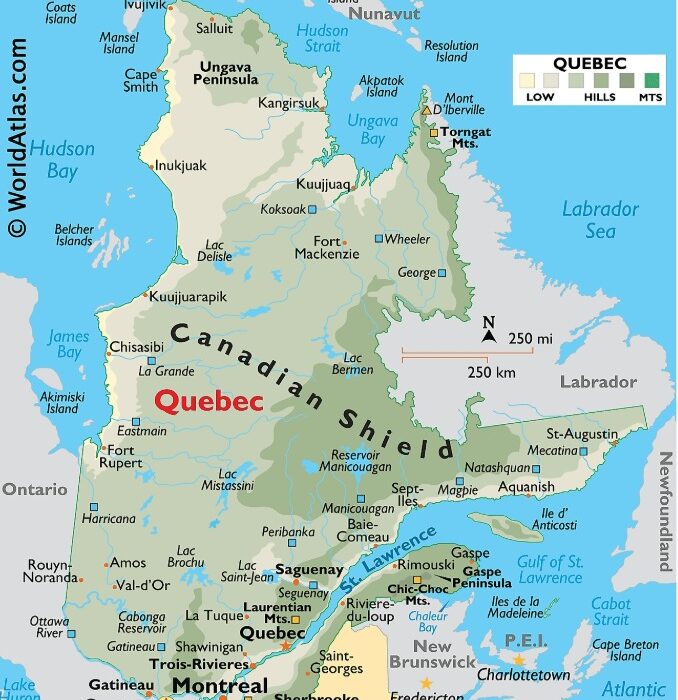
QUEBEC – October 10, 2026 – On October 5, 2026, something remarkable happened in Canada. The separatist Parti Québécois (PQ), led by Paul St-Pierre Plamondon, won Quebec’s provincial election, securing 59 of 127 legislative seats with approximately 27.9 percent of the popular vote. Although the party fell short of a parliamentary majority, it returned to power carrying an unmistakable political ambition: Quebec should eventually become an independent country.
Canada did not respond by declaring war. Its prime minister did not announce that separatism would be crushed militarily. Instead, Prime Minister Mark Carney congratulated the victorious leader and expressed his willingness to work with the new Quebec government.
For the people of the former British Southern Cameroons, commonly known as Ambazonia, this development raises an uncomfortable international question. Why is the pursuit of independence accommodated through democratic politics in Canada while the same aspiration has helped produce years of bloodshed, repression, and political confrontation in Cameroon?
The answer reveals much about the relationship between democracy, territorial integrity, and the right of peoples to determine their political future. Quebec: Independence Without Criminalization Quebec’s independence movement is neither new nor politically insignificant. The predominantly French-speaking province has maintained a distinct linguistic, cultural, and political identity within Canada for generations.
Its citizens have already voted in two independence referendums, in 1980 and 1995. Both failed, the second by a narrow margin. Yet the political movement survived, continued organizing, contested elections, and eventually returned to government.
Even today, support for Quebec independence remains around 30 percent. The recent electoral victory therefore cannot reasonably be interpreted as a popular mandate for separation. It does, however, demonstrate something considerably more important: advocating independence does not automatically disqualify a political movement from participating in democratic government.
Canada’s territorial integrity remains important to Ottawa. The federal government openly prefers national unity. Nevertheless, the existence of a separatist movement is treated as a political reality requiring democratic engagement.That distinction deserves international attention.
Southern Cameroons: The Ballot Without a Third Box
The history of Southern Cameroons presents a markedly different experience. In 1961, the United Nations supervised a plebiscite concerning the political future of the former British-administered territory. Its people were offered two alternatives: achieve independence by joining the Federation of Nigeria or achieve independence by joining the already independent Republic of Cameroon. There was no third box offering separate sovereign independence.
On February 11, 1961, a majority voted for the second alternative. United Nations General Assembly Resolution 1608 (XV), adopted on April 21, subsequently endorsed the result and contemplated discussions concerning the arrangements for joining the Republic of Cameroon. This history is central to the contemporary Southern Cameroons question.
Where Quebec voters have twice been able to answer an explicit question about separation from Canada, Southern Cameroons voters were never presented with a corresponding option to establish an independent state of their own.
These circumstances are not legally identical. Quebec is a province within an established federation, while Southern Cameroons emerged from a United Nations trusteeship arrangement during decolonization. Yet precisely because their histories differ, the comparison demands serious examination rather than automatic dismissal.
Why was separate independence excluded from the Southern Cameroons plebiscite, and what consequences did that exclusion have for the territory’s political future? Sixty-five years later, that question remains consequential.
When Political Grievances Become a Security Crisis
The modern Southern Cameroons conflict did not begin as a conventional military confrontation. In 2016, lawyers and teachers protested what they considered the erosion of English-language legal and educational institutions. Their grievances reflected longstanding concerns about cultural identity, institutional autonomy, and political marginalization.
The authorities responded with arrests, restrictions, and security operations. Political tensions escalated, and demands for greater autonomy increasingly gave way among some activists to demands for outright independence. By late 2017, the crisis had descended into armed conflict.
Human Rights Watch has documented serious abuses committed by government security forces, including unlawful killings, destruction of civilian property, and torture. It has also documented killings, kidnappings, attacks on schools, and other violations by armed separatist groups.
The result has been devastating for ordinary civilians. Thousands have died, families have been displaced, schools have been disrupted, and communities have endured years of insecurity. No serious political analysis should excuse attacks against civilians by any party. But neither should the crimes of armed actors be used to extinguish the legitimate space for peaceful political expression.
A democratic state must distinguish between advocating independence and committing violence. Failing to recognize that distinction risks converting an unresolved political dispute into a permanent security emergency.
Canada’s Constitutional Lesson
In 1998, the Supreme Court of Canada delivered a landmark opinion concerning Quebec’s possible secession. The Court ruled that Quebec possessed no unilateral constitutional right to separate from Canada. However, it also established that a clear majority supporting secession on a clear referendum question would create a constitutional obligation for the parties to negotiate.
The judgment did not guarantee Quebec independence. It recognized that democracy, federalism, constitutionalism, the rule of law, and minority rights must all be considered. That is the significance of Canada’s approach.
The state does not surrender its territorial integrity simply because some citizens seek independence. But neither can it assume that political disagreement disappears merely because the central government invokes constitutional authority. Democratic legitimacy requires engagement with legitimate political aspirations.
For Southern Cameroons, the lesson is not that Canadian constitutional law automatically applies to Cameroon. It does not. The lesson is that territorial integrity and peaceful political dialogue need not be mutually exclusive. Canada demonstrates that a government can oppose separation while allowing its advocates to compete for political power. That is a democratic principle worthy of international consideration.
The International Community’s Selective Attention
There is also a difficult question for the United Nations, the Commonwealth, African Union, Britain, France, and other international stakeholders. Why do some disputes over sovereignty receive sustained constitutional debate, while others are addressed primarily through appeals for stability and security?
The former British Southern Cameroons did not emerge from history without international involvement. The United Nations supervised its plebiscite. Britain administered the territory under the trusteeship system. The Republic of Cameroon participated in the political arrangements that followed.
These institutions and governments therefore possess historical connections to the circumstances that produced the present dispute, although their contemporary legal obligations must be assessed separately.
It is not enough for international actors to demand an end to violence without seriously examining the historical and political questions underlying it. Nor should they assume that every demand for self-determination necessarily requires immediate international recognition of a new state.
There is a vast political and diplomatic space between automatic recognition and permanent refusal to engage. Within that space lie credible negotiations, constitutional guarantees, democratic consultation, minority protections, human rights accountability, and peaceful methods of determining political legitimacy. The international community should be prepared to examine those possibilities without prejudging every outcome.
The Lesson for Ambazonia
Quebec’s electoral victory should not be mistaken for an impending declaration of independence. Its separatist party won an election, not a sovereignty referendum. Considerable political, constitutional, economic, and democratic obstacles remain.
That reality makes the comparison with Southern Cameroons more compelling. Canada allows the independence question to remain within political institutions even when most voters do not currently support secession.
Southern Cameroons, by contrast, has experienced the destructive consequences of a political dispute that has increasingly been framed through the language of national security, rebellion, and territorial preservation.
The people of Southern Cameroons deserve more than an indefinite cycle of military confrontation and unanswered historical grievances. They deserve meaningful opportunities for peaceful political expression, credible dialogue, accountability, and democratic participation in determining their future.
The same principle must protect citizens who favor independence, those who prefer autonomy or federalism, and those who wish to remain within Cameroon. Self-determination cannot be credible if political alternatives are silenced before they can be debated.
The Question the World Cannot Avoid
The victory of the Parti Québécois will not necessarily break up Canada. But it has already demonstrated something important: a country’s unity need not depend on suppressing every political movement that questions its permanence. For Southern Cameroons, the historical irony is profound.
In 1961, its people were asked to choose between joining two already independent countries. In 2026, Quebec’s citizens continue to possess democratic avenues for debating whether to establish a separate country.
One political community has been permitted to revisit the question of sovereignty through democratic institutions. The other continues to struggle with the consequences of a political arrangement whose foundational choices remain disputed. The world need not declare Quebec and Southern Cameroons legally identical to recognize the democratic principle connecting them.
A state’s territorial integrity should not depend upon making peaceful demands for self-determination politically impossible. If Canada can debate its unity without treating every separatist as an enemy of the state, the international community should ask why meaningful democratic engagement with the Southern Cameroons question remains so elusive.
The final question is not whether Canada will remain united. It is whether the people of Southern Cameroons will ever be given a credible, peaceful, and democratic opportunity to address the political future that continues to divide them.
As Amazon associate this site earns from qualifying purchases
Buy book’s on Ambazonian’s productive Sovereignty and statecraft By Martin Mungwa on Amazon
Timothy Enongene
Associate Editor-in-Chief, The Independentist News