

The question now is whether that truth will remain a statement—or become a process. Because if dialogue is necessary, then its absence is no longer procedural. It is consequential. And in conflicts of this scale, consequences do not disappear. They accumulate—politically, morally, and historically.
By Ali Dan Ismael, Editor-in-Chief, The Independentist News
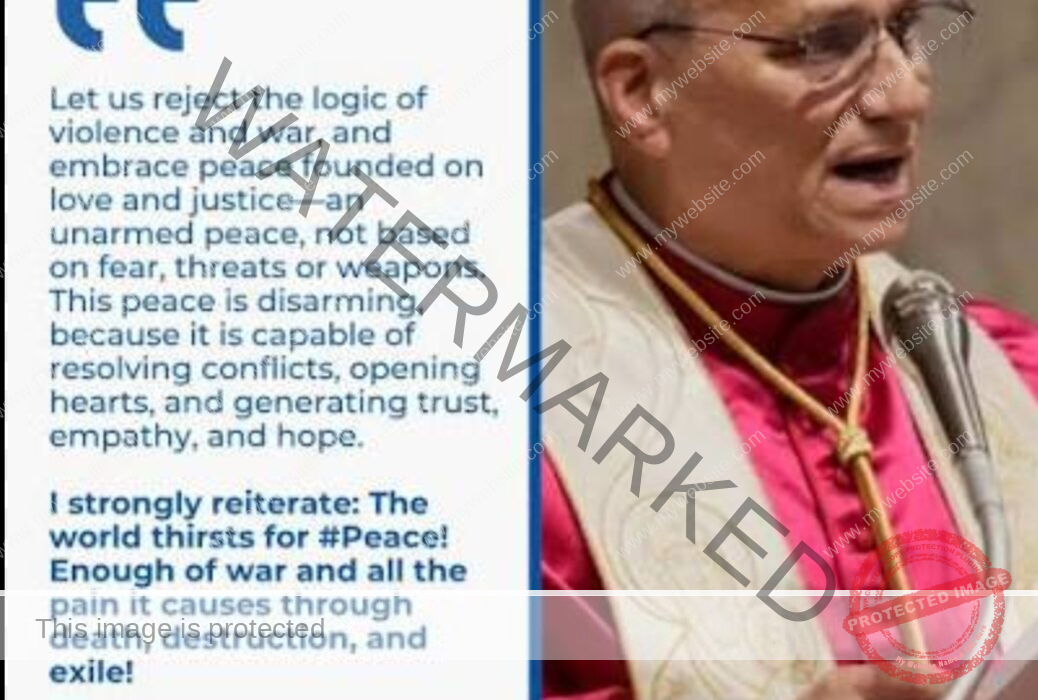
There are moments in a conflict when truth breaks through the carefully managed script. This week, the Archbishop of Bamenda, Andrew Nkea Fuanya, stated without hesitation: “peace without dialogue is shameful.” That statement is not symbolic. It is structural.
It strikes at the core of a long-standing approach under Paul Biya—an approach that has attempted to stabilise a political crisis through force, administration, and narrative control, rather than through negotiation. To be precise: a peace that excludes dialogue is not peace—it is containment.
PULL QUOTE “A peace that excludes dialogue is not peace—it is containment.”
THE IMAGE THAT TELLS ANOTHER STORY
Yet conflicts are not shaped by words alone. They are shaped by what is seen—and how it is interpreted. The image of religious authority standing in cordial proximity to state power introduces a second narrative. One that will be used to suggest that engagement exists, that normalcy is returning, and that the crisis is being managed. This is not accidental. It is the language of political survival. In prolonged conflicts, power does not always resolve crises. It reframes them.
PULL QUOTE “In prolonged conflicts, power does not resolve crises—it reframes them.”
THE DANGER OF “MANAGED PEACE”
Let us step outside the theatre. The facts remain: civilian infrastructure has been destroyed, communities have been displaced, and the underlying political question remains unresolved.
Against this backdrop, the idea of “peace” without structured dialogue is not merely insufficient—it is strategically dangerous. Because it creates the illusion of resolution while preserving the conditions that produced the conflict. And illusions, in conflicts of this magnitude, do not stabilise nations. They prolong suffering.
PULL QUOTE “Illusions do not resolve conflicts—they prolong them.”
THE LIMITS OF “NEGOTIATED SOLUTIONS”
Voices such as Fobi Nchinda Simon of the SDF have called for a “negotiated solution” to the crisis. At face value, this appears aligned with the growing recognition that dialogue is unavoidable. But the critical question is not whether negotiation is needed. It is what kind of negotiation is being proposed.
A process without clearly defined parties, neutral mediation, international guarantees, and a venue outside the influence of the state is not a solution. It is a repetition of past failures. Ambazonians have seen this before—processes presented as dialogue, but structured to preserve the imbalance that created the conflict. The difference between resolution and relapse lies in structure.
PULL QUOTE “The difference between resolution and relapse lies in structure.”
A SHIFT THAT CANNOT BE IGNORED
Despite the contradictions, something important has occurred. When a senior religious authority publicly asserts that dialogue is indispensable, it signals a subtle but meaningful shift: the narrative of unilateral control is weakening, the moral justification for excluding negotiation is eroding, and the demand for dialogue is no longer external—it is emerging from within. This is not a breakthrough. But it is pressure. And pressure, if properly understood, can be converted into position.
PULL QUOTE “When the call for dialogue comes from within, the narrative of control begins to weaken.”
THE STRATEGIC MISTAKE TO AVOID
Within Ambazonian discourse, reactions have been immediate—and, in some cases, counterproductive. Labels such as “enablers” and “blacklegs” may satisfy emotion, but they do not advance strategy.
The objective is not to discredit every imperfect voice. The objective is to identify and amplify the truth that advances the cause. And the truth is this: There can be no legitimate peace without structured, mediated dialogue. That principle now carries weight beyond political advocacy. It carries moral recognition.
PULL QUOTE “The objective is not to attack the messenger—it is to amplify the truth.”
WHAT MUST FOLLOW
This moment must be used with discipline. Any meaningful resolution must include recognised parties—not substitutes; neutral mediation—not controlled environments; credible international guarantors; and a negotiation framework conducted outside the influence of the state. Anything less is not negotiation. It is performance. And Ambazonians have seen performance before.
PULL QUOTE “Anything less than mediated negotiation is not a process—it is performance.”
FINAL WORD: TRUTH OR THEATRE
The Archbishop has articulated a truth that cannot be easily dismissed. The question now is whether that truth will remain a statement—or become a process. Because if dialogue is necessary, then its absence is no longer procedural. It is consequential. And in conflicts of this scale, consequences do not disappear. They accumulate—politically, morally, and historically. The appearance of peace may satisfy the moment. But only dialogue can resolve it.
FINAL PULL QUOTE “The appearance of peace may satisfy the moment—but only dialogue can resolve the conflict.”
Ali Dan Ismael, Editor-in-Chief, The Independentist News