

Negotiation without legitimacy is theater. Dialogue without consent is imposition. Elections without participation are performance. And power without legitimacy—no matter how long it endures—remains fundamentally negotiable, but not on its own terms. History has settled that argument already.
By Ali Dan Ismael Editor-in-Chief The Independentist News
A Crisis Beyond Misunderstanding
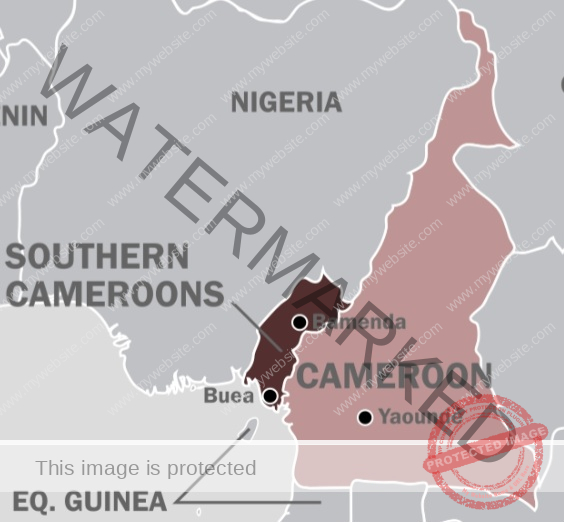
History is unforgiving to illusions. It records, with cold precision, that power without legitimacy eventually collapses under the weight of its own contradictions. The crisis between Ambazonia and La République du Cameroun is not a misunderstanding. It is not a communication failure. It is a structural rupture. And at the center of that rupture lies a simple truth: a system that cannot derive legitimate authority from the governed cannot credibly negotiate on their behalf.
The Ritual of Elections, The Absence of Consent
Let us dispense with diplomatic euphemisms. Yes, elections are held in Cameroon. Ballots are printed. Results are announced. Formalities are observed. But legitimacy is not a ceremony—it is consent. In the Anglophone territories, that consent has long collapsed. Elections in these regions have been marked by mass boycotts, voter intimidation under heavy military presence, near-empty polling stations in key areas, and outcomes announced in the absence of meaningful participation. What emerges from such a process is not a mandate. It is a manufactured continuity of power. A government that cannot secure participation from a significant portion of the population—especially in a conflict zone—does not speak for that population. It speaks over it. And when power speaks over people, negotiation becomes fiction.
Recognition Is Not Legitimacy
International recognition is often cited as proof of legitimacy. It is not. Recognition is a diplomatic convenience. Legitimacy is a political reality. The same international system that recognizes governments has also overseen the end of systems once considered untouchable—from the collapse of Apartheid to negotiated settlements like the Good Friday Agreement. What changed in those cases was not paperwork. It was pressure—internal resistance combined with external acknowledgment that the status quo could no longer be sustained. Cameroon is approaching that threshold.
Criminalization: The Death of Political Dialogue
Rather than address the political roots of the conflict, Yaoundé has chosen a familiar path: criminalization. Ambazonian actors are labeled “terrorists.” Their demands are stripped of political context. Their grievances are reframed as security threats. But this strategy carries a fatal contradiction. A government cannot simultaneously declare a population’s representatives illegitimate and claim to be open to negotiation. You do not negotiate with what you insist does not exist. This is not strength. It is paralysis disguised as authority.
Foumban: The Memory That Refuses to Die
Every negotiation is shaped by memory. For Ambazonians, that memory has a name: the Foumban Conference. It was presented as dialogue. It produced absorption. It promised partnership. It delivered centralization. That experience is not a footnote—it is a warning. Any process controlled internally by the same structure that benefits from the status quo will be viewed, rightly or wrongly, as a repetition of that history. And a people that believes it has been negotiated out of its own future once will not willingly submit to it again.
A System That Cannot Concede
The deeper problem is not unwillingness. It is incapacity. A highly centralized political system—built on continuity, patronage, and control—cannot easily negotiate structural change without destabilizing itself. Federalism threatens concentration of power. Genuine autonomy challenges administrative dominance. International mediation introduces scrutiny. In such a system, negotiation is not a policy option. It is an existential risk. And systems rarely choose self-dismantling.
Diagnosis, Not Insult
Strip away the speeches, the summits, the carefully staged dialogues, and one fact remains: a government emerging from contested elections, exercising authority through securitization, and denying the political existence of its opponent lacks the credibility required for meaningful negotiation. This is not an insult. It is a diagnosis.
Where Resolution Actually Begins
Conflicts of this nature do not resolve themselves through internal declarations of unity. They shift when the balance changes: when international actors move from observation to engagement, when mediation is anchored outside the control of one party, and when legitimacy is measured not by procedure, but by participation. Ambazonia’s case, increasingly framed as one of decolonization, is moving into that space—whether Yaoundé acknowledges it or not.
The Final Question
The question is no longer whether negotiation should happen. The question is under what conditions it can be real. Negotiation without legitimacy is theater. Dialogue without consent is imposition. Elections without participation are performance. And power without legitimacy—no matter how long it endures—remains fundamentally negotiable, but not on its own terms. History has settled that argument already.
Ali Dan Ismael Editor-in-Chief The Independentist News