












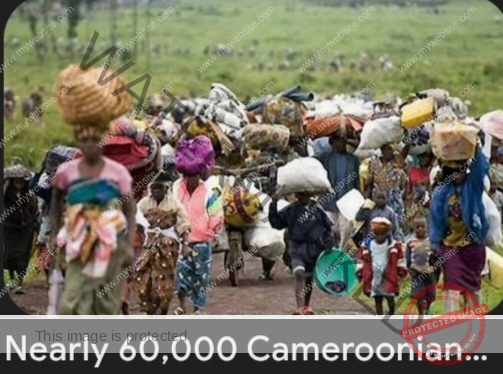
What once felt like a hopeful journey toward safety has, for many, become a difficult and prolonged struggle. Women, children, and families live with constant worry about theft, attacks, and insecurity. The anguish visible on many faces speaks of disrupted lives and lost peace.
By Chief Ngalle Lyonga
Voices From The Wilderness for The Independentistnews
Tears alone cannot bury the dead. The tears of Cameroonian refugees in the Adagom I Refugee Settlement tell a story of deep sorrow and unrelenting fear.
Many of us live under the heavy weight of insecurity, our lives woven with anxiety and uncertainty. Each day, we wake to the fear of violence, unable to farm freely or move beyond the informal limits of the settlement without caution and watchful eyes.
What once felt like a hopeful journey toward safety has, for many, become a difficult and prolonged struggle. Women, children, and families live with constant worry about theft, attacks, and insecurity. The anguish visible on many faces speaks of disrupted lives and lost peace.
Mothers hold their children tightly, alert to every unfamiliar sound or movement, navigating daily life with caution and fatigue.
It must also be said that not everyone in the settlement fled directly from conflict zones. Some had already been living in Nigeria before the crisis escalated, and some families have since returned home to Cameroon. But many of us remain here, suspended between uncertainty and survival, simply because we have nowhere safe to return.
Resettlement hopes have also dimmed. Programmes once spoken of with optimism have slowed or disappeared, leaving many refugees feeling forgotten. The United Nations High Commissioner for Refugees (UNHCR) continues its work, yet for many here, progress feels painfully slow, and resettlement opportunities appear limited to only a small number of people.
Meanwhile, insecurity in parts of Nigeria is well known. As refugees, we are persons of concern—people already scarred by conflict and loss. Yet daily life here remains precarious. Support structures that once provided some sense of protection have weakened. Agencies and watch teams that once helped maintain community vigilance are no longer fully present.
A few months ago, through the efforts of community youth leaders, including Mr. Nunu Pius Sali, known locally as “Man of God,” a community security initiative was created. But without funding and institutional support, the structure could not survive.
Today, community security efforts remain fragile, struggling to contain rising lawlessness around the settlement. Refugees who fled violence in search of safety now find themselves again surrounded by fear, their dignity and resilience tested daily.
The contrast is painful. While some officials and workers operate in comfort, refugees endure extreme heat, overcrowded shelters, and harsh living conditions. Nights are no longer moments of rest but times of anxious prayer and vigilance.
Incidents occur even in daylight. Our sister Geraldine was nearly stabbed around 11:00 in the morning—not in the dead of night, but in broad daylight. Such events deepen fear among already traumatized residents.
Once lively sections of the settlement now stand partly abandoned, shelters broken or empty as families leave when they can, seeking safer alternatives wherever possible.
Many who remain live in constant vulnerability. In this crucible of suffering, effective security measures and compassionate intervention are not luxuries—they are moral necessities to restore dignity and hope to people who have already lost much.
And beyond the hardship remains longing. I miss the fresh air at the foot of Mount Fako, the land of my birth. When shall I see my native land again?
Chief Ngalle Lyonga
Voices From The Wilderness



Leave feedback about this