










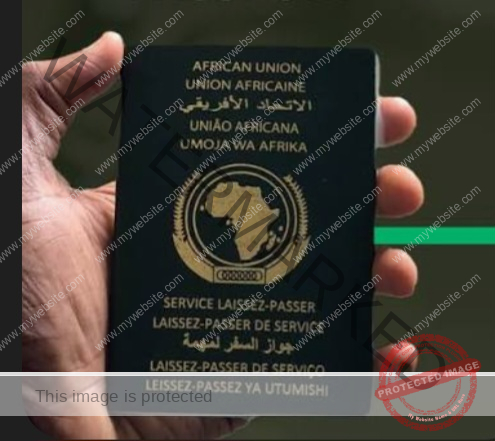
A reformed African Union must transform the African passport into a symbol of shared freedom, protected by supranational guarantees that prevent any regime from weaponizing borders to punish populations or isolate communities.
By Timothy Enongene, Guest Editor-in-Chief, The Independentistnews
In the halls of power in Addis Ababa, African leaders frequently speak of “Agenda 2063” and a borderless continent. Yet for the average African, borders remain jagged scars of division—lined with extortionist checkpoints, restrictive visas, and bureaucratic humiliation. While European citizens in 2026 enjoy the freedom of movement across the Schengen Area—traveling from Lisbon to Berlin with little more than a shared legal identity—the African traveler is still treated as a suspect in their own homeland.
From the perspective of a restored Federal Republic of Ambazonia, we do not fear a borderless Africa; we welcome it. But we insist on a fundamental distinction: we want a union of One Passport, not a union of One Dictator. True integration must serve African people—the traders, students, workers, and families—not merely the presidents who gather to celebrate longevity while their citizens endure immobility.
The Schengen Lesson: Integration for the Grassroots
The European Union succeeded in breaking down borders because it understood a simple truth: mobility fuels prosperity. When a student from Italy can study in France, or a small business owner from Poland can trade in Belgium without layers of obstruction, the entire region benefits. This is grassroots prosperity—integration that starts from the bottom up.
In much of Africa, borders function differently. They operate as instruments of control and revenue extraction. For an Ambazonian trader, crossing into neighboring territory often means facing armed checkpoints, informal militias, or predatory officials serving centralized power structures. This is not integration—it is economic suffocation.
A reformed African Union must transform the African passport into a symbol of shared freedom, protected by supranational guarantees that prevent any regime from weaponizing borders to punish populations or isolate communities.
Ambazonia’s Vision: A Hub of Fluid Trade
Ambazonia envisions itself as a natural gateway in a borderless Africa. With its strategic coastline, commercial culture, and industrious population, it is positioned to become a hub of movement, trade, and exchange. But this vision depends on a foundational principle: sovereignty first, integration second.
A borderless union cannot exist where powerful neighbors use open borders as cover for annexation, domination, or violence. Integration without recognition of partners becomes absorption, not cooperation. True integration requires clearly recognized, equal participants.
Once the Federal Republic of Ambazonia is recognized as a sovereign state, we would be among the strongest advocates for dismantling trade barriers and mobility restrictions. We seek an association where an Ambazonian engineer can work in South Africa as easily as a Kenyan doctor can practice in Buea—where mobility is opportunity, not vulnerability.
Rejecting the “Presidential Club” Model
The current model of African integration is largely top-down. Presidents sign treaties in luxury venues, but the benefits rarely reach the citizen at the border crossing. This is because many regimes prioritize regime security over human security.
They fear free movement because they fear free ideas. They fear open borders because they fear accountability. They fear mobility because they fear escape from repression. This “Presidential Club” model must be rejected. A borderless Africa must be a People’s Union—one that protects the rights of the traveler against the whims of the autocrat. If Europe can manage shared travel systems while preserving national identities and sovereignty, Africa is fully capable of doing the same.
Conclusion: Shared Prosperity through Sovereignty
As Africa moves through 2026, the path to a borderless continent must be built on respect for self-determination. We do not want a “One Africa” that becomes a larger cage managed by a collective of rulers. We want a union of free, sovereign states that choose cooperation for the benefit of their citizens.
The African passport should not identify which ruler you belong to. It should guarantee your right to move. Your right to trade. Your right to work. Your right to thrive. It must represent freedom, not subjugation.
It is time to transform the AU into an association that enables grassroots prosperity rather than protects presidential power. Let us build a continent where borders no longer imprison opportunity—and where the only things that move freely are people, goods, ideas, and the spirit of freedom.


Leave feedback about this