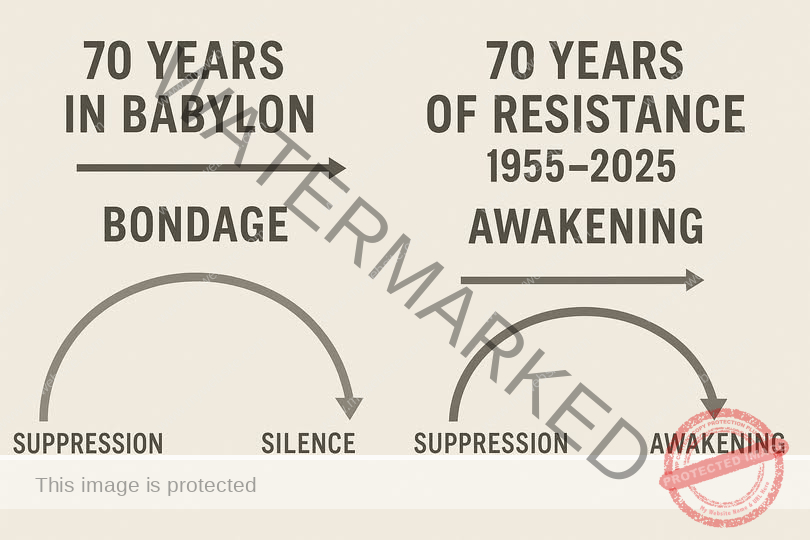


From Suppression (1955–1971) to Silence (1971–2016) to Awakening (2016–2025), Cameroon’s historical arc has completed its moral cycle: from oppression through forgetfulness to remembrance.
By Prof. Louis Mbua, Contributing Author to the Independentist
When the Union des Populations du Cameroun (UPC) was banned in 1955 in the French-administered United Nations Trust Territory of Cameroun, the seeds of a national tragedy were sown. France, fearful of authentic independence, unleashed the machinery of repression to crush the dream of a truly sovereign republic.
Those who had dared to imagine a free Africa were hunted down, imprisoned, or executed. Others fled across the Mungo River into the British-administered Southern Cameroons, carrying with them the flickering torch of Pan-African liberation. Ruben Um Nyobè, Félix Moumié, and Ossendé Afana became martyrs of an interrupted awakening — prophets whose blood consecrated the soil of Africa’s conscience.
Between 1955 and 1971, France and its protégé Ahmadou Ahidjo waged what was called a “pacification campaign.” It was in truth a war of extermination — the deliberate destruction of nationalist memory. Villages were burned, entire communities uprooted, and a culture of fear institutionalised. When the guns finally fell silent, Ahidjo declared victory and unity. Yet beneath that calm façade, the republic became a colonial project in republican disguise.
In 1982, when Paul Biya succeeded Ahidjo, many hoped for a moral and political rebirth. Instead, the structures of dependency were reinforced. Biya, educated in French political schools, perpetuated the same colonial architecture of power — centralisation, elite loyalty, and subservience to Paris. The instruments of control changed in tone but not in essence.
Under his watch, the dream of true independence was reduced to ritual, democracy to choreography, and freedom to the privilege of silence. What began under French supervision as an imperial experiment became, under Biya, a system of internal colonisation — a republic governed by fear, clientelism, and the myth of stability.
Thus, for seventy years, Cameroun lived through a long night of amnesia — a captivity of both mind and spirit. Textbooks erased its martyrs; public discourse rewarded obedience over truth. Fear became patriotism; silence, a measure of wisdom. It was a Babylonian exile — spiritual, intellectual, and moral.
Dr E. M. L. Endeley, the first Prime Minister of the Southern Cameroons, foresaw this tragedy when he warned on the eve of the 1961 federation: “The Cameroun Republic is still a colony of France.” His warning, dismissed at the time as alarmist, matured into prophecy.
History, however, is cyclic, and truth eventually reawakens. In 2016, in that same Southern Cameroons which had once sheltered exiled UPC revolutionaries, a new cry for justice was heard. Teachers and lawyers — voices of conscience — rose peacefully to demand respect for law and for life. Their courage sparked a moral revolt that spread like wildfire, rekindling a revolution of memory and identity.
In the digital age, young Cameroonians on both sides of the Mungo began to unlearn propaganda and reclaim the truth. They resurrected the buried names of Um Nyobè, Moumié, and Afana — no longer as rebels, but as visionaries of African selfhood. The exiled memory returned home.
Then came October 12, 2025. Issa Tchiroma’s supposed electoral victory over Paul Biya appeared, for a fleeting moment, to signal the breaking of old chains. Yet when the regime once again falsified the people’s will, the streets erupted in defiance. The uprising that followed was not just political; it was spiritual — a collective awakening from seventy years of slumber.
From Suppression (1955–1971) to Silence (1971–2016) to Awakening (2016–2025), Cameroon’s historical arc has completed its moral cycle: from oppression through forgetfulness to remembrance. The La République Revolution is not the birth of something new but the return of something ancient — the restoration of truth, the resurrection of memory, and the reclaiming of human dignity.
Seventy years after the martyrdom of Um Nyobè and the warning of Dr E. M. L. Endeley, their cry now resonates in a generation unwilling to kneel before falsehood. The exile of truth has ended. A people once silenced have found their voice — and with it, their destiny.
This is the dawn of the Pan-African Renaissance — the long-delayed awakening of a continent rediscovering itself, born from the courage to remember.
Prof. Louis Mbua