

If Yaoundé emerges from this episode with a deeper understanding of economic sovereignty, strategic planning, domestic ownership, and local participation in development, then the controversy surrounding Sosucam may ultimately prove to have served a purpose far greater than the future ownership of a single enterprise.
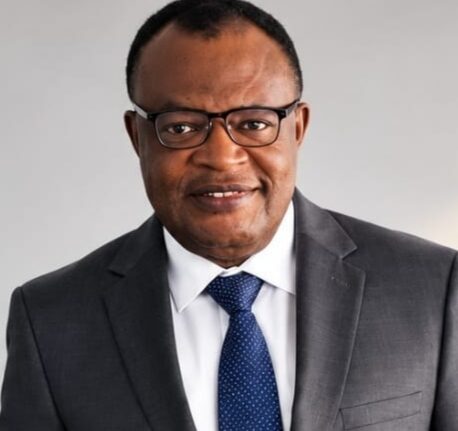
By Ali Dan Ismael
Editor-in-Chief, The Independentist News
The controversy surrounding the proposed sale of Sosucam raises important questions about economic sovereignty, strategic industries, and whether La République du Cameroun is beginning to confront the structural weaknesses of its own development model.
The Legacy of Centralized Economic Governance
For decades, La République du Cameroun pursued an economic strategy in which political authority remained highly centralized while ownership and control of many strategic sectors gradually migrated into foreign hands. Agriculture, logistics, banking, manufacturing, telecommunications, and transport infrastructure increasingly became dependent upon decisions made in foreign capitals and corporate boardrooms rather than within the communities whose prosperity depended on them.
Sosucam and the Return of Economic Sovereignty
The recent intervention by the state in the proposed sale of Sosucam may signal an important shift in thinking within policy circles in Yaoundé. For perhaps the first time in many years, the state appears to be acknowledging a reality that many nations discovered long ago: some industries are simply too important to be treated as ordinary commercial assets.
Sugar is not merely sugar. Sugar represents food security. It represents employment. It represents industrial production. It represents transport networks, supply chains, irrigation systems, and economic resilience. A country that loses effective influence over its food production systems inevitably surrenders part of its economic sovereignty.
The Contradiction at the Heart of the Model
Ironically, the Sosucam affair exposes one of the central contradictions of the Cameroonian economic model. For decades, successive governments promoted privatization and liberalization while failing to cultivate sufficiently strong domestic ownership structures capable of assuming responsibility for strategic sectors whenever foreign investors chose to leave.
The issue is not foreign investment itself. Foreign investment has played an important role in developing infrastructure, creating employment, introducing technology, and expanding production capacity across Africa. The problem emerges when entire sectors become dependent upon decisions taken thousands of kilometers away from the workers, farmers, municipalities, and consumers whose futures are directly tied to those industries.
Rediscovering Strategic Industries
Today, Yaoundé finds itself in an uncomfortable position. After decades of encouraging external ownership and centralized decision-making, the state suddenly seeks to reassert influence over an asset that it no longer directly controls. The obvious question therefore presents itself: Why was this strategic importance not recognized earlier? Why wait until ownership changes are imminent before rediscovering the national significance of food production and agricultural sovereignty?
A Continental Lesson
To be fair, this is not solely a Cameroonian problem. Across Africa, governments are increasingly reassessing the strategic importance of agriculture, ports, energy infrastructure, transport corridors, telecommunications, and critical supply chains. The global disruptions of recent years have reminded governments everywhere that food security and industrial resilience cannot simply be outsourced indefinitely.
In that sense, the Sosucam intervention may represent less a rejection of markets and more an acknowledgement that markets alone cannot guarantee national resilience. If so, La République du Cameroun may finally be beginning to learn lessons that many countries learned decades ago: Economic sovereignty matters. Strategic sectors matter. Domestic productive capacity matters. Food security matters.
The Persistence of Centralization
Yet the Sosucam episode exposes another structural weakness that remains unresolved. Decision-making in La République du Cameroun continues to be highly centralized. Strategic committees are created in Yaoundé. Policies are formulated in Yaoundé. Decisions are announced in Yaoundé. Meanwhile, workers, municipalities, producers, and local communities often remain spectators in decisions that fundamentally shape their economic futures. Those who produce the wealth frequently possess the least influence over its ownership and management.
Beyond Ownership: The Governance Question
The challenge facing La République du Cameroun therefore extends beyond the question of who owns Sosucam. The deeper issue is governance itself. Who determines which industries are strategic? Who participates in those decisions? Who benefits from the wealth generated? Who bears the consequences when investors depart or policies fail? These are not merely economic questions. They are questions of political legitimacy and state design.
Is Cameroon Learning?
The answers will determine whether La République du Cameroun is simply reacting to an isolated commercial transaction or genuinely learning from decades of structural vulnerability. The Sosucam affair may ultimately prove to be more than a dispute over the ownership of a sugar company. It may become a test of whether the country is prepared to evolve from a highly centralized post-colonial administrative model toward a more resilient, strategic, and participatory economic system.
The Verdict of History
History will not remember whether a particular transaction was approved, delayed, or blocked.History will remember whether the lessons were learned. If Yaoundé emerges from this episode with a deeper understanding of economic sovereignty, strategic planning, domestic ownership, and local participation in development, then the controversy surrounding Sosucam may ultimately prove to have served a purpose far greater than the future ownership of a single enterprise.
The question now is whether La République du Cameroun is prepared to learn those lessons—or whether it will continue postponing difficult reforms until the next strategic crisis arrives.
Ali Dan Ismael
Editor-in-Chief, The Independentist News