










News commentary

We are home to news on Cameroon and the CEMAC region. We are dedicated to honest and reliable reporting. We are the voice of the Cameroonian people and their fight for freedom and democracy at a time when the Yaoundé government is silencing dissent and suppressing democratic voices.

The success of this new program will depend less on funding announcements and more on whether governance reforms, accountability mechanisms, and economic policies are strong enough to deliver sustainable change.
By The Independentistnews Political/Economic Desk
Cameroon is once again preparing to borrow heavily—over CFA 3 trillion in projected new debt—to finance an import-substitution program intended to reduce dependence on foreign goods and stimulate domestic production. On paper, the strategy appears logical. In reality, many citizens have heard this promise before, with limited results.
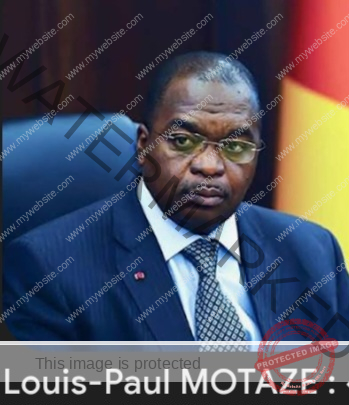
Economy Minister Louis Paul Motaze recently announced the first companies selected under the National Development Strategy 2030 (SND30). These firms are expected to benefit from state support, credit guarantees, and tax incentives aimed at boosting local production.
Yet instead of optimism, the announcement has sparked skepticism. The question widely asked is simple: why should this time be different?
Governance Performance Under Scrutiny
For decades, Cameroon has launched ambitious economic programs promising industrial growth, job creation, and economic independence. However, implementation has often lagged behind announcements.
Major initiatives—from agricultural modernization plans to industrialization programs—have frequently struggled due to weak infrastructure, bureaucratic inefficiencies, inconsistent policy execution, and limited follow-through. As a result, many citizens feel that economic progress has not matched the scale of official promises.
Despite abundant natural resources and strategic geographic advantages, the country continues to depend heavily on imports for food and manufactured goods that could potentially be produced locally.
The Challenge of Long Political Continuity
President Paul Biya has led Cameroon since 1982, making his tenure one of the longest in contemporary global politics. Supporters argue that this continuity has ensured stability in a region often marked by political upheaval.
Critics, however, question whether such prolonged leadership has contributed to policy stagnation and slowed institutional renewal. They argue that economic modernization requires fresh leadership approaches, stronger accountability, and governance reforms adapted to contemporary economic challenges. The debate over leadership longevity remains central to discussions about Cameroon’s economic future.
Accountability and Transparency Concerns
Public concerns over governance often focus on transparency and accountability in public spending and project execution. Large-scale projects have sometimes been announced with great expectation, only to later face delays, funding issues, or incomplete delivery.
Citizens frequently question how borrowed funds are utilized and whether oversight mechanisms are strong enough to ensure projects deliver measurable economic benefits. Without clear accountability and transparent monitoring, economic initiatives risk losing public confidence.
Long-Serving Ministers and Policy Continuity
Another frequent point of public debate is the long tenure of several senior government officials who have served in ministerial or strategic roles over extended periods. Figures such as Laurent Esso, Joseph Dion Ngute, Louis Paul Motaze, Ferdinand Ngoh Ngoh, and other long-serving officials symbolize continuity within the political system.
Supporters view this experience as institutional stability. Critics argue it reflects limited political renewal and contributes to policy inertia at a time when economic transformation is urgently needed.
Economic Stagnation and Policy Gaps
Despite repeated economic plans, unemployment—particularly among youth—remains a major challenge. Industrial production has not expanded at the pace many expected, and the country continues to rely on imported food and manufactured goods.
Local producers face persistent challenges, including high production costs, energy constraints, transport difficulties, and competition from imported goods that often undercut domestic prices.
Analysts argue that without coherent industrial policies protecting local production while improving competitiveness, import-substitution strategies are unlikely to succeed.
Public Controversies and Growing Frustration
Public frustration has also grown around perceptions that political leadership is often distant from the daily economic realities faced by ordinary citizens. Periodic controversies surrounding governance priorities, spending choices, and policy implementation have further deepened skepticism about economic reforms.
Citizens increasingly demand not just announcements but tangible improvements in employment opportunities, infrastructure, and living standards.
Borrowing Without Reform Risks Repetition
Borrowing to invest in industrial development is not inherently problematic. Many developing economies have successfully used debt to accelerate growth. The danger lies in borrowing without addressing structural weaknesses that previously undermined similar initiatives.
If governance challenges, policy inconsistencies, and accountability concerns remain unresolved, the new import-substitution program could struggle just as past initiatives did.
The Question Facing Cameroon
Cameroon does not lack economic plans or industrial ambitions. What many citizens now demand is effective execution, transparency, and measurable results.
The success of this new program will depend less on funding announcements and more on whether governance reforms, accountability mechanisms, and economic policies are strong enough to deliver sustainable change.
Otherwise, the country risks financing yet another cycle of expectations that fail to materialize—while the debt remains for future generations to repay.
The Independentistnews Political/Economic Desk
Share This Post:
Cameroon Conflict: A War Entering Its Tenth Year — and Time Is Running Out for Everyone
The Mask of Deceit: Debunking Yaoundé’s Information War Against the Ambazonian State Army
Related Post
The Delusion of Omnipotence at the Unity Palace
A Call for a Table of Truth: Why Military
The Path to Actualization: From Theory to Sovereignty
THE BLUEPRINT FOR OUR SOVEREIGNTY: BEYOND FONLON’S “WILL WE
CROCODILE TEARS AND BUSINESS JOURNALISM: THE GUARDIAN POST’S BETRAYAL
A Fervent reader of The Independentistnews Richard Kemiwo challenges