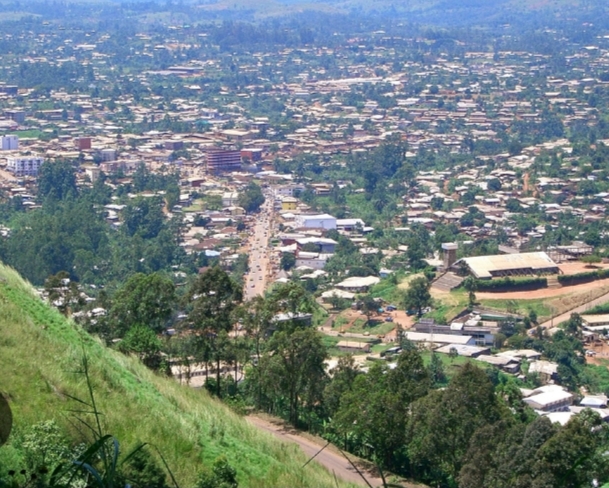


Bamenda must no longer be viewed only as a conflict-affected city, a political stronghold, or a large marketplace. It must become a national center of production, healthcare innovation, knowledge, and enterprise. Its farmers must supply processing industries. Its markets must become enterprise platforms. Its universities must generate businesses and technology. Its financial institutions must mobilize productive capital. Its hospitals must receive dependable electricity and medical oxygen. Its roads must connect farms with markets, factories, healthcare facilities, and regional trade corridors. Its diaspora must become an investment partner. Its young people must become skilled workers, biomedical technicians, plant operators, innovators, producers, and business owners.
By Ali Dan Ismael, Editor-in-chief The Independentist News
This independent policy commentary presents a proposed economic-reconstruction framework for consideration by President Samuel Ikome Sako, the Government of the Federal Republic of Southern Cameroons (Ambazonia), local institutions, businesses, healthcare providers, professionals, and the diaspora. It does not constitute an official announcement that every proposal has already been adopted.
Bamenda Must Produce Again
Bamenda has endured years of armed conflict, commercial disruption, deteriorating infrastructure, unreliable electricity, interrupted education, declining investment, population displacement, insecurity, and the departure of skilled professionals. Its markets remain active. Its commercial instincts remain strong. Its people remain remarkably entrepreneurial. Yet commercial activity alone does not constitute economic prosperity.
A city may be crowded with traders, motorcycles, imported merchandise, roadside vendors, and constant transactions while producing too little of the wealth it consumes. Goods may circulate every day while household incomes remain stagnant. Markets may remain full while factories remain absent. Young people may work from morning until night without accumulating enough capital to establish durable enterprises. Bamenda cannot recover merely by becoming busy again. It must become productive again.
The Government of the Federal Republic of Southern Cameroons (Ambazonia), under President Samuel Ikome Sako, should therefore approach Bamenda not merely as a conflict-affected city requiring humanitarian relief, but as a strategic national asset requiring coordinated economic reconstruction.
The objective should not be to reproduce the old economy exactly as it existed before the conflict. That economy was already constrained by inadequate infrastructure, unreliable energy, weak processing capacity, poor roads, underemployment, limited manufacturing, and dependence upon goods produced elsewhere.
The objective should be to build something stronger: an energy-secure, productive, diversified, technologically capable, locally financed, and regionally connected highland economy. Bamenda must move from survival commerce to production; from selling raw agricultural commodities to processing them; from scattered workshops to organized enterprise clusters; from unstructured remittances to productive investment; from dependence upon imported finished goods to local value creation; and from managing unemployment to creating enterprises.
Every major public investment should be expected to create productive capacity, sustainable employment, local value addition, higher household income, and resources for continued reinvestment. Bamenda should become the first demonstration city of a wider national recovery model. It should prove that the Ambazonian struggle is not only about resisting injustice. It is also about preparing to govern responsibly, protect civilians, restore infrastructure, strengthen healthcare, commercialize knowledge, create employment, and improve daily life.
Bamenda Has Managed and Produced Before Bamenda is not being asked to discover economic discipline for the first time. Its people possess a long record of labor, enterprise, public administration, cooperative activity, prudent borrowing, and contribution to the wider economy of Southern Cameroons. Generations of people from the Bamenda Grassfields contributed labor, agricultural production, administrative talent, technical skills, commercial services, and community support to the growth of the Cameroon Development Corporation.
The construction and financing of the Bamenda Main Market also remain important symbols of an earlier tradition of accountable public management. During the relatively brief period in which the Foncha administration exercised meaningful authority, public credit was reportedly used to construct a productive commercial asset and the resulting obligation was repaid.
The principle was simple but powerful: borrow for a productive purpose, create an asset, generate public value, maintain the asset, account for the revenue, and repay the obligation. That tradition should guide the proposed Bamenda reconstruction program. Bamenda built before. Bamenda managed before. Bamenda repaid before. Bamenda can produce again.
From Liberation Leadership to Developmental Statecraft
The international standing of any liberation leader ultimately depends upon more than the ability to describe historical injustice. It also depends upon the ability to explain how freedom will improve the lives of ordinary people.
President Samuel Ikome Sako has an opportunity to broaden the meaning of Ambazonian leadership. He can demonstrate that the independence movement is not confined to resistance politics, diplomatic appeals, or criticism of Yaoundé. It is also capable of preparing a lawful, productive, accountable, innovative, and humane alternative.
A serious reconstruction program for Bamenda would communicate an important message: the Government of the Federal Republic of Southern Cameroons (Ambazonia) is thinking beyond the conflict and preparing for the responsibilities of government. Such readiness cannot be demonstrated through titles, declarations, ceremonial appointments, or political slogans. It must be demonstrated through practical results.
Can farmers reach their farms safely? Can traders operate without extortion? Can hospitals obtain reliable electricity and certified medical oxygen? Can roads move goods efficiently? Can cold rooms preserve agricultural products? Can young people receive training that leads to employment? Can women-owned enterprises obtain financing? Can proven Ambazonian technology be restored to production? Can diaspora investors trust public institutions? Can every dollar contributed for reconstruction be independently accounted for?
The transition from liberation leadership to developmental statecraft begins when a movement demonstrates that it can protect life, organize production, manage resources, respect contracts, strengthen institutions, and plan beyond the next political emergency. Bamenda can become the place where that capacity is demonstrated.
A National Economic Reconstruction and Highland Development Zone
The Sako administration should designate Bamenda as a National Economic Reconstruction and Highland Development Zone. This designation would concentrate financial, technical, administrative, energy, security, healthcare, and diaspora resources around defined recovery objectives.
Bamenda’s reconstruction should not be left to disconnected departments, temporary charities, isolated councils, competing political structures, or uncoordinated projects. It should become a whole-of-government mission involving energy, infrastructure, agriculture, trade, finance, education, healthcare, technology, local government, civilian protection, and international economic engagement.
A Bamenda Economic Reconstruction Authority should be established under an appropriate legal and administrative framework. Its membership should include county and municipal institutions, businesses, farmers, market traders, traditional authorities, credit unions, universities, professional associations, women’s organizations, youth representatives, engineers, manufacturers, health professionals, transport operators, and the diaspora.
The authority should operate with a fixed mandate, published performance targets, transparent procurement, conflict-of-interest rules, independent audits, and regular public reporting. Its first responsibility should be to conduct a comprehensive economic and infrastructure assessment covering farms, markets, commercial districts, workshops, factories, warehouses, schools, hospitals, technical institutions, roads, electricity infrastructure, water systems, telecommunications, financial institutions, displaced businesses, available machinery, professional skills, and diaspora investment capacity. The findings should form a Bamenda Productive Asset Register.
The register would show not only what Bamenda has lost, but also what it still possesses. It would help the administration decide which assets can be restored immediately, which require new investment, and which economic sectors can generate the fastest public benefit. No serious government should announce factories without knowing where electricity will come from. It should not announce enterprise zones without identifying land, roads, water, labor, financing, and customers. It should not promise hospital oxygen without examining machinery, production capacity, storage, transportation, certification, and energy requirements. Economic recovery must begin with evidence.
Civilian Protection Is Economic Infrastructure
No economic-revival program can succeed without personal security, freedom of movement, predictable commercial hours, and protection of civilian life. Peace is not separate from economics. Peace is economic infrastructure. Farmers cannot increase production when they cannot reach their farms safely. Traders cannot maintain inventories when business hours are unpredictable. Financial institutions cannot lend when borrowers may be unable to operate. Diaspora investors cannot commit capital where personnel, property, contracts, roads, and equipment cannot be protected.
Hospitals cannot operate safely when electricity infrastructure, oxygen supplies, ambulances, medical personnel, and transportation routes are exposed to disruption. The government should declare farms, markets, hospitals, schools, universities, water systems, electricity installations, substations, communication facilities, public transportation, food warehouses, industrial-gas facilities, and processing plants to be protected civilian and economic assets.
No armed formation, political organization, security unit, public official, or private actor should be permitted to extort traders, impose unauthorized levies, obstruct food or medical transportation, destroy commercial vehicles, occupy schools, sabotage infrastructure, kidnap civilians, intimidate farmers, steal medical supplies, or interfere with lawful business.
Any actor who claims to defend the population while destroying its ability to work, trade, learn, travel, obtain healthcare, and produce is weakening the society that the political struggle is supposed to liberate.
A professionally regulated civilian-commercial protection service should be trained in community policing, market security, traffic management, fire prevention, infrastructure protection, medical-facility security, and commercial dispute prevention. Its mandate should be defensive, constitutional, and subject to civilian oversight. The protection of civilians would do more for President Sako’s international credibility than a hundred diplomatic speeches. The world will judge future Ambazonian leadership by how it treats ordinary people.
The Energy Emergency: Restore Power to Restore Production
Bamenda cannot rebuild its economy in darkness. Reliable electricity is not a secondary service that can be postponed until after economic recovery. It is one of the essential conditions of recovery. Agro-processing plants cannot operate consistently without power. Cold rooms cannot preserve food. Hospitals cannot protect medicines, operate critical equipment, or perform essential procedures reliably. Water systems cannot pump continuously. Welders, furniture makers, tailors, mechanics, printers, laboratories, schools, banks, communication systems, and digital-service providers cannot function competitively under prolonged and unpredictable outages.
Electricity shortages impose a hidden tax upon every household and enterprise. Businesses are forced to purchase generators, fuel, batteries, voltage regulators, replacement appliances, and private solar systems. Small enterprises pay proportionately more for backup electricity than larger organizations.
Food deteriorates. Machinery is damaged. Production is interrupted. Operating hours are shortened. Customers are lost. Jobs disappear. A tailor who cannot operate an electric machine loses orders. A welder without dependable power cannot complete contracts. A dairy cooperative without refrigeration loses milk. A hospital without reliable electricity risks lives. A young software developer cannot compete internationally when internet access and device charging depend upon unpredictable power.
Industrial-gas production, compression, purification, and liquefaction also require dependable energy. Available machinery has little productive value when electricity is insufficient, unstable, or prohibitively expensive. The Sako administration should therefore make emergency energy restoration one of the first priorities of the Bamenda reconstruction program.
The Bamenda Emergency Energy Restoration Desk
A specialized Bamenda Emergency Energy Restoration Desk should operate within the Bamenda Economic Reconstruction Authority. It should bring together electrical engineers, utility specialists, renewable-energy professionals, local technicians, business representatives, hospitals, markets, councils, universities, financial institutions, and diaspora experts.
Its first responsibility should be to conduct a rapid technical assessment of the electricity system. The assessment should identify overloaded or damaged transformers, unreliable feeders, broken distribution lines, unsafe connections, excessive losses, unavailable spare parts, critical facilities, major productive users, and communities receiving inadequate service. It should produce a publicly understandable restoration timetable while withholding technical information that could expose vulnerable infrastructure to sabotage or attack.
The First Thirty Days
During the first thirty days of effective administrative authority, the government should establish an emergency electricity command and reporting center. It should identify hospitals, water systems, communication facilities, markets, cold-storage centers, laboratories, industrial facilities, and essential businesses requiring priority service. Qualified engineers should inventory transformers, conductors, poles, switchgear, meters, generators, batteries, solar equipment, tools, and replacement components.
Local and diaspora professionals should be mobilized through a transparent technical roster. Repair teams should receive protected access to damaged infrastructure. Citizens and businesses should have a reliable system for reporting outages, dangerous connections, damaged equipment, and suspected theft. Unauthorized electricity levies and informal payments should be prohibited.
Substations, transformers, repair personnel, hospital generators, tools, replacement equipment, and strategic machinery should be treated as protected national assets. Emergency restoration should prioritize life-saving and productive facilities rather than politically connected neighborhoods. Hospitals, water-pumping facilities, communication systems, food markets, cold rooms, processing centers, laboratories, financial institutions, and strategic commercial areas should receive the earliest reliable service.
The First One Hundred Days
During the first one hundred days, the administration should begin repairing priority feeders, replacing damaged transformers, correcting unsafe connections, clearing vegetation from distribution corridors, restoring public lighting in strategic commercial areas, and establishing secure inventories of essential spare parts.
Where immediate grid restoration is impossible, temporary solar-and-battery systems, mobile generation, and professionally managed mini-grids should support hospitals, water systems, markets, schools, communication centers, laboratories, and designated enterprise clusters. Emergency generators should not become the permanent foundation of the economy.
Fuel is expensive. Supply chains are vulnerable. Maintenance is difficult. Generator dependence raises the cost of local goods and exposes businesses and hospitals to fuel shortages and price instability. Temporary generation should therefore serve as a bridge to a more diversified and reliable energy system.
The administration should establish Productive Power Zones serving markets, processing plants, workshops, cold-storage facilities, water systems, hospitals, laboratories, industrial facilities, and digital enterprises. Concentrating reliable electricity within selected productive and life-saving clusters would allow economic activity and essential healthcare to restart before uninterrupted service can be restored to every neighborhood.
Electricity restoration must also be accompanied by transparent metering and payment arrangements. Households and businesses cannot demand reliable service while refusing to pay reasonable and lawful charges. At the same time, no utility or authority should collect tariffs for electricity that has not been supplied. The new compact should be based upon reciprocal accountability: reliable service, transparent billing, lawful payment, infrastructure protection, professional regulation, and public reporting.
Medical Oxygen and Industrial-Gas Sovereignty
Bamenda’s emergency energy program should support more than lighting, refrigeration, communication, and ordinary commercial activity. It should also become the foundation of a strategic medical-oxygen and industrial-gas industry.
An Ambazonian-developed patented technology has already demonstrated the capacity to manufacture and purify specialized industrial gases to extremely high levels of purity. The technology has previously operated in an industrial setting, and the required machinery is available.
The identities of the inventor, patent-rights holder, associated enterprise, previous customers, technical partners, machinery locations, and production arrangements are being withheld for security, commercial-confidentiality, and intellectual-property reasons. This is not a theoretical proposal awaiting proof of concept. It is a demonstrated industrial capability that should be prepared for secure recommissioning, expansion, certification, financing, and renewed production.
The Sako administration should facilitate a confidential technical, legal, commercial, engineering, and medical implementation assessment. That assessment should determine the condition and operational readiness of the machinery, recommissioning and maintenance requirements, production capacity, electricity and water requirements, installation needs, safety controls, licensing arrangements, certification requirements, workforce needs, and transportation and distribution systems.
Sensitive specifications, ownership records, machinery locations, customer information, proprietary methods, and commercial arrangements should remain restricted. The technology should be recognized as a strategic Ambazonian industrial capability.
Oxygen for Hospitals and Emergency Care
Reliable medical oxygen is essential for emergency departments, operating theatres, maternity wards, neonatal units, intensive-care services, ambulances, trauma care, respiratory treatment, and the management of patients whose blood-oxygen levels have fallen dangerously low. Hospitals should no longer depend entirely upon distant suppliers, unreliable transportation, imported cylinders, or emergency purchases made only after supplies have been exhausted. The Bamenda reconstruction program should establish a Medical Oxygen Security Initiative.
Its immediate objectives should be to provide dependable oxygen to hospitals and health centers, establish emergency reserves, create safe filling and distribution systems, and train biomedical engineers, clinicians, technicians, drivers, plant operators, and maintenance personnel. The demonstrated capacity to purify industrial gases does not eliminate the need for medical regulation.
Oxygen intended for patients must be produced, tested, handled, stored, and distributed according to recognized medicinal-oxygen standards. Clinical use requires contaminant control, hygienic handling, approved cylinders or vessels, traceability, reliable quality assurance, and professional supervision. The administration should therefore distinguish between two connected programs. The first is the production of certified medicinal oxygen for hospitals, ambulances, clinics, maternity centers, and emergency services. The second is the production and purification of high-purity gases for industrial, scientific, agricultural, laboratory, technological, and commercial applications.
A Bamenda Oxygen and Industrial-Gas Production Center
The administration should evaluate the establishment of a Bamenda Oxygen and Industrial-Gas Production Center within or near a Productive Enterprise Zone. The center could supply certified medical oxygen, liquid oxygen where operationally justified, industrial oxygen for welding and fabrication, nitrogen for food preservation and packaging, laboratory gases, and selected gases required by manufacturing, agriculture, refrigeration, scientific research, and advanced industry.
It could also provide cylinder inspection, filling, testing, maintenance, cryogenic-equipment servicing, and technical training. The available machinery should be professionally inspected, recommissioned, calibrated, protected, and integrated into a properly designed production facility. The facility should have reliable electricity, backup power, water, secure transportation, fire protection, quality-control laboratories, trained operators, spare parts, preventive maintenance, and appropriate emergency procedures.
Because gas production, purification, compression, and liquefaction require significant energy, the center should form part of Bamenda’s long-term electricity and industrial-development strategy.
From Proven Capability to Renewed Production
The central challenge is no longer proving that the underlying technology can work. The challenge is converting demonstrated industrial capability and available machinery into secure, certified, properly financed, continuously operating, and commercially sustainable production.
The implementation pathway should include confidential equipment inspection, recommissioning, calibration, plant engineering, safety review, hospital and industrial demand assessments, medicinal-oxygen certification, industrial certification, investment mobilization, operator training, quality-control systems, distribution planning, and preventive maintenance.
Neither the inventor nor the patent-rights holder should be pressured to surrender intellectual property, machinery, confidential information, or commercial rights to the government, a political organization, an investor, or a foreign entity.
A properly structured licensing agreement, joint venture, or public-private partnership could permit deployment while preserving ownership, confidentiality, contractual rights, commercial independence, and future market opportunities.
The role of government should be to protect the technology, support secure recommissioning, facilitate regulation, provide dependable infrastructure, mobilize credible investment, and ensure that public participation produces measurable healthcare and economic benefits. Bamenda will not be starting from theory. It will be rebuilding from demonstrated capability.
The Wider One-Hundred-Day Economic Stabilization Program
Emergency power restoration and medical-oxygen preparation should operate alongside a wider economic stabilization program. During the first one hundred days, the administration should reopen principal commercial corridors, repair critical farm-to-market roads, clear drainage systems, improve sanitation, restore water to productive areas, register damaged businesses, create safe temporary trading spaces, and restart agricultural collection and transportation systems.
Vocational and apprenticeship programs should also be reopened. A Bamenda Business Recovery Window should provide verified small and medium-sized enterprises with access to restart grants, concessional loans, equipment leasing, inventory financing, solar systems, battery storage, and technical assistance.
Support should not be distributed as political patronage. Applicants should submit basic recovery plans explaining how assistance will restore production, preserve employment, create jobs, reduce energy costs, strengthen healthcare, or provide essential services. Businesses should receive support according to competence, economic need, employment potential, and public value—not political affiliation. Rebuilding Roads as Economic Arteries Bamenda’s roads should be rehabilitated according to their economic function rather than their political visibility.
A road is not merely a strip of asphalt.
It is a connection between farms and markets, workers and jobs, patients and hospitals, students and schools, businesses and customers, and industries and regional trade. Priority routes should include major urban commercial corridors and connections linking Bamenda with Bafut, Bambili, Bambui, Ndop, Wum, Batibo, Mamfe, and neighboring Nigerian markets. Projects should be selected according to the farms, hospitals, schools, processing plants, energy installations, industrial facilities, and logistics centers they serve.
Every major road project should include drainage, pedestrian safety, transparent procurement, local employment targets, public reporting, and enforceable maintenance obligations. A road should not be celebrated simply because asphalt has been laid. Its success should be measured by reduced travel times, lower freight costs, fewer vehicle repairs, improved farm access, faster medical delivery, increased agricultural sales, and new businesses established along the corridor.
Transforming Agriculture into Agro-Industry
Agriculture should become the first major engine of Bamenda’s recovery. Bamenda and its surrounding highland communities possess considerable potential in potatoes, maize, beans, vegetables, coffee, poultry, livestock, dairy products, fruits, spices, and other food commodities. Yet farmers remain economically vulnerable when they sell raw produce immediately after harvest at prices determined by middlemen, poor roads, unreliable electricity, inadequate storage, and temporary market conditions.
The government should establish a Bamenda Highland Agro-Industrial Network connecting farming communities to collection centers, warehouses, grain silos, cold storage, processing facilities, laboratories, packaging centers, transportation systems, wholesale markets, and digital price information. Potatoes can be processed into flour, starch, chips, frozen products, and animal feed. Maize can support flour mills, bakeries, animal-feed plants, poultry farms, cereals, and beverage production. Beans can be cleaned, graded, packaged, and branded. Milk can support yogurt, cheese, butter, and pasteurized dairy products.
Coffee can be roasted, processed, packaged, and marketed under highland brands rather than leaving the region largely as an unprocessed commodity. Purified industrial gases may also support food preservation, packaging, laboratory testing, refrigeration, and selected manufacturing processes.
The objective should be to create value at every stage: farming, collection, storage, processing, packaging, transportation, wholesaling, retailing, and export. Farmers must not remain the poorest participants in economic chains that begin with their land, labor, knowledge, and risk.
The Made in Bamenda Program
The administration should launch Made in Bamenda, a production, branding, and quality-certification program. The label would identify goods substantially produced, processed, assembled, designed, or packaged within Bamenda and its surrounding highland economy.
Initial categories could include processed foods, coffee, beverages, furniture, wood products, clothing, footwear, leather goods, agricultural tools, construction materials, household products, renewable-energy components, digital services, books, crafts, medical-support equipment, and industrial-gas services.
Public institutions should provide qualified local producers with fair access to contracts whenever they meet standards of price, quality, capacity, safety, and transparency. Schools could purchase locally produced food, furniture, uniforms, books, and cleaning materials.
Hospitals could obtain selected food, linen, furniture, maintenance services, certified oxygen, and non-specialized supplies locally. Government offices could purchase local furnishings, software, printing, energy services, and stationery. Public procurement should become an instrument of productive development rather than merely a method of spending public money.
Markets as Enterprise Platforms
Bamenda’s markets should be treated as economic-development institutions. They should provide clean water, sanitation, drainage, fire protection, waste management, secure storage, refrigeration, transparent stall management, childcare facilities, digital-payment options, business-registration support, cooperative finance, product inspection, legal assistance, and organized loading areas.
Street vendors should not simply be displaced in the name of urban beautification. They should be incorporated into safe and accessible trading spaces that protect livelihoods while improving sanitation, traffic movement, and pedestrian safety. A Bamenda Digital Market Exchange should publish daily prices for agricultural commodities, livestock, transportation, building materials, energy services, and essential goods.
Transparent information would strengthen farmers’ bargaining power, reduce manipulation, and help producers decide when and where to sell. The deeper questions of market ownership, public-asset control, allocation, and economic dispossession will be examined separately in Part III of this series. Bamenda as a Regional Trade and Logistics Capital Bamenda should become the principal highland trade and logistics center of Southern Cameroons / Ambazonia.
A modern wholesale and logistics terminal should be established outside the most congested commercial districts. It should provide warehouses, cold storage, truck parks, cargo-handling areas, vehicle repair, fuel and charging facilities, sanitation, security, financial services, digital cargo tracking, and commercial documentation support.
Organized trade routes should connect Bamenda with surrounding agricultural communities, other counties of the Republic, Nigeria, and wider West African markets. Cross-border trade should be formalized without destroying the livelihoods of small traders. Simplified procedures, transparent tariffs, small-trader permits, anti-corruption safeguards, and efficient inspection should encourage lawful commerce.
Bamenda Airport should also be evaluated as an economic asset rather than a prestige symbol. Its practical functions could include emergency transportation, medical evacuation, business travel, educational travel, diaspora access, tourism, and selected high-value or time-sensitive cargo. Infrastructure becomes productive when it moves people, knowledge, services, medical supplies, energy, and goods efficiently.
The University as an Innovation Engine
The University of Bamenda and the wider network of technical and professional institutions should become central participants in reconstruction. A Bamenda National Innovation and Enterprise Center should connect universities, technical colleges, farmers, manufacturers, engineers, health professionals, software developers, financial institutions, public agencies, and diaspora experts. The center should incubate startups, test agricultural products, design affordable machinery, develop food-processing technology, support intellectual property, provide business clinics, create digital tools, and help enterprises meet quality standards. It should also support energy, biomedical, medical-gas, waste-management, water, transportation, and public-health solutions.
Student internships and final-year projects should address real Bamenda problems. Education should no longer be treated mainly as preparation for emigration or public-sector employment. It should become a source of enterprises, technology, skilled workers, inventions, and productive institutions.
Youth Employment Through Skills and Enterprise
The government should establish a Bamenda Youth Skills, Apprenticeship, and Enterprise Corps. Young people should receive practical training in construction, electrical installation, solar systems, battery maintenance, power-distribution repair, plumbing, welding, fabrication, vehicle repair, food processing, furniture production, software, logistics, agriculture, healthcare support, tailoring, medical-equipment maintenance, plant operation, and waste recycling.
Training must be connected to equipment, apprenticeships, customers, contracts, enterprises, and startup financing. Certificates without practical experience or economic opportunity should not be considered sufficient outcomes. Public infrastructure, energy, healthcare, and industrial contractors should be required to train local apprentices. The goal should be to transform young people from frustrated job seekers into skilled workers, technicians, innovators, producers, and employers.
Women as Owners of Productive Enterprises
Women already occupy a central position in Bamenda’s agriculture, markets, food distribution, healthcare, household economy, and informal financial systems. The recovery program should move women from economic participation without sufficient protection into formal ownership, financing, management, and leadership.
A Women’s Productive Enterprise Facility should provide working-capital loans, equipment leasing, renewable-energy financing, cooperative processing facilities, commercial kitchens, childcare assistance, business registration, digital training, procurement access, and packaging support. The purpose should not be to confine women permanently to microenterprise. Promising businesses should be supported to become manufacturers, exporters, employers, and significant regional companies.
Mobilizing the Diaspora for Investment
The Bamenda and Southern Cameroons diaspora possesses capital, professional expertise, technology, and international commercial networks. Diaspora money already supports household consumption, education, healthcare, funerals, emergency relief, and displaced families. These responsibilities remain essential, but secure mechanisms should also allow part of diaspora capital to finance productive assets.
A professionally managed Bamenda Reconstruction and Productive Enterprise Fund should invest in agro-processing, renewable energy, electricity distribution, battery storage, healthcare, medical oxygen, industrial gases, warehousing, transportation, housing, technology, waste recycling, industrial facilities, and export-oriented enterprises. The fund should publish its accounts, administrative costs, investment criteria, conflicts of interest, and project results. It must never become a political treasury or source of personal enrichment. Trust will be Bamenda’s most important investment currency.
Productive Enterprise Zones
The government should establish Bamenda Productive Enterprise Zones where small and medium-sized enterprises can access reliable shared infrastructure. These zones should provide dependable electricity, solar and battery backup, industrial water, broadband internet, drainage, fire protection, security, waste treatment, affordable production space, shared machinery, testing laboratories, and business-development support. Priority sectors should include food processing, furniture, textiles, leather goods, packaging, construction materials, agricultural equipment, renewable-energy components, medical-support services, industrial gases, vehicle maintenance, and digital services.
Shared infrastructure would reduce the cost of production and make it unnecessary for every small manufacturer to purchase a separate generator, construct an independent workshop, secure private water, and establish isolated quality-control systems.
Financing Without Political Patronage
Bamenda’s revival will require public expenditure, private investment, cooperative finance, diaspora capital, development partnerships, and locally generated revenue. The administration must establish strict rules separating economic opportunity from political loyalty. No business should receive financing because its owner supports a political faction. No contractor should be selected without transparent qualifications. No public official should hold undisclosed financial interests in projects under his or her authority. Major contracts should be published. Independent audits should be mandatory. Citizens should be able to track project costs, contractors, schedules, progress, and performance.
Public participation in the industrial-gas initiative should likewise be governed through professional assessment, transparent agreements, intellectual-property protection, regulatory compliance, and measurable public benefit. Public money must create measurable public value.
Waste as a Productive Resource
Bamenda’s waste problem should be transformed into an employment, energy, and enterprise opportunity. Organic market waste can be converted into compost, animal feed, or biogas. Plastics can be sorted and transformed into paving materials, roofing components, furniture, and other products. Scrap metal can supply fabrication workshops.
Waste collection can support licensed neighborhood enterprises. Medical and industrial waste should be managed through specialized safety standards and must not be mixed indiscriminately with household or market waste. A clean city should do more than improve Bamenda’s appearance. It should reduce disease, protect waterways, recover useful materials, generate energy, employ young people, and attract investment. Measuring Results Rather Than Announcements The government should publish an annual Bamenda Economic Renewal Scorecard.
The scorecard should measure jobs created, businesses reopened, new enterprises established, agricultural output, products processed locally, post-harvest losses, household-income growth, electricity reliability, outage duration, productive enterprises connected, road performance, women-owned and youth-owned enterprises, diaspora investment, local procurement, apprentices trained, and public-project completion.
Healthcare and industrial indicators should include hospital electricity reliability, certified medical-oxygen availability, emergency oxygen reserves, health facilities supplied, technicians trained, machinery recommissioning milestones, certification progress, production continuity, and industries supplied with industrial gases.
Projects that consume public resources without producing measurable economic or public-health improvements should not be described as development. Speeches are not development. Announcements are not development. Committees are not development. Development is electricity restored, hospitals supplied, roads maintained, farms connected, businesses reopened, products processed, machinery recommissioned, young people employed, and household incomes improved.
President Sako’s Leadership Test
President Samuel Ikome Sako’s economic responsibility should not be to personally manage every factory, market, road, power facility, oxygen center, or cooperative. His responsibility should be to establish the vision, lawful institutions, administrative discipline, civilian protection, professional competence, financial transparency, intellectual-property safeguards, and investment confidence required for citizens to produce and innovate.
The credibility of the Bamenda program would depend upon five leadership tests. The first is institutional unity. Economic reconstruction cannot proceed through competing administrations, contradictory directives, overlapping authorities, or rival taxation systems. The second is civilian protection. People must be free to work, trade, farm, travel, study, receive healthcare, and invest without fear. The third is financial transparency. Public contributions, contracts, reconstruction funds, energy investments, healthcare programs, and business-support initiatives must be independently audited.The fourth is professional competence. Engineers, economists, farmers, educators, traders, physicians, manufacturers, accountants, energy specialists, inventors, and entrepreneurs must shape economic decisions.The fifth is accountable government. Public resources must serve citizens rather than reward political loyalty or punish disagreement.
If President Sako champions these principles, he will demonstrate that his leadership is not confined to resistance politics. He will present himself as a leader concerned with the responsibilities of government, the dignity of work, the protection of civilians, energy security, healthcare delivery, technological innovation, and the creation of a viable post-conflict economy.
That would strengthen his international reputation as a forward-looking leader. But reputation must follow performance. The world will not be persuaded merely because an ambitious plan has been published. It will be persuaded when competent professionals are appointed, civilians are protected, intellectual property is respected, accounts are published, machinery is recommissioned, hospitals are supplied, and promises become measurable results.
Bamenda as the First Demonstration of National Recovery
Bamenda must no longer be viewed only as a conflict-affected city, a political stronghold, or a large marketplace. It must become a national center of production, healthcare innovation, knowledge, and enterprise. Its farmers must supply processing industries. Its markets must become enterprise platforms. Its universities must generate businesses and technology. Its financial institutions must mobilize productive capital. Its hospitals must receive dependable electricity and medical oxygen. Its roads must connect farms with markets, factories, healthcare facilities, and regional trade corridors. Its diaspora must become an investment partner. Its young people must become skilled workers, biomedical technicians, plant operators, innovators, producers, and business owners.
Under this proposed program, the Government of the Federal Republic of Southern Cameroons (Ambazonia) would not wait passively for prosperity, technology, or essential medical supplies to arrive from abroad. It would organize Bamenda’s people, land, knowledge, institutions, capital, energy resources, proven industrial capability, available machinery, culture, and geographic position into a productive highland economy.
Success would not be measured by the number of speeches delivered in Bamenda’s name. It would be measured by jobs created, farms connected, electricity restored, hospitals supplied, products processed, businesses financed, apprentices trained, markets modernized, roads maintained, machinery recommissioned, public accounts published, and households lifted into greater economic security.
The first duty of reconstruction is to restore hope. The second is to restore power and convert hope into production. The third is to protect life through stronger hospitals, dependable medical oxygen, and secure essential services. The fourth is to transform proven Ambazonian industrial capability into renewed production, skilled employment, healthcare security, and national economic strength. The fifth is to recover Bamenda’s tradition of prudent borrowing, productive investment, responsible management, and disciplined repayment. That is how the Sako administration can jump-start Bamenda’s economy. It is also how Bamenda can become the first demonstration of national recovery, productive sovereignty, energy security, technological capability, improved healthcare, managerial competence, and shared prosperity.
Part II examines how the Bamenda demonstration can become a countrywide economic-growth strategy by reducing the costs of money, reliable energy, productive labor, transportation, and institutional uncertainty. Part III will examine colonial extraction, control of public assets, market access, economic dispossession, and the restoration of Bamenda’s institutions to accountable public service
Ali Dan Ismael, Editor-in-chief The Independentist News