













Through the so-called Accords de Coopération, France institutionalized tribal supremacy, economic servitude, and political dependency — building a system where one man’s survival became the guarantee of another nation’s interests.
By Ali Dan Ismael (London), Eposi Lum (Bamenda), and Jean-Marie Poccachard (Lyon), The Independentist
A Pact Built on Dependence, Not Development
For more than four decades, Paul Biya’s rule has been sustained not by the will of his people but by the silent machinery of a foreign patron. What Paris called Franco-Cameroonian cooperation was never genuine partnership; it was a coded blueprint for control.
Through the so-called Accords de Coopération, France institutionalized tribal supremacy, economic servitude, and political dependency — building a system where one man’s survival became the guarantee of another nation’s interests.
The Birth of French Blackmail and the Phantom Coup
When Biya succeeded Ahmadou Ahidjo in nineteen eighty-two, he inherited a state dominated by northern elites loyal to his predecessor. Seeking legitimacy and foreign protection, Biya succumbed to French blackmail. France offered him survival — but at a cost. It demanded loyalty to Paris, preservation of the Cooperation Accords, and a total purge of the northern establishment that might resist them.
Under French encouragement, Biya staged the phantom coup of nineteen eighty-three to eighty-four, a fabricated plot that allowed him to arrest, execute, or retire dozens of northern officers.
In their place, he installed loyalists from his Beti-Bulu clan — men chosen not for merit but for obedience. The objective was simple: to make the Cooperation Accords unbreakable by ensuring every key position was held by those whose future depended on France’s protection. And it worked. The system endured for decades — a colonial relic wrapped in the trappings of a republic.
The Birth of Communal Liberalism: France’s Ideological Gift to Biya
In this mindset, and with firm French support, Communal Liberalism was born — Biya’s supposed political philosophy, which in reality was designed to cement the Franco-Beti/Bulu alliance. Presented as a theory of social harmony and shared progress, it was in fact a political theology meant to sanctify tribal supremacy.
Through Communal Liberalism, Biya built a framework that made the Beti/Bulu clan the nucleus of political power, ensuring that succession to the presidency could only pass through family ties or trusted members of the same ethnic fraternity. It was France’s ideological insurance policy — a doctrine dressed in intellectual vocabulary but built on the same old colonial premise: that stability lies in control, and control requires hierarchy.
Now the illusion is collapsing. The same edifice that Biya and his French patrons believed would last “a thousand years,” much like Hitler’s Reich, is crumbling under the weight of its corruption, repression, and internal contradictions. What began as a philosophy of “unity through community” has ended as a fortress of fear, guarded by the ghosts of colonial tutelage.
Ministries of Servitude: How Paris Governed Through Yaoundé
From that moment, Cameroon’s most powerful ministries became French satellites, each under the stewardship of the Beti-Bulu elite.
Defense was led by Beti officers trained in French academies, operating under the supervision of “military advisers” from Paris.
Territorial Administration became the repressive engine of the state, organized on the French prefectural model and guided by “technical partners” from the Interior Ministry.
Finance was guarded by Beti technocrats loyal to the CFA franc and the French Treasury, ensuring Cameroon’s currency remained a colonial instrument.
Justice was built in the Napoleonic image, where loyalist magistrates protected regime crimes while silencing reformers.
Higher Education became a laboratory for colonial pedagogy, producing docile minds rather than independent thinkers.
Foreign Affairs turned into a mirror of French diplomacy, where ambassadors were discreetly cleared through Paris before appointment.
This ethnic monopoly over strategic ministries turned Cameroon into a tribal protectorate under French supervision — a republic only in name, but an empire in practice.
Protection in Exchange for Submission
Biya’s loyalty was handsomely rewarded. Whenever his regime faced scrutiny — over election fraud, massacres in Ambazonia, or systemic corruption — France came to his defense. At the United Nations Security Council, Paris shielded Yaoundé from sanctions. Within NATO, France justified cooperation with Cameroon as part of a “counter-terrorism” partnership, particularly during Democratic administrations in Washington that preferred French coordination in Africa to direct engagement.
For example, during the Biden administration, Secretary of State Antony Blinken, a known Francophile, ignored all calls for action on the Ambazonian conflict, maintaining a deaf ear throughout the administration. This posture allowed France to continue shaping U.S. policy toward Cameroon, insulating Biya’s regime from accountability.
Thank God, when Donald Trump returned to office, his administration resumed where it had left off — tightening the screws on Yaoundé by removing Cameroon from the African Growth and Opportunity Act (AGOA) and breaking security cooperation, a decisive shift that exposed the hollowness of France’s protection.
In return for such Western tolerance, French corporations such as Total, Bolloré, Suez, and CFAO retained privileged access to Cameroon’s oil, ports, timber, and logistics. The relationship was transactional and deeply colonial: Biya guaranteed France’s access; France guaranteed Biya’s survival.
The United Nations’ Failed Mediation
Even the United Nations attempted to moderate Cameroon’s internal imbalance. In the early years of the Ambazonian conflict, Secretary-General António Guterres personally reached out to Paul Biya, urging him to adopt limited administrative reforms. He reportedly suggested that with the financial assistance of the United Nations, Biya compensate and retire some of his top administrators to pave the way for a more balanced administration that could include the historically marginalized northern and Anglophone communities.
Biya immediately rejected the proposal. He knew that acceptance would anger Paris — and risk the withdrawal of France’s protection. Within days, French diplomats and intelligence handlers around Yaoundé reassured the presidency that “no change is necessary.” The message was clear: Biya’s survival depended on resisting reform.
From that moment, every attempt by African leaders, ECOWAS mediators, or the African Union to intervene fell on deaf ears, not because of national pride but because Biya’s regime is hostage to French intelligence networks and powerful occult fraternities that view any change as a threat to their spiritual and financial empire.
Tchiroma and the Return of France’s Old Game
The name whispered across Yaoundé’s corridors is Issa Tchiroma Bakary — a northern politician once purged by Biya, now re-emerging as a possible bridge between the old order and France’s future plans. His recent visit to the French Embassy before declaring his candidacy has raised profound suspicions. Is he a reformer, or merely the next caretaker of France’s invisible empire?
Paris, embarrassed by Biya’s decay yet fearful of losing control, appears to be mending relations with Tchiroma, hoping to preserve the Cooperation framework under a more acceptable face. If he bows to French overtures, the circle of dependency will close again, and the colonial chain will remain unbroken.
France may well hand over Biya to Tchiroma — to exact the same violence once meted to the northerners — if his friendship with Paris was sealed during that embassy encounter as proof of trust and loyalty. Such a handover would not mark renewal but repetition: the same tyranny repackaged under a new ethnic flag, still managed from the Élysée.
The New Rumor: Thirty More Years of Economic Slavery
Reports from within Yaoundé speak of an even darker twist. Paul Biya and Ferdinand Ngoh Ngoh are said to have quietly extended the Cooperation Accords for another thirty years, with Emmanuel Macron’s personal approval.
The revised pact would transform Cameroon into a vast agricultural colony for French industry — a supplier of cocoa, cotton, palm oil, and biofuels to feed Europe’s production. In return, France would continue shielding the regime diplomatically, offering political protection in exchange for economic servitude.
If true, this extension is nothing short of the recolonization of Cameroon by treaty. It explains France’s timid reaction to Biya’s disputed victory — not disapproval, but strategic patience while preparing for Tchiroma’s entry. The cycle continues, with France once again manipulating the pendulum of power from the shadows, waiting for the next loyalist to secure its interests.
Ambazonia’s Position: A Line History Cannot Erase
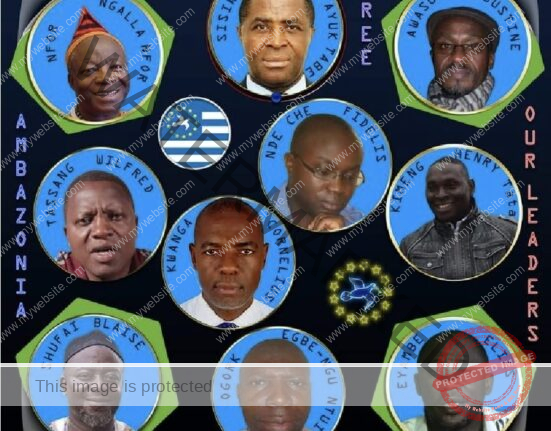
But one nation refuses to participate in this cowardice. “Whoever takes over La République du Cameroun must meet Ambazonia at the negotiation table,” declared Dr. Samuel Ikome Sako, President of the Federal Republic of Ambazonia. “We will not recognize any regime — old or new — that remains bound to France’s chains.”
Ambazonia stands as the moral and political contrast to this colonial cycle. While Biya and Ngoh Ngoh mortgage their sovereignty to foreign powers, the people of Southern Cameroons have chosen self-determination over servitude. They reject both the cowardice of Paris and the complicity of Yaoundé, insisting that the only just future lies in a free negotiation between equals, not a renewal of colonial bondage.
Conclusion: The Empire of Fear and the Nation of Resolve
The Accords de Coopération were never about progress — they were about power. They preserved France’s influence at the expense of Cameroon’s independence, trading national dignity for diplomatic silence. Biya’s phantom coup enthroned a clan; France’s protection purchased decay.
Even the United Nations’ cautious intervention was crushed under the weight of French interests and secret loyalties. And when Communal Liberalism was born, it merely sanctified the tribal machinery France had engineered — an ideology built to last “a thousand years,” now collapsing under its own delusion.
But as France becomes weaker internationally — and especially in Africa — the balance is shifting.
The United States may no longer need French protection, and with the new Trump policy of transactional relationships, the era of French domination on the continent may well be in its twilight years.
Now, as the Accords are rumored to be renewed for another generation, Cameroon faces the same tragic choice: subservience or sovereignty.
But Ambazonia has already chosen.
While France hides behind diplomacy and Tchiroma rehearses his loyalties, the Ambazonian people stand firm in their conviction: Freedom cannot be negotiated through blackmail, and no accord signed in secret can erase the right of a nation to exist.
Ali Dan Ismael (London), Eposi Lum (Bamenda), and Jean-Marie Poccachard (Lyon), The Independentist





Leave feedback about this