






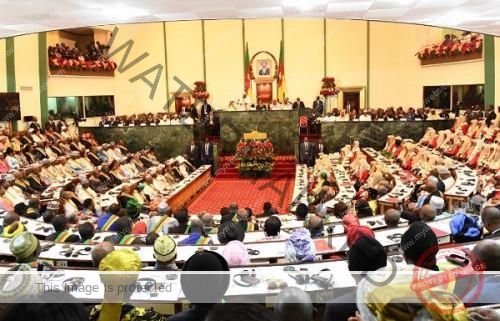






History shows that when legitimacy collapses, finance follows. And when finance withdraws, systems change. This is not the end of a crisis — it is the exposure of one. And for Ambazonia, it is not just an economic data point. It is strategic evidence that the structure attempting to occupy its future is itself becoming financially, institutionally, and historically unsustainable.
By The Independentistnews Political desk
Markets as Mirrors of State Credibility
When international investors demand high interest rates from a country, they are not making a political statement — they are making a risk assessment. Markets are cold, rational, and unsentimental. They price instability, fragility, and institutional weakness long before diplomats admit them. Cameroun’s rising borrowing costs are not an economic anomaly; they are a global verdict.
The Financial Verdict
What the eurobond market is signaling is simple: La République du Cameroun is no longer viewed as a credible sovereign system. High interest rates reflect high risk, and high risk reflects deep structural failure — political, fiscal, institutional, and economic.
Systemic Fragility, Not Isolated Crisis
Investors are not reacting to a single variable. They are reacting to a pattern: unsustainable public debt, weak non-oil revenues, fragile public finances, political uncertainty following contested elections, aging leadership, governance stagnation, and an economy structurally dependent on commodities and external shocks. Add to this the international environment — tighter global capital markets, post-Ukraine war financial caution, and African sovereign defaults in Ghana and Zambia — and the picture becomes clear: Cameroun is now priced as a fragile state economy.
Beyond Economics: A Political Reality
But this is not merely an economic story. It is a political one. Debt markets are exposing what political narratives attempt to conceal: the Cameroonian state structure is no longer stable, credible, or trusted. Financial systems do not reward occupation models, assimilation projects, or artificial state architectures built on coercion rather than consent. They punish them.
Why This Matters for Ambazonia
For Ambazonia, this matters profoundly. The crisis is not “Anglophone unrest.” It is not “regional instability.” It is not “local grievance.” It is systemic state failure.
The Cost of Occupation Systems
An occupation system requires constant financing to survive — security spending, administrative control, debt servicing, and external borrowing. As borrowing becomes more expensive, the cost of maintaining control rises while legitimacy declines. This is how fragile systems collapse: not through one event, but through accumulating pressure across finance, governance, legitimacy, and credibility.
Financial Decoupling of Trust and Territory
Cameroun’s debt profile reveals a deeper truth: international markets are already decoupling financial confidence from territorial claims. Investors are not pricing a unified, stable, credible state. They are pricing risk geography, institutional fragility, and governance uncertainty.
Two Competing State Models
This creates a strategic contrast for Ambazonia. One model is extractive, debt-dependent, externally financed, politically rigid, and structurally fragile. The other must be productive, diversified, development-oriented, institutionally credible, and sovereignty-based.
Statehood as Structure, Not Slogans
Statehood is not only about flags and borders — it is about financial credibility, economic structure, governance architecture, and institutional trust. Ambazonia’s future legitimacy will not come from rhetoric alone. It will come from demonstrating a different model: development sovereignty instead of debt dependency, production economies instead of extraction economies, institutional credibility instead of administrative control, and governance by consent instead of rule by force.
The Signal in the Numbers
Cameroun’s rising interest rates are not just numbers. They are signals. Warnings. Indicators. They tell a story that politics refuses to tell: the state system is weakening, trust is eroding, and credibility is collapsing.
Conclusion: The Language of Markets
History shows that when legitimacy collapses, finance follows. And when finance withdraws, systems change. This is not the end of a crisis — it is the exposure of one. And for Ambazonia, it is not just an economic data point. It is strategic evidence that the structure attempting to occupy its future is itself becoming financially, institutionally, and historically unsustainable. Debt does not lie. Markets do not chant slogans. Risk pricing is the language of truth.
The Independentistnews Political desk






Leave feedback about this